
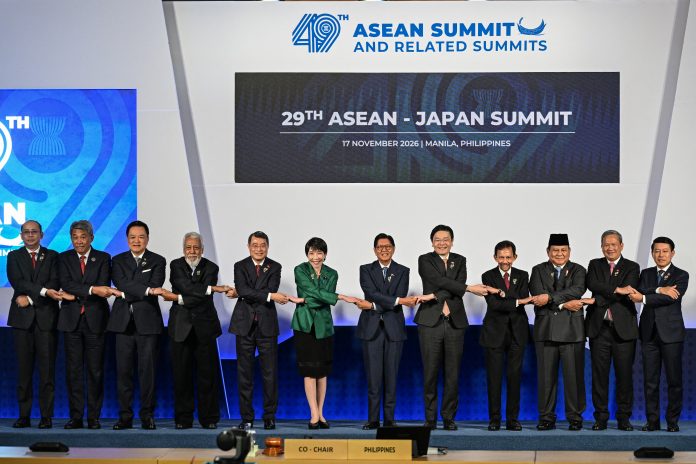
Civil society groups urged Southeast Asian leaders to end the region’s dependence on fossil fuels, warning that continued coal, oil and gas expansion threatens energy security, marine ecosystems and food supplies.
The appeal came as leaders gathered for the 49th Association of Southeast Asian Nations (ASEAN) Summit in Manila on Nov. 17, alongside the second week of COP31 climate negotiations in Antalya, Türkiye.
Environmental advocates said Southeast Asia’s reliance on fossil fuels has exposed communities to volatile energy prices and supply disruptions while increasing pressure on ecosystems and livelihoods.
“We have coal and we have gas, yet we are still experiencing electricity outages while communities continue to bear the brunt of fossil fuel dependence,” said Novita Indri Pratiwi of Trend Asia.
“We must not turn the geopolitical crisis into an excuse for further fossil fuel expansion,” she added.
The groups criticized Japan’s Asia Zero Emission Community (AZEC) initiative, which also held a summit in Manila on Nov. 17, arguing that most of its projects remain tied to fossil fuels despite its decarbonization agenda.
“What Japan is pushing through AZEC is not a solution for Southeast Asia – it is a costly detour that serves Japanese fossil fuel interests at ASEAN’s expense,” said Makiko Arima of Oil Change International.
Arima said stockpiling imported oil would not shield the region from supply disruptions or rising fuel costs. She called for a transition to affordable and reliable renewable energy.
Environmental advocates raised concerns about oil and gas operations in marine ecosystems that support coastal livelihoods and regional food security.
Adam Farhan, director of Rimba Watch, said the group’s analysis found that 87% of Malaysia’s sensitive marine ecosystems face threats from oil and gas exploration and production.
He cited Tun Mustapha Park in Sabah, where an oil and gas concession reportedly overlaps with a protected marine area.
“In 2024, Petronas was reportedly awarded a production sharing contract for Block SB403. When we overlaid the map of this block with marine protected areas in Sabah, we found that its borders almost exactly mirror the boundaries of Tun Mustapha Park,” Farhan said.
He called for a ban on oil and gas exploration, production and transport within marine protected areas, including buffer zones around them.
Vince Cinches of World Animal Protection warned that another major El Niño event could worsen pressures on agriculture, fisheries and food supplies already affected by rising production costs and ecosystem degradation.
“Farmers face water shortages, crop losses, and declining incomes, while fisheries which supply most of Southeast Asia’s animal protein face mounting stress from warming oceans,” Cinches said.
The groups urged ASEAN governments to use the regional summit and COP31 negotiations to adopt stronger commitments on renewable energy, biodiversity protection and climate action.