
Indigenous groups in the Philippines warned that mining, energy, and critical-minerals projects could repeat the displacement and rights violations faced by ancestral communities during the Marcos dictatorship.
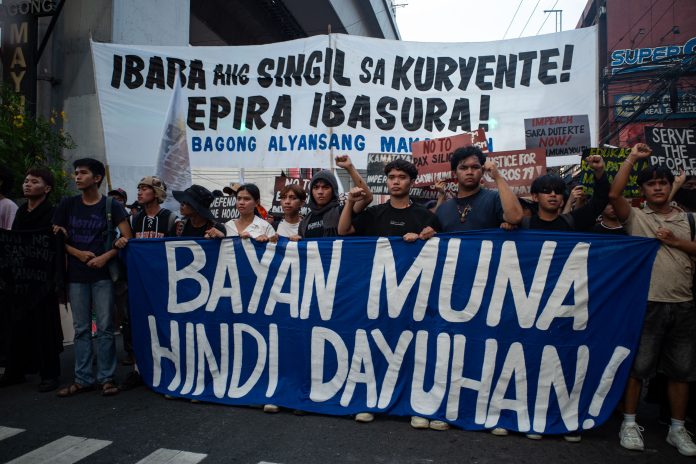
Marking the 54th anniversary of the declaration of Martial Law, the groups drew parallels between development projects pursued under former President Ferdinand Marcos Sr. and those being advanced under President Ferdinand Marcos Jr., including mining, dams, renewable energy projects and the U.S.-led Pax Silica Initiative.
Under the elder Marcos, Indigenous communities faced projects such as the Chico River Dam and Laiban Dam, along with large-scale logging concessions and other developments that threatened ancestral lands, according to the statement.
The projects were imposed in the name of development, while resistance from Indigenous communities was met with militarization, violence, and suppression, the groups said.
“Fifty-four years later, under Marcos Jr., nothing has changed. The names and forms of the projects may have changed, but the interests behind them remain the same,” the groups said.
The groups pointed to Pax Silica and the expansion of mining and energy projects as among the present threats confronting Indigenous communities.
In Central Luzon, renewable energy projects and the push for Pax Silica threaten Ayta ancestral lands and livelihoods, while Indigenous communities in the Cordillera face mining and dam projects that the groups said involve manipulation of Free, Prior and Informed Consent processes.
The groups cited Mangyan communities affected by ecotourism and real estate projects in Southern Tagalog and Tumandok communities opposing dams in Panay.
The groups also raised concerns over the government’s critical-minerals push following the signing of Executive Order No. 122.
Mining interests are targeting copper and other minerals in Nueva Vizcaya and the Cordillera, while nickel mining is expanding in Zambales and Mindanao, the statement said.
“These minerals are increasingly treated as strategic resources for global supply chains, yet the lands where they are found are often the very ancestral territories of Indigenous Peoples,” the groups said.
They also challenged the branding of energy projects as environmentally sustainable and socially just.
“Energy projects are being branded as ‘clean’ and ‘just,’ but the reality on the ground is that these projects enter without consent, without transparency, and bring about environmental destruction and human rights violations,” the statement read.
The groups accused authorities of responding to Indigenous resistance through terrorist designations, arrests and criminal charges. They also alleged killings, militarization and attacks on communities.
The statement linked present-day struggles to Indigenous resistance during Martial Law, recalling Macli-ing Dulag and the communities that opposed the Chico River Dam.
“We remember that the victories of Indigenous resistance were never handed down by the state. They were won through collective struggle, which we continue until now,” the groups said.
They vowed to continue opposing projects they believe threaten ancestral territories, livelihoods and their right to determine their own future.
“The Indigenous Peoples will not surrender our ancestral lands for so-called development. We will not allow our territories to become sacrifice zones for foreign interests and corporate profit. We will continue to defend our lands, our livelihoods, our cultures, and our right to determine our own future,” they said.