
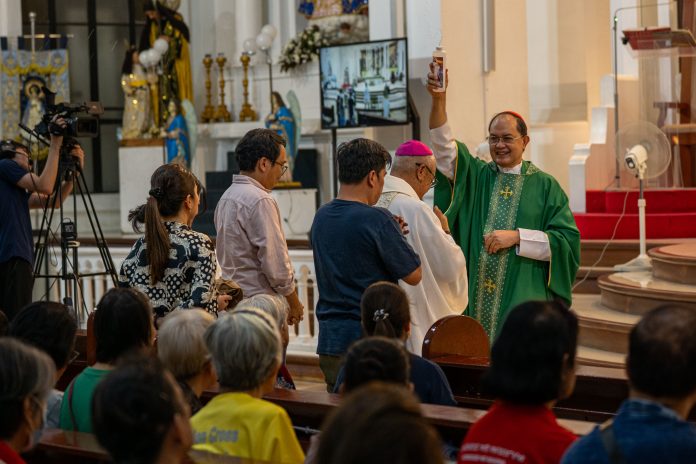
A senior Church official in the Philippines has urged Catholics to confess sins against the environment, saying ecological destruction and social injustice are often overlooked in traditional understandings of personal wrongdoing.
Cardinal Pablo Virgilio David of Kalookan made the appeal during his Nov. 5 homily at a send-off Mass for Philippine environmental defenders attending the COP31 climate summit in Ankara, Türkiye.
“Why don’t we try including our sins against nature among the sins we confess?” David asked. “I have never heard anyone confess, ‘Bless me, Father, for I have sinned. I threw garbage into the river,’” he said.
“Why can we confess lying but fail to recognize the abuse of nature as something to confess?” he added.
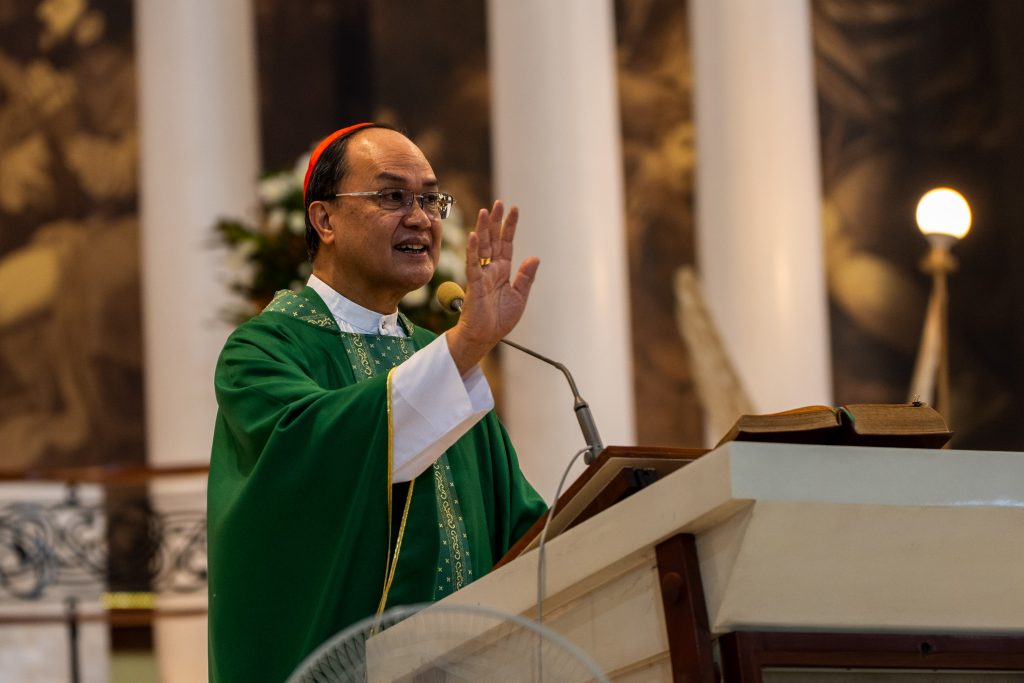
The prelate said Catholics often associate sin with personal wrongdoing, particularly matters involving sexual morality, while overlooking corruption, support for the killing of drug suspects and environmental destruction.
He cited the poisoning of air, water and soil, deforestation, destructive mining and logging as examples of wrongdoing that should be recognized as social sins.
The cardinal said environmental abuse had been identified as a serious social sin during the pontificate of Pope Benedict XVI. He also recalled Pope Francis’ call for ecological conversion in his encyclical Laudato Si’.
David said ecological conversion requires more than planting trees, segregating waste, or reducing plastic consumption. It demands changes in lifestyles, attitudes, and the understanding of development.
He questioned economic policies and projects that prioritize financial gains without accounting for damage to natural resources.
“Now, Pax Silica is being discussed, but there is no discussion about where the energy and water it will consume will come from,” he said. “But what if what we call economic gains leads to ecological loss?” he asked.
David said development is often measured by the number of businesses, buildings and roads constructed, as well as the money generated, with little attention to environmental consequences.
He also criticized police actions against communities opposing mining operations in Nueva Vizcaya, where residents have protested activities they fear will damage mountains and water resources.
The cardinal cited reclamation in Manila Bay and the destruction of forests and watersheds, including those in the Sierra Madre, as examples of environmental damage.
“Not gold, not silicon, but water. Without water, there is no life,” he said.
David warned that the country could face a severe water crisis in the coming months as the effects of El Niño intensify.
“We think we are progressing. We think we are earning. But if the price is the loss of clean water, the destruction of livelihoods and danger to the lives of future generations, what is the benefit?” he asked.
David said Catholics must recognize that caring for the environment is part of their responsibility as people of faith.
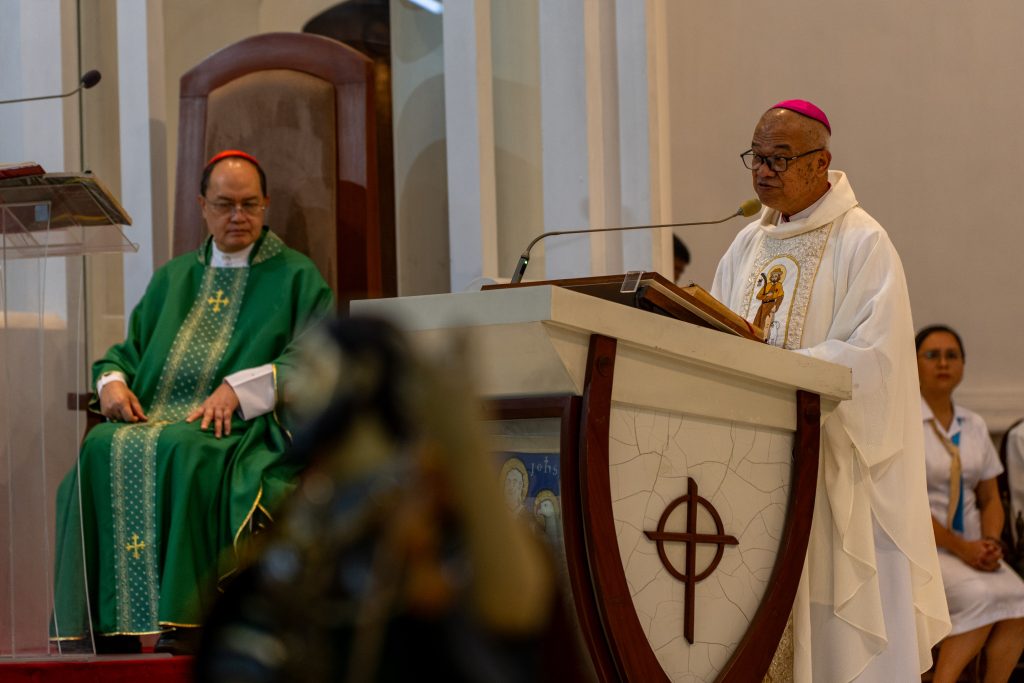
Before the Mass ended, David invited Bishop Gerardo Alminaza of San Carlos, president of Caritas Philippines, to address the congregation ahead of the climate summit.
“Tonight, we gather not simply to send a delegation to a conference. We gather to send witnesses—and we gather as witnesses ourselves,” Alminaza said.
He said the delegation would carry the concerns of communities affected by climate change, energy insecurity, hunger, and environmental destruction.
“Our worth will not be measured by our titles, our speeches, or the number of meetings we attend,” he said, stressing the importance of bringing the voices of affected communities into climate negotiations.
In a separate interview with LiCAS News, Alminaza identified drought, fossil fuel dependence, food insecurity, and ecosystem destruction as major concerns the Philippine delegation would raise at COP31.
He cited warnings from the Department of Agriculture that a strong El Niño could reduce rice production by as much as 700,000 metric tons, threatening farmers and communities already struggling with water shortages.
The bishop called for early warning systems, adaptation support and climate financing that reach vulnerable communities, particularly farmers and coastal populations.
He also warned that the Philippines’ dependence on imported fossil fuels exposes households to rising energy, transport and food costs.
“We must say clearly at COP31: an energy system that leaves us exposed to volatile imported fossil fuels is not secure, and it is not just,” Alminaza said.
He called for a transition to clean, affordable energy that protects workers and consumers and allows communities to participate in energy decisions.
Alminaza also cited a Social Weather Stations survey showing that 22.6 percent of Filipino families experienced involuntary hunger in September, underscoring the need to address food insecurity in climate negotiations.
He said the destruction of forests, mangroves, reefs and watersheds threatens the livelihoods and safety of Indigenous peoples, farmers, fisherfolk and coastal communities.
The bishop urged governments to protect these ecosystems and ensure that affected communities have a voice in decisions involving their lands and resources.
Alminaza said the delegation’s responsibility would continue beyond COP31, with churches and communities expected to pursue climate action at home.
“We do not go as saviors. We go as servants and witnesses,” he said. “The cry of the earth and the cry of the poor are one cry,” Alminaza added.