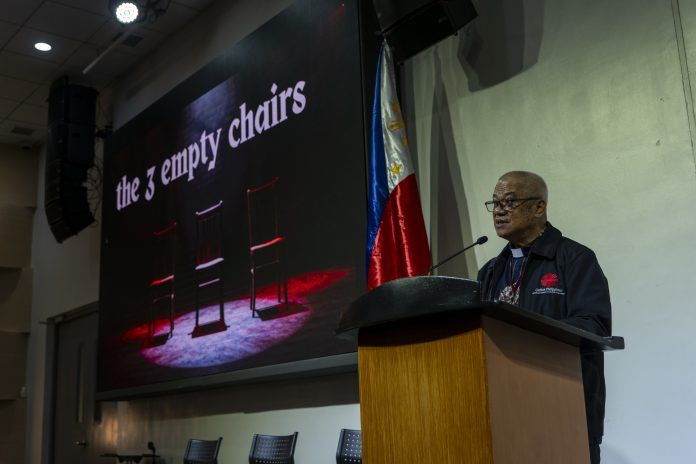
Three wooden chairs stood empty on the left side of the room. They were not reserved for late arrivals.
Bishop Gerardo Alminaza had asked that they remain vacant to represent voices often missing from Philippine policymaking: the poor, the environment, and future generations.
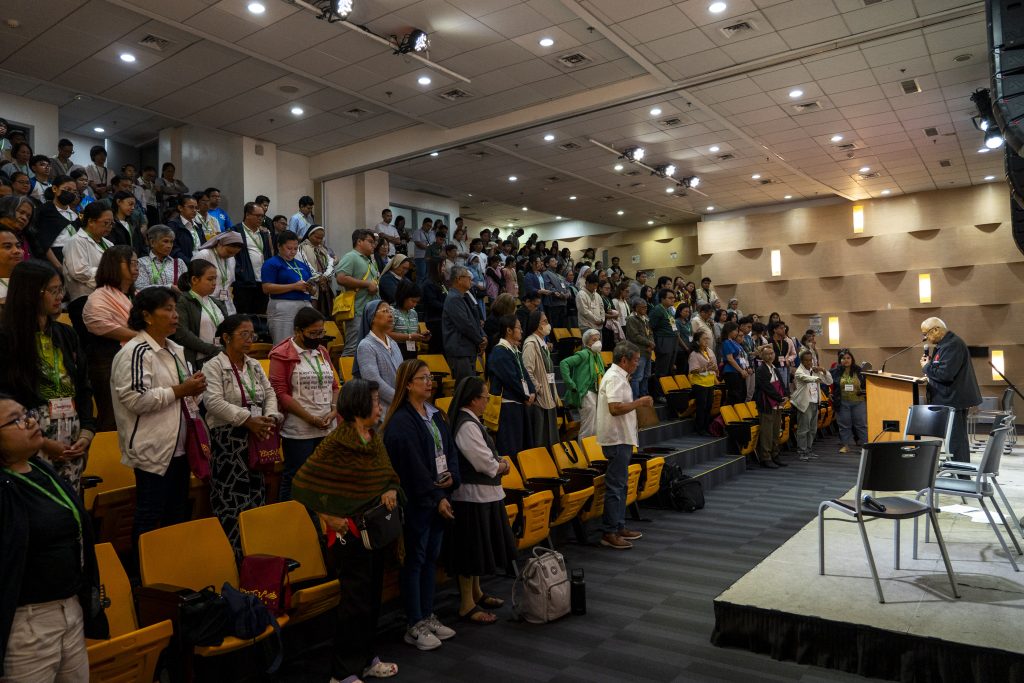
The chairs formed part of a session on integral ecology at the 12th Philippine Conference on New Evangelization on July 25 at the Royal and Pontifical University of Santo Tomas in Manila.
Across the room, four speakers examined how environmental destruction, economic hardship, and political governance affect communities.
Alminaza, president of Caritas Philippines and bishop of the Diocese of San Carlos, opened the discussion by referring to the Waray word sangkay, meaning a friend or companion who walks beside another.
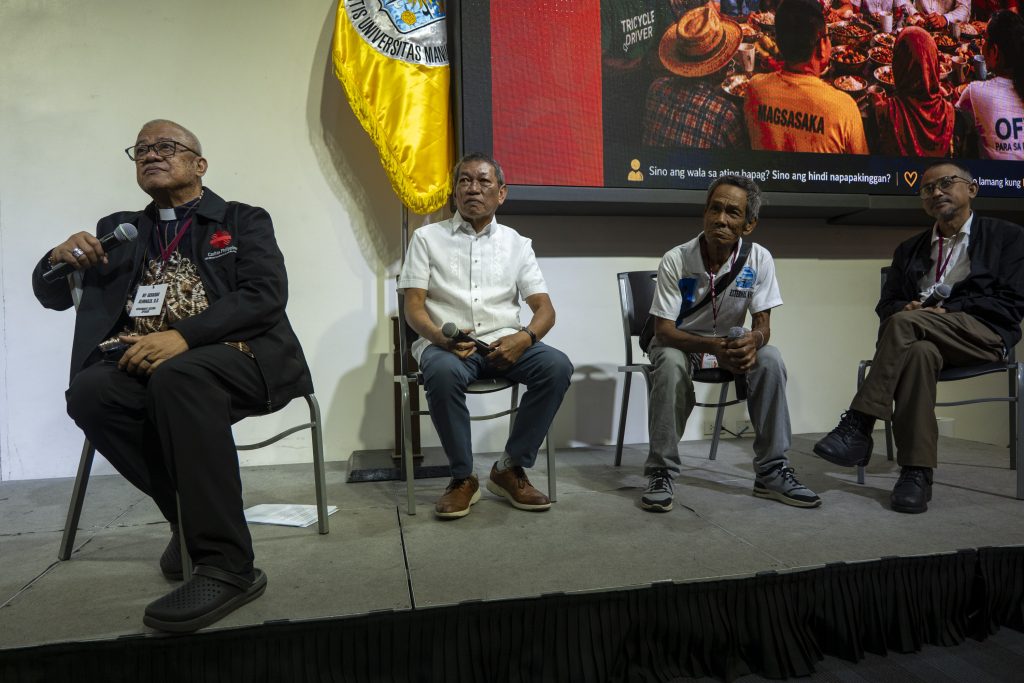
“Jesus tells his disciples, ‘I have called you friends.’ Now this is the starting point of our coming together,” Alminaza said.
He warned that genuine friendship becomes difficult when society accepts what he called “tolerated evils,” including transactional relationships in which people and natural resources are valued only for their immediate benefit.
“When we treat environmental destruction, poverty, governance, and human rights as separate concerns, even though they are deeply interconnected in the lives of our communities, the tolerated evils we have accepted weaken society,” Alminaza said.
Mining on Sibuyan Island
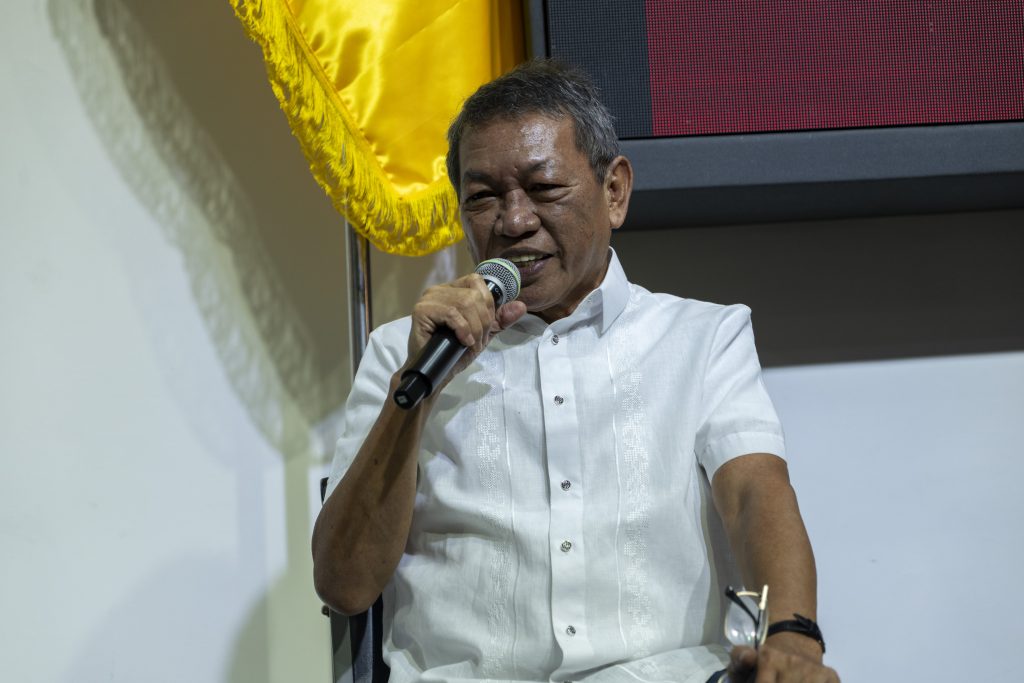
Engineer Alfredo Pascual, known as Uncle Toto, discussed the environmental threats facing Sibuyan Island in Romblon province.
He described the island’s natural resources, including Mount Guiting-Guiting and its inland waters, before addressing the dispute over open-pit nickel mining.
Pascual said many residents felt betrayed after local officials endorsed mining operations despite their responsibility to protect the community.
Drawing from his previous work in mining management, he challenged corporate claims of “responsible mining.”
“When we say responsible mining, there are mitigation measures. You can install siltation ponds and dams so that the runoff and erosion from the mine will not go directly to the sea,” Pascual said.
In practice, however, Pascual said such measures were often installed merely to satisfy regulatory requirements.
“We only did it for cosmetic purposes, for compliance, just so we could say it was done. If regulators catch a violation, you make temporary fixes to rectify it, and then it goes right back to cosmetic compliance.”
He said local tax revenues and temporary employment could not compensate for the permanent environmental damage left after mining operations ended.
Economic pressure in the Verde Island Passage
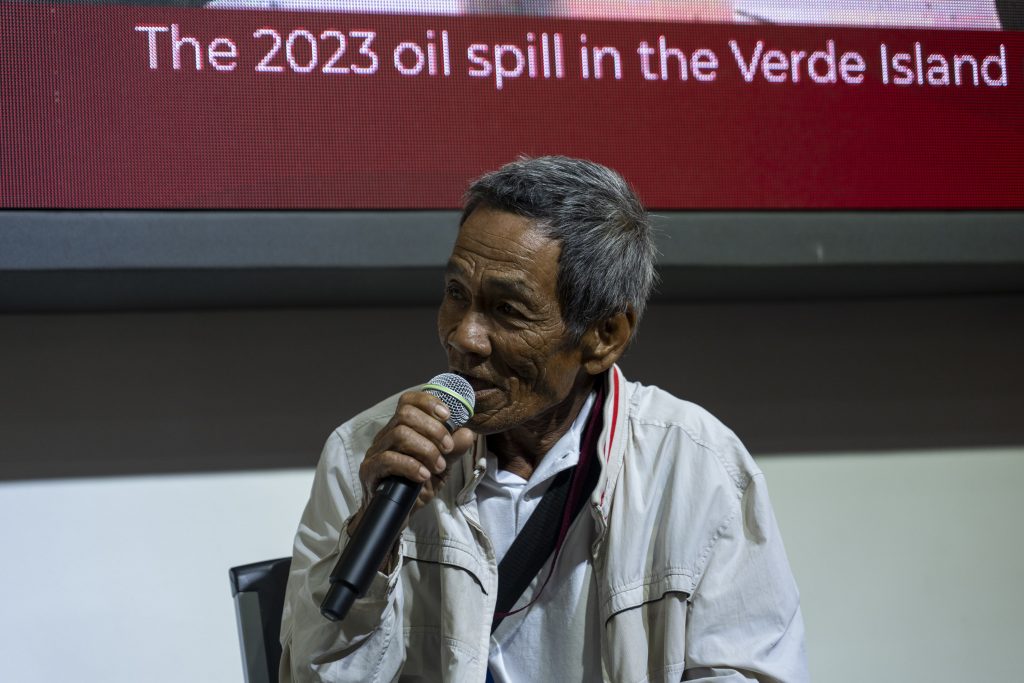
Maximo “Tatay Simo” Bayubay, a fisherman from the Verde Island Passage in Batangas, south of Manila, described the hardships confronting small coastal communities.
He spoke about oil spills, rising living costs, and inconsistent assistance from government agencies and other institutions.
“There are those who help. It’s not that there is no one who helps, but they are inconsistent or insufficient,” Bayubay said.
“That’s why the poor people lose hope in this kind of assistance from the government officials,” he added.
Bayubay said small-scale fishers had few alternative sources of income when environmental disasters forced them to stop fishing.
“You don’t have enough food for your family. You don’t have enough education. There is no land that you can cultivate when the tide comes in and goes out. It’s not our fault, fishermen,” he said.
Political dynasties and economic control
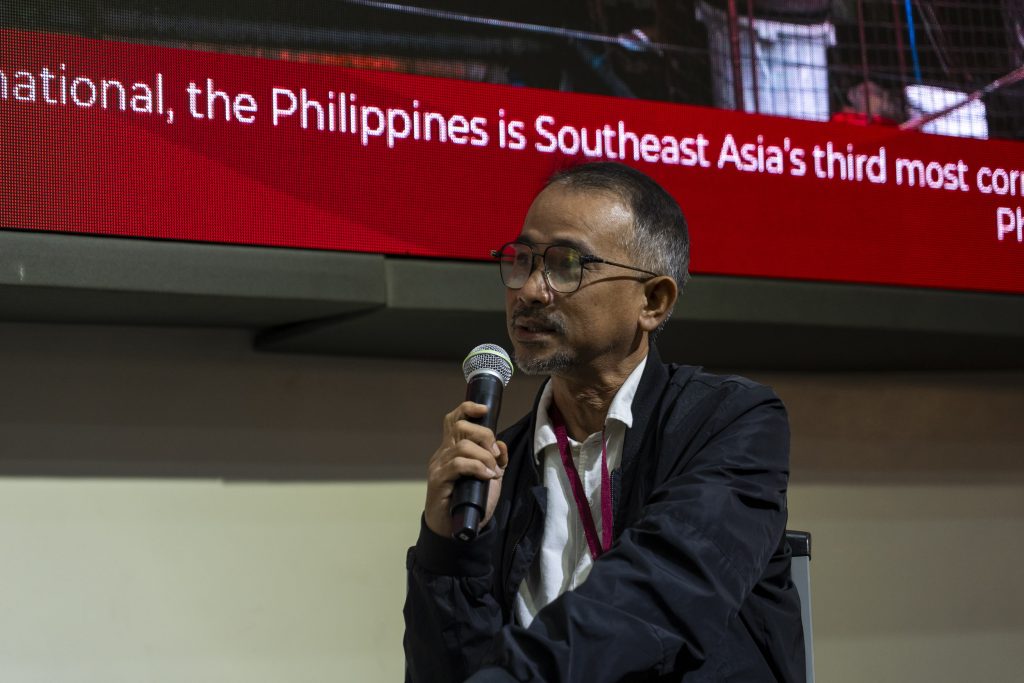
Human rights lawyer Luke Espiritu described political dynasties as economic entities that preserve their power through ventures that do not generate genuine local development.
“Political dynasties are economic units. They are both the embodiment of our political and economic elite,” Espiritu said.
The foundation of a dynasty, he said, lies in “what they have built in their localities, is things that they have built in an economy like the Philippines that is heavily based on non-production.”
Espiritu said political elites concentrate on extractive industries, public works contracts, real estate development, and privatized services.
To protect their commercial interests, he said, dynasties rely on patronage networks, local political control, and campaign machinery to win votes from people focused on surviving from day to day.
Debate over voting rights
The discussion prompted an exchange over class, privilege, and voting rights during the open forum.
A participant proposed limiting the right to vote to taxpayers, members of the middle class, and higher-income earners. The participant blamed poor voters for repeatedly electing corrupt officials and asked whether professionals and higher taxpayers should have the exclusive right to choose the country’s leaders.
Other participants rejected the proposal as elitist.
Espiritu disputed the claim that voting choices reflected ignorance among lower-income voters. He cited survey data indicating that substantial numbers of middle- and upper-income voters also supported controversial political figures.
“It is powerful people who buttress the chances of these politicians,” Espiritu said, emphasizing that consent in the Philippines is manufactured from above through massive campaign budgets, media networks, and local political machinery.
He said the daily struggle for survival left marginalized people with little time or space to examine the political and economic forces affecting their lives.
“Preoccupied with survival, they cannot even contemplate their own oppression,” Espiritu said, adding that marginalized communities often vote under threat, intimidation, or sheer economic necessity, where survival leaves little room to challenge local power structures.
Alminaza agreed that denying poor people the right to vote would violate basic human rights and Church teaching.
He said a synodal society should expand participation rather than exclude marginalized voices.
Unheard voices
Before ending the session, Alminaza returned to the three empty chairs.
He asked participants to remember the poor whose views are excluded from major decisions, the environment damaged by continued exploitation, and future generations who will inherit the consequences of present actions.
“Prayer without action is dead,” Alminaza said. He said responding to these concerns required structural change as well as individual conviction.