A Catholic bishop in central Philippines has called on government agencies to review tree-cutting permits issued for mining projects on June 12.
Bishop Socrates Mesiona of Puerto Princesa warned that large-scale forest loss poses ecological, social, and moral risks to one of the country’s most environmentally significant provinces.
In a pastoral letter, the prelate urged authorities to reassess permits authorizing the cutting of trees in areas affected by mining operations and to make all related documents available to the public.
The appeal comes after the bishop cited public documents and consolidated records indicating that at least 218,854 trees are covered by Special Tree Cutting and Earth-Balling Permits (STCEP) issued for mining projects in southern Palawan, including sites in Aborlan, Brooke’s Point, Bataraza and areas connected to Mt. Bulanjao.
“Masidhi ang aming pag-aalala, at ang tanong namin: Ano ang ating ginawa sa biyayang ito?” (“We are deeply concerned, and we ask: What have we done with this gift?”) Mesiona said.
The bishop said the permits raise broader questions about environmental governance and the stewardship of natural resources.
“Nakapagtataka na ang mga ahensiyang inaasahang mangangalaga sa kalikasan ay inaakalang mahigpit sa pagpapatupad ng batas sa karaniwang mamamayan, ngunit tila maluwag at mapagbigay sa malalaking kompanya ng pagmimina at mga makapangyarihang tao,” (“It is troubling that agencies expected to protect the environment are perceived as strict in enforcing the law against ordinary citizens, yet seem lenient and accommodating toward large mining companies and powerful individuals.”) he said.
Mesiona called on authorities to review existing tree-cutting permits and hold meaningful consultations with affected communities. He also urged government agencies to disclose complete information on STCEP approvals, including permit numbers, locations and lists of affected trees.
The bishop further called for a determination of whether the permits comply with Palawan’s mining moratorium and for legal reforms to strengthen the protection of forests and watersheds.
While acknowledging that the final number of trees to be cut remains subject to review, Mesiona said the issue ultimately raises a moral question about how natural resources are used and who bears the consequences.
“Anuman ang eksaktong bilang ng mga punong puputulin sa huling pagsusuri, nananatili ang tanong na moral: Ang paggamit ba natin ng likas na yaman ay may paggalang sa Maylikha at sa kapwa—kasama ang mga susunod pa sa atin?” (“Whatever the exact number of trees that may ultimately be cut, the moral question remains: Does our use of natural resources show respect for the Creator and for our neighbors—including those who will come after us?”) he said.
Drawing on Catholic teaching on environmental stewardship, the bishop said ecosystems provide essential services that sustain both human communities and the natural world, including carbon absorption, water purification, disease regulation, soil formation and waste processing.
“Kaya’t mahalagang mapanatili ang balanse ng mga ugnayang ito sa ating kapaligiran—isang usaping moral at panlipunan: kapag ang kalikasan ay naghihirap, naghihirap din ang tao—lalo na ang mahihirap at mga napag-iiwanan,” (“It is therefore important to maintain the balance of these relationships within our environment—a moral and social issue: when nature suffers, people suffer as well, especially the poor and those left behind.”) he said.
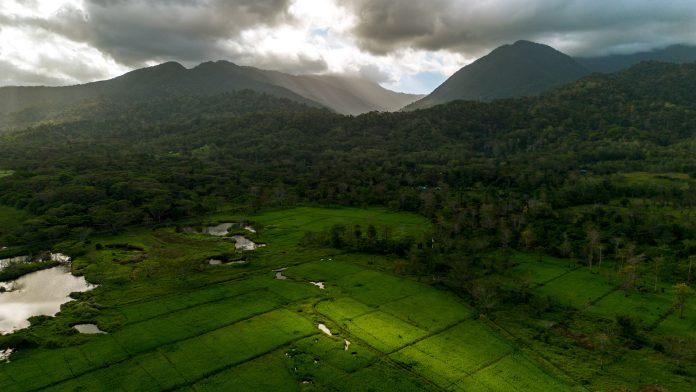
Mesiona described Palawan as a gift entrusted to its people and a responsibility that extends beyond the present generation.
“Ang Palawan ay hindi lamang sagisag ng kagandahan; ito ay tanda ng kabutihan ng Diyos at isang pananagutang ipinagkatiwala sa ating mga kamay,” (“Palawan is not merely a symbol of beauty; it is a sign of God’s goodness and a responsibility entrusted to our hands.”) he said.
He urged authorities and the public to act with “paggalang, katarungan, at pag-asa” (“respect, justice and hope”) so that future generations may inherit “isang buhay na tahanan, hindi isang sirang kalikasan” (“a living home, not a broken environment”).