A mainline Protestant church in the Philippines said the country has yet to achieve genuine independence, arguing that continued U.S. military and economic influence undermines Philippine sovereignty more than a century after independence was declared.
In a statement marking the 128th anniversary of Philippine independence, the National Council of Churches in the Philippines honored Filipinos who fought against colonial rule while warning that the struggle for self-determination remains unfinished.
“Yet, even as we commemorate this historic moment, we are reminded that the work for liberation remains, as the aspiration for true independence is unfulfilled,” the NCCP said.
The council argued that foreign interests continue to exert significant influence over the country’s political, economic, and security policies.
“There can be no genuine independence while the Philippines remains deeply subordinated to foreign economic and military interests,” it said.
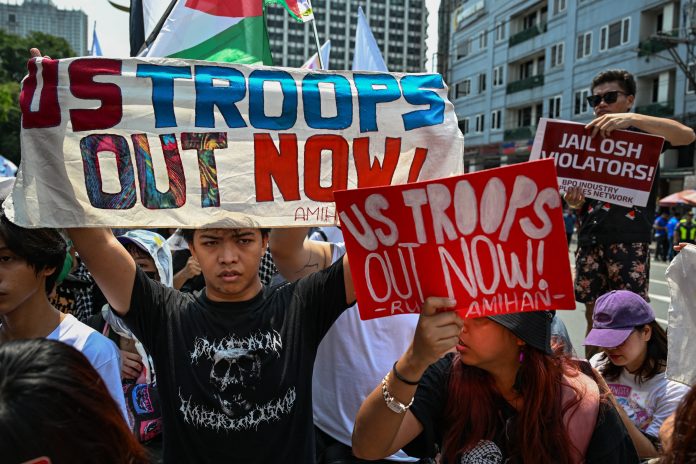
Among the arrangements cited by the NCCP was the Enhanced Defense Cooperation Agreement (EDCA), a defense pact that allows U.S. forces access to designated military facilities in the Philippines.
The church group said the agreement “allows US troops to access camps and facilities of the Armed Forces of the Philippines, and is given free reign and full control of lands, ports, and seas that position the Philippines as a forward base for external military activity in the Asia-Pacific.”
According to the statement, such arrangements increase the risk of the Philippines being drawn into broader geopolitical conflicts while also carrying environmental and social consequences for communities near military sites.
The NCCP also expressed concern over “Pax Silica,” a proposed 4,000-acre advanced manufacturing zone in Luzon that it said would deepen the country’s integration into supply chains linked to U.S. strategic interests.
The NCCP’s statement comes amid growing debate over “Pax Silica,” a U.S.-backed initiative that seeks to position the Philippines as a hub for semiconductor production, critical mineral processing, and advanced technology manufacturing.
The program is linked to the proposed Luzon Economic Corridor and has been promoted as part of efforts to strengthen supply chains for emerging technologies and advanced industries.
Labor, church, and activist groups have raised concerns about the initiative’s implications for national sovereignty, labor rights, and regional security.
In May, the Ecumenical Institute for Labor Education and Research and Bagong Alyansang Makabayan warned that deeper integration into U.S.-aligned technology and manufacturing networks could increase foreign influence over the Philippine economy and tie the country more closely to strategic competition between the United States and China.
They also questioned whether the project would primarily benefit foreign corporations while exposing local communities to economic, environmental, and geopolitical risks.
The project, NCCP said, “will draw the Philippines more tightly into global supply chains linked to semiconductor production and advanced technologies related to defense, communications, and digital infrastructure of the US for its wars of aggression.”
The council said both military and economic arrangements raise questions about who benefits from them and who bears their costs.
“When sovereignty is compromised by external interests, whether through military positioning or resource extraction, the promise of true independence remains far and unfulfilled,” the statement said.
The NCCP called on churches and the wider public to remain vigilant in defending national sovereignty and promoting an independent foreign policy centered on peace.
“As followers of Christ committed to justice, peace, and the integrity of creation, the National Council of Churches in the Philippines calls the churches and all people of goodwill to remain vigilant and discerning,” it said.
The group also urged policymakers to ensure that economic development serves the common good rather than external interests alone.
“Ultimately, we affirm that no foreign power can bring about the fullness of life for our people,” the NCCP said. “Our hope rests in God, and our liberation is forged in the collective struggle of the Filipino people for justice, dignity, and peace.”