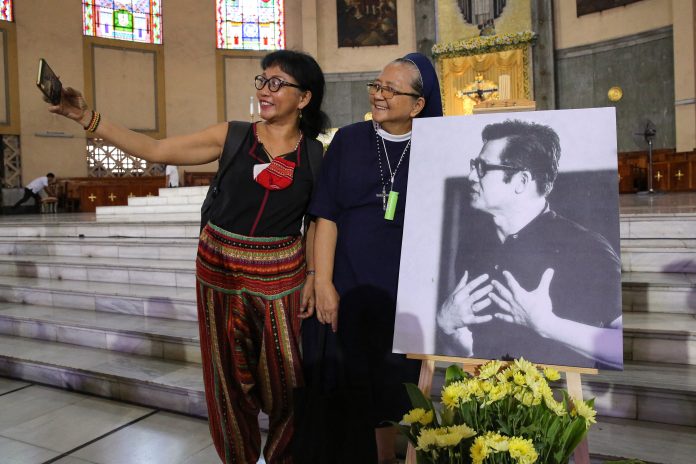
Philippine ecumenical bishops marked the 43rd anniversary of the assassination of opposition leader Benigno “Ninoy” Aquino Jr. with a call for renewed peace negotiations between the government and the National Democratic Front of the Philippines.
The Ecumenical Bishops’ Forum (EBF) issued the appeal on Aug. 21, saying the lessons of Aquino’s assassination in 1983 remained relevant as armed conflict between the government and the communist movement continued.
The bishops said Aquino’s killing exposed the consequences of political repression and the failure to address deep divisions through democratic means.
His death, they said, “awakened a people” and helped inspire a movement for truth, freedom and democratic change that contributed to the 1986 People Power Revolution.
The forum said renewed calls for government-NDFP negotiations had emerged alongside continuing armed encounters and killings, while the government maintained that the conflict should instead be addressed through security and other state measures.
“The suppression of voices does not necessarily remove the problems behind them,” the bishops said, adding that a genuine peace process must be “serious, inclusive, truthful, and directed toward the common good,” EBF said.
The bishops said a pastoral response did not require churches to side with either the government or the armed movement.
Instead, they said, churches should stand with those affected by the conflict, including displaced farmers, families mourning soldiers or combatants, civilians caught in violence, political prisoners and communities burdened by poverty and insecurity.
“Peace cannot mean merely the absence of gunfire,” the bishops said. It must also include justice, human dignity, reconciliation and efforts to address the conditions that allow violence to continue.
The forum said Aquino’s assassination should prompt the country to examine how it responds to political conflict.
“If repression and political violence deepened our nation’s crisis in the past, today’s continuing armed conflict likewise calls for courageous efforts toward peaceful and political solutions,” the bishops said.
They said churches could serve as a bridge by fostering dialogue, defending human rights and international humanitarian law, accompanying victims, seeking truth and accountability, and creating spaces where opposing sides could speak without resorting to violence.
The forum also cited a 2026 statement by the World Communion of Reformed Churches calling for the resumption of government-NDFP negotiations and efforts to address the roots of injustice.
The statement was signed by leaders of the Episcopal Church in the Philippines, United Church of Christ in the Philippines, United Methodist Church and Iglesia Filipina Independiente, along with Catholic Bishop Emeritus Deogracias S. Iniguez Jr.
“Renewing dialogue is not an endorsement of violence or of any particular political organization,” the bishops said.
“It is an affirmation that people, even amid deep disagreement, must continue seeking peaceful ways to end suffering and transform conflict,” they added.