
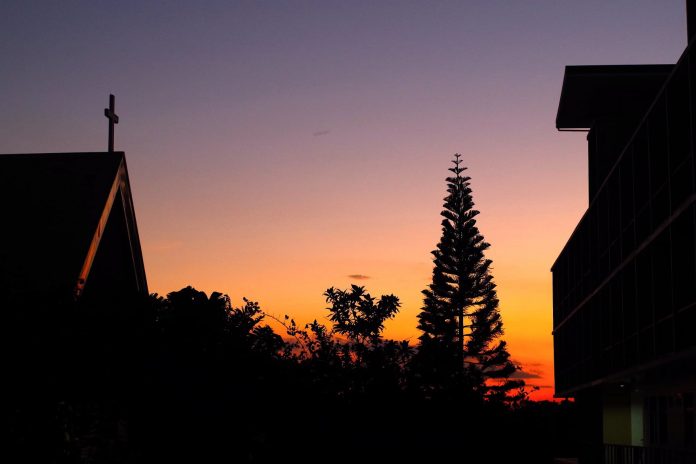
There is something strangely unsettling about returning to a place that once belonged so deeply to one’s life.
The clergy of the Diocese of Calapan recently held their annual retreat at the CBCP Caritas Development Center in Tagaytay. For many of my companions, it was simply a retreat venue, a place to pause from the demands of pastoral ministry and spend a few days in prayer and reflection. For me, however, coming back was an entirely different experience.
The place was familiar. Almost too familiar.
From 2010 to 2020, I served as Executive Secretary of NASSA/Caritas Philippines. This Center was practically an extension of our office and, in many ways, an extension of my own life. We held meetings, workshops, evaluations, strategic planning sessions, retreats, and countless other activities here. It was where organizational decisions were made, partnerships were nurtured, and dreams for the Church’s social action ministry were imagined and pursued.
Walking through its familiar corridors, I found myself remembering things that perhaps nobody else would notice.
I knew almost every nook and cranny of the place. I even knew about its biodiversity profile, I loved photographing flowers (and the occasional dramatic sunset). The chapel was particularly dear to me. It was there that I poured out my heart in prayer during difficult moments, seeking clarity and strength when the burdens of leadership became overwhelming. The Center was my personal oasis, a place where I could retreat into solitude, find some quiet, and recover my bearings. I had my favorite room, and even a personal collection of books in the little library.
I knew the workers personally, including their families. Today, I met Thea, the daughter of Aida, who was our Center Manager during my term. I remembered her as a little girl, running around the premises. Now she is a grown-up college student. How quickly time passes. Children grow up, people move on, and familiar faces gradually become part of an earlier chapter of one’s life.
Perhaps this is one of the quiet sorrows of living: we keep saying hello and goodbye, often without realizing how much time has passed between them.
I also found myself looking at the additional building constructed during my administration. It was originally envisioned as the Center for Resiliency, Empowerment and Integral Development (CREED), a dream that went beyond putting up another building. We wanted to establish a Social Action Academy, a repository of learning and technical expertise that would strengthen the competencies of diocesan social action workers in development, humanitarian response, climate change adaptation, and environmental sustainability. We imagined a place where knowledge, experience, and faith would converge to create more effective ways of confronting poverty and empowering vulnerable communities.
It was an ambitious dream, perhaps even a little audacious. But we believed it was necessary. The building was meant to embody something larger than itself: our conviction that serving the poor requires not only a generous heart but also competence, knowledge, and the continuing formation of those entrusted with this mission.
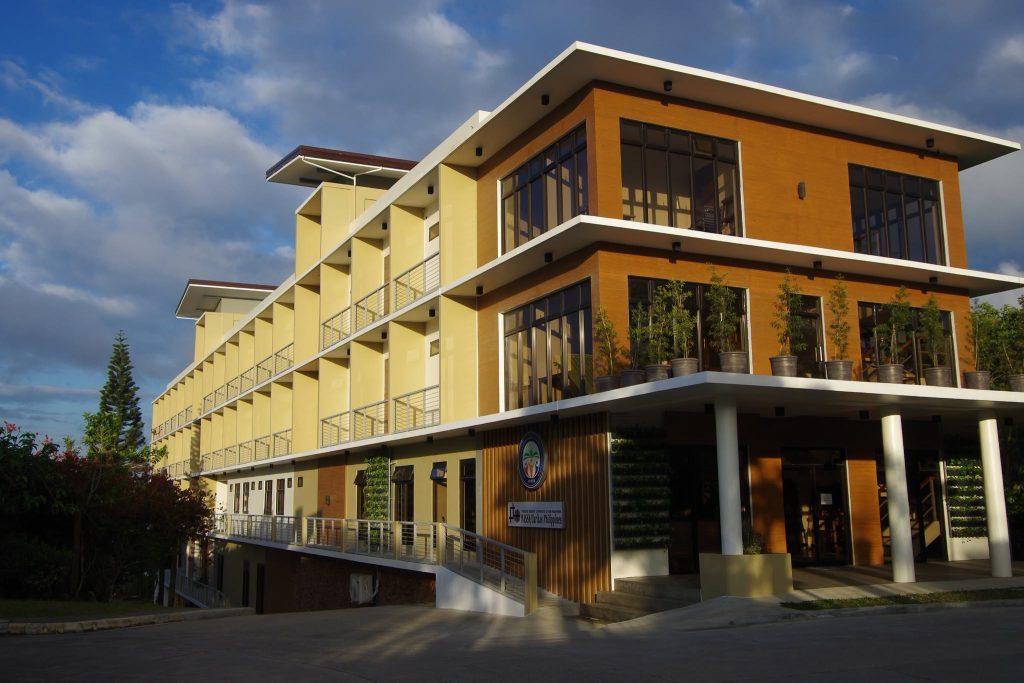
Photo by Fr. Edwin Gariguez
Today, it is called Caritas Academy. The name has changed, and the institution continues its journey, still trying to realize something of that original vision.
Looking at it, I felt an unexpected sadness. There are dreams one can continue to nurture, and there are dreams one eventually has to surrender. Perhaps the most difficult part of letting go is realizing that something you once gave so much of yourself to has moved beyond your hands. You can no longer determine its direction, explain its original intentions, or even claim a place in its unfolding story.
And so, strangely enough, I felt like a visiting stranger in a place I once called home.
Yet perhaps this is also a lesson in the peculiar journey of priesthood.
We sometimes become too attached to the things we build, the institutions we lead, the programs we initiate, and the people who become part of our lives. We invest our energy, imagination, and even our personal sacrifices in making things happen. Somewhere along the way, we may begin to think that these things are extensions of ourselves, that their future somehow depends on our continued presence.
But ministry does not work that way.
We are, after all, servants of a mission that is much larger than our own lifetime. We plant seeds whose flowering we may never witness. We build foundations upon which others will construct something different, perhaps even something better. We accompany people for a season, knowing that eventually they will continue their journey without us.
I remember a beautiful reflection attributed to Archbishop Oscar Romero: “The kingdom is not only beyond our efforts, it is beyond our vision.”
It reminds us that our work is never the whole story. We plant seeds, water what has already been planted, and lay foundations that will require further development. What we accomplish may remain incomplete, but it is an offering entrusted to God’s grace.
Perhaps that is what I needed to remember as I walked through those familiar corridors.
The years I spent here were not diminished simply because I no longer belonged to the place in the same way. The prayers offered in the chapel were not forgotten. The friendships formed, the struggles endured, the dreams pursued, and the work shared with so many people had already become part of a story that no change of leadership or institutional name could erase.
Soon, the retreat will end, and we will return to our respective assignments in the diocese. The Center will continue receiving visitors, hosting meetings, and welcoming people whose stories will become part of its unfolding history.
And I will leave once more.
Perhaps this is the quiet grace of coming back: not to reclaim what has already passed, but to recognize that some places remain part of us even when we no longer belong to them.
We come, we serve, we leave.
And somewhere between the coming and the leaving, we learn that the work was never entirely ours to begin with. It was God’s work, entrusted to us for a time.
Perhaps that is enough.
Fr. Edwin Gariguez is the executive director of the Social Action Center of the Diocese of Calapan. A Catholic priest and environmental activist, he serves as convenor of REnew Mindoro and Protect the Verde Island Passage, advancing community-led efforts for a just and sustainable energy transition.
He is a former executive director of Caritas Philippines (CBCP-NASSA) and a recipient of the 2012 Goldman Environment Prize for his leadership in protecting Mindoro’s environment and Indigenous communities.