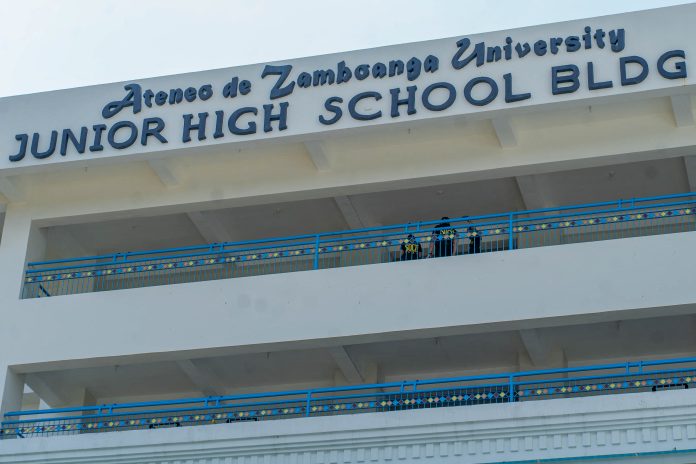
The Archdiocese of Zamboanga called for a thorough investigation and accountability over the deadly shooting at a Jesuit-run school in the southern Philippines, saying victims and their families deserved truth and justice.
The archdiocese expressed solidarity with the Jesuit community and the Ateneo de Zamboanga University (ADZU) family following the Aug. 18 shooting.
“We join the entire ADZU community in profound grief over the loss of young lives and in deep concern for those who have been wounded, traumatized, and deeply affected by this tragedy,” the archdiocese said.
It assured learners, teachers, school personnel and families of its prayers and support as the community moves toward healing and recovery.
“As we mourn, we also affirm our commitment to truth, justice, and accountability,” the archdiocese said.
“The Catholic faithful stand with the victims and their families in seeking a thorough investigation and appropriate accountability. We pray that the authorities may be guided by wisdom, fairness, courage, and a sincere commitment to justice,” it added.
The Department of Education had ordered schools across the Philippines to prepare for a nationwide drill on active attack incidents before the Ateneo de Zamboanga shooting.
In an Aug. 12 memorandum, six days before the attack in Zamboanga, the education department directed public and private elementary and secondary schools to conduct the Nationwide Simultaneous School Safety Drill for Active Attack Incidents on Aug. 25 at 9 a.m.
The department said the drill was part of its commitment to ensuring “safe, secure, and resilient learning environments” and was ordered “in response to the increasing occurrence of active shooting and other active attack incidents affecting schools and communities worldwide.”
Schools were directed to develop, review or update localized contingency plans for active attacks and share approved plans with local governments, the Philippine National Police and parent-teacher associations.
The department called for preparedness measures that include double-locking mechanisms or other appropriate classroom security measures, family reunification areas, safe rooms, evacuation routes and emergency communication procedures.
Schools were also instructed to coordinate with police, the Bureau of Fire Protection, local disaster risk reduction and management offices and other partners.
The department said the drills should prioritize the safety and psychological well-being of learners and teaching and non-teaching personnel.
“Simulation activities shall be age-appropriate, trauma-informed, and focused on preparedness, protective actions, coordinated response, and post-incident recovery,” the memorandum said.
The directive came amid a series of violent incidents involving schools in different parts of the country.
As of Aug. 21, nine school-related violence incidents have been reported since June 16, including seven stabbings and two shootings. Several of the incidents occurred outside school premises.
The first shooting in the tally occurred June 22 at San Jose National High School in Tacloban City. The Aug. 18 attack at Ateneo de Zamboanga University Junior High School was the second shooting listed in less than two months.
The Zamboanga archdiocese said Catholic schools must remain places where young people can learn, grow and be formed in a culture of peace.
“We continue to believe in the power of faith formation and catechesis in nurturing the hearts and minds of our young people and teachers, forming communities rooted in compassion, respect, dialogue, responsibility, and peace,” the archdiocese said.
“Our schools must remain safe spaces—places where young people can learn, grow, discover their dignity, and become instruments of peace,” it added.
The archdiocese also appealed for restraint as authorities investigate the shooting.
“In this moment of sorrow, we choose prayer over fear, compassion over condemnation, truth over speculation, and justice over vengeance,” it said.