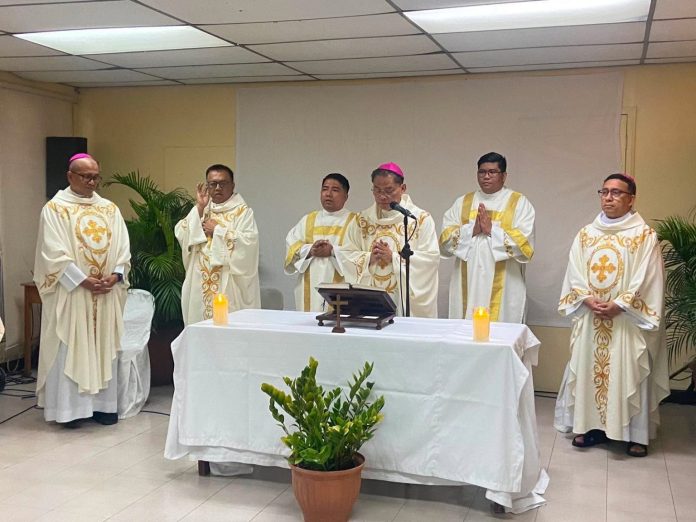
Church leaders from 33 Philippine dioceses are undergoing formation aimed at transforming synodality from a Church concept into concrete pastoral action in parishes, communities, and ministries.
The five-day program, “Sulong-Padayon: Igniting Filipino Synodal Leadership,” is being held at the Pope Pius XII Catholic Center in Manila and runs until Friday, Aug. 21. Organized by the CBCP Committee on Synodal Transformation, it gathers clergy and lay synodal implementors from across the country.
The formation emphasizes listening, discernment, accompaniment, accountability, collaboration, and inclusive participation as essential elements of synodal leadership. It also seeks to develop a distinctly Filipino expression of synodality rooted in local culture, experiences, and community life.
Synodality as a way of being Church
The CBCP Committee on Synodal Transformation stressed that synodality should not be treated as a program or method, but as “a way of being Church together.”
Participants are challenged to move from listening to discernment, and from discernment to collaborative pastoral action within their communities. Through reflection and group activities, they are encouraged to recognize God’s presence in everyday community experiences and to accompany one another in faith.
At the heart of the formation is the conviction that synodality begins with listening and discerning together what the Holy Spirit is asking of the Church. The Filipino phrase “Sulong-Padayon,” meaning to move forward and continue together, captures this shared vision of walking as one Church.
Biblical reflection and inclusive participation
A major component of the program is biblical reflection and bibliodrama centered on Jesus’ encounter with the Syrophoenician woman in the Gospel. The committee said the passage offers a framework for exploring “listening, crossing boundaries, discernment and conversion” in Church leadership.
Participants are encouraged to pay attention to voices that are often unheard and to become more sensitive to how the Holy Spirit works through people and communities. The formation also highlights accountable and collaborative leadership through exercises on trust, communication, shared responsibility, and the recognition of diverse gifts.
“Synodal leadership is not exercised alone, but creates space for others to participate and contribute,” the committee said.
Strengthening grassroots communities and collaboration
The program places strong emphasis on strengthening Basic Ecclesial Communities, grassroots groups, and marginalized sectors to make Church life more inclusive and participatory. Through Scripture, personal sharing, and group reflection, participants examined how the Church can better accompany those “at the peripheries of ecclesial life.”
It also promotes cooperation among CBCP commissions, with representatives discussing shared programs, challenges, and opportunities for deeper collaboration. A dialogue with CBCP president Archbishop Gilbert Garcera on Aug. 20 allowed diocesan leaders to share their experiences and identify key priorities for the bishops’ conference.
The formation further encourages partnerships with local governments, civil society, and other sectors as part of the Church’s missionary responsibility. The committee said such collaboration is not merely administrative but essential to the Church’s mission of working for the common good.
Walking together in mission
The CBCP Committee on Synodal Transformation said the goal of the formation is to translate synodal listening into concrete pastoral action and to build communities where “everyone has a place, a voice and a contribution.”
Sulong-Padayon is described not only as a training program but as “an invitation to walk together, listen deeply, discern courageously and serve joyfully” in the shared mission of the Church in the Philippines.