International climate financing may be steering Asia-Pacific countries toward waste incineration and other disputed technologies instead of efforts to prevent waste generation, according to a report released Nov. 12 during the COP31 climate summit in Türkiye.
The Global Alliance for Incinerator Alternatives (GAIA) found that all 16 national climate plans it examined included approaches the environmental network considers “false solutions,” with countries dependent on external financial support proposing more such measures than those with unconditional commitments.
The report, Beyond NDCs: A Review of International Commitments for Climate and Waste in Asia Pacific, examined the latest nationally determined contributions (NDCs), which outline countries’ climate commitments under the Paris Agreement.
Eight countries whose climate commitments depend on external financing proposed 27 measures GAIA classified as false solutions, averaging 3.38 per country. Eight countries with unconditional commitments proposed 22, averaging 2.75.
GAIA said the findings raised concerns that international climate finance and technology transfers could favor expensive waste management infrastructure over waste prevention, reuse and community-based recycling.
“Governments and international finance institutions (IFIs) cannot claim climate action while financing infrastructure that depends on waste to keep operating,” said Mayang Azurin, GAIA Asia Pacific’s deputy director for programs.
“Incineration locks communities and economies into decades of waste generation, destroys valuable materials that could be reused and recycled, and diverts investment from genuine Zero Waste solutions,” she said.
All 16 climate plans referenced carbon markets, credits, offsets, emissions trading systems or similar mechanisms that GAIA classifies as false solutions.
Carbon capture, utilization and storage appeared in 12 plans, making it the most widely cited technological approach identified in the study.
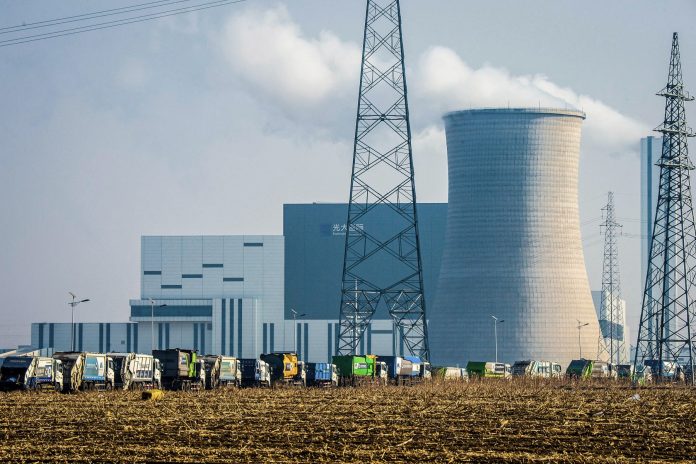
Six countries, Bangladesh, China, Indonesia, Nepal, Singapore and the United Arab Emirates, included waste-to-energy incineration in their commitments. China’s reference appeared in the Hong Kong annex of its national climate plan.
The report also found that six countries included waste prevention or other zero-waste measures alongside technologies GAIA opposes.
Bangladesh, for example, included waste-to-energy incineration, refuse-derived fuel, landfill gas capture and carbon capture alongside recycling, composting and resource recovery.
Only three countries, Bangladesh, Indonesia and Palau, explicitly mentioned reuse, while nine included recycling.
GAIA said the emphasis on technologies that process waste after it is generated reflected the limited attention given to reducing resource extraction, production and consumption.
The report also examined the role of international financial institutions in financing waste infrastructure across the region.
It cited a 3,000-ton-per-day waste-to-energy project in North Dhaka, Bangladesh, financed by the Asian Infrastructure Investment Bank, and waste-to-energy projects in Thailand backed by the Asian Development Bank and the Asian Infrastructure Investment Bank.
In the Philippines, the report identified a proposed 100-megawatt waste-to-energy incinerator in Manila’s Smokey Mountain area, where communities have challenged the project.
GAIA warned that large waste infrastructure projects could expose communities to pollution, undermine existing recycling systems and create financial obligations lasting decades.
The report also raised concerns about the Association of Southeast Asian Nations’ sustainable finance framework, which recognizes energy recovery as a potentially sustainable or transitional activity.
GAIA said the framework could allow waste incineration, refuse-derived fuel and landfill gas capture projects to qualify for financing intended to support climate action.
It also examined the Asia Zero Emission Community, a regional initiative involving Japanese financial institutions that promotes investments in large infrastructure projects.
The report cited Indonesia’s Legok Nangka waste-to-energy project as an example of investments that prioritize waste treatment infrastructure over measures to reduce waste generation.
GAIA said such financing arrangements could leave less support available for locally managed waste systems and threaten the livelihoods of informal waste workers.
The study found that national climate plans frequently referred to green jobs, social inclusion and a just transition but provided limited details on income protection, occupational safety and the participation of affected communities.
“When national climate plans only give superficial nods to zero waste while doubling down on incinerators and offsets, they fail to provide support to what communities actually need,” said Sumana Narayanan, GAIA Asia Pacific’s deputy director for programs.
GAIA called on governments and international financial institutions to prioritize waste prevention, reuse, repair, recycling and composting in climate financing decisions.
It also urged authorities to strengthen protections for informal waste workers and communities affected by waste infrastructure, including their participation in decisions on proposed projects.
The study examined commitments contained in national climate plans but did not comprehensively assess existing government policies, financed projects or implementation.
Its findings indicate a relationship between financing conditions and the technologies proposed in climate plans, but do not establish that international funding directly caused governments to adopt them.
GAIA called for comprehensive assessments of the environmental, financial and social costs of waste infrastructure before projects receive support, including their long-term effects on workers, affected communities and efforts to reduce waste generation.