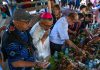
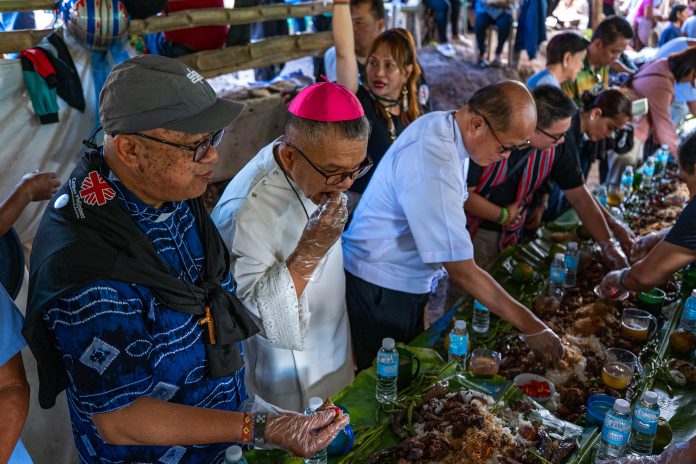
Three Catholic bishops in the Philippines have pledged legal, humanitarian, and pastoral support for Indigenous communities and farmers resisting mining exploration in Nueva Vizcaya, where residents face arrests and court cases over their efforts to protect ancestral lands and livelihoods.
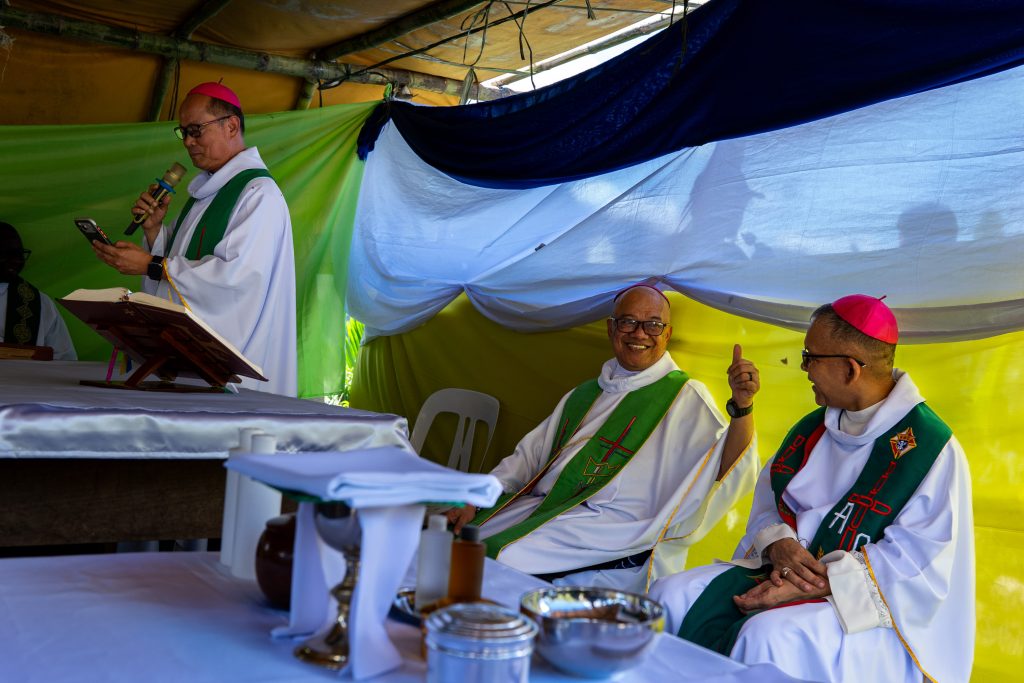
During a solidarity visit to an Indigenous community’s mining barricade in Kasibu on Nov. 14, Bishop Jose Elmer Mangalinao of Bayombong defended the residents’ resistance, while Bishop Gerardo Alminaza of San Carlos and Bishop Moises Cuevas of Calapan committed to mobilizing wider Church support.
In his homily during the solidarity Mass, Mangalinao said Indigenous communities were defending not only their ancestral lands but also the forests, rivers and agricultural areas that sustain their families and future generations.
Drawing on the Gospel account of the persistent widow who repeatedly sought justice from an unjust judge, the bishop compared her perseverance with the struggle of Indigenous Peoples and farmers whose appeals to government authorities have often gone unheard.
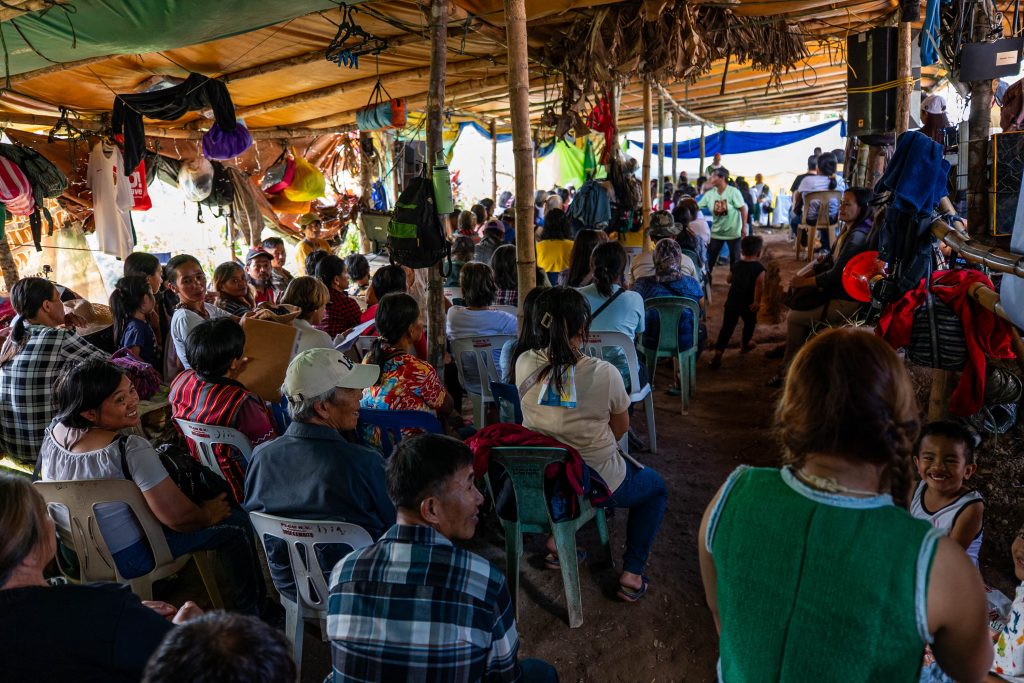
He said their resistance was not simply about protecting individual properties but about defending their communities, their way of life and the environment on which they depend.
The prelate rejected the idea that economic development could justify sacrificing the lives and livelihoods of communities or destroying the natural resources they rely on.
The bishop also acknowledged the sacrifices of Indigenous residents who have maintained their barricades despite difficult conditions and the threat of legal action.
He told community members that their determination to defend their ancestral lands offered Church leaders important lessons about solidarity, sacrifice and the protection of creation.
Mangalinao urged residents to remain steadfast in their struggle while rejecting violence, stressing that their pursuit of justice must remain grounded in faith and respect for human life.
He said genuine faith should be expressed not only through prayer and worship but also through concrete efforts to defend the dignity and rights of others.
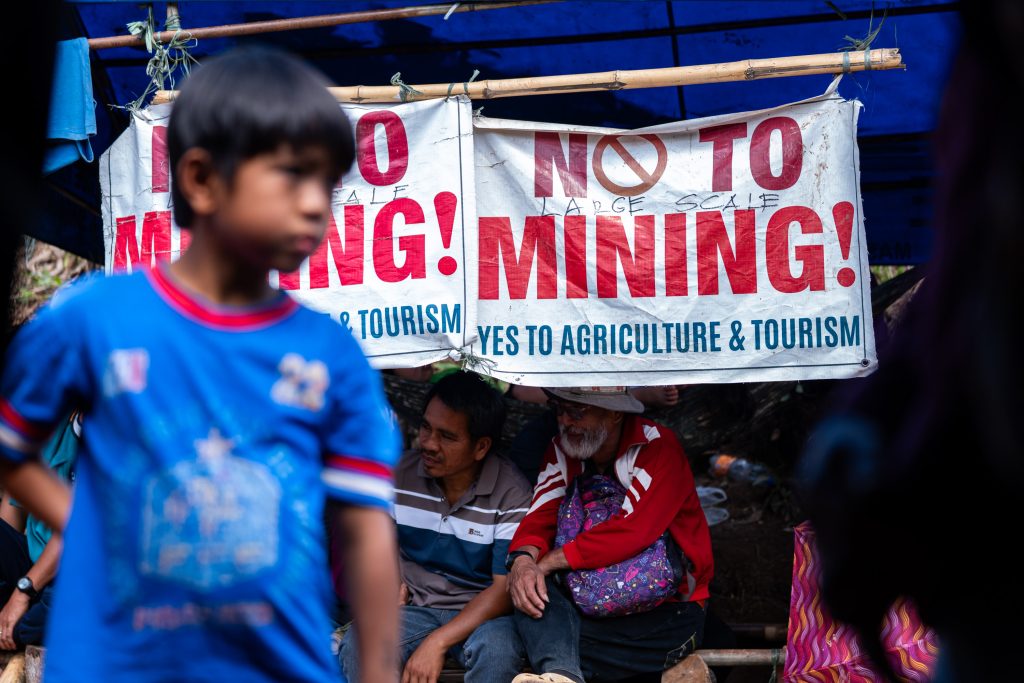
The solidarity mission came amid continuing opposition to mining exploration in Kasibu, where Indigenous communities and farmers have maintained barricades against activities involving North Luzon Mineral Resources Corp.
The company holds an exploration permit covering approximately 4,456 hectares. Residents have raised concerns about the potential effects of the project on ancestral lands, agricultural livelihoods, forests and water sources.
The dispute has resulted in police operations, arrests and court proceedings involving residents opposing mining exploration.
Eleven protesters were arrested during an Aug. 28 police operation at a barricade in Barangay Paquet. They were subsequently released on bail.
The Kasibu municipal council has also requested the cancellation of the company’s exploration permit, citing community divisions and unrest arising from the dispute.
The company has maintained that it holds a valid exploration permit and a Certificate of Non-Overlap from the National Commission on Indigenous Peoples. Residents have questioned the processes used to determine Indigenous consent and protect their ancestral rights.
Similar concerns have emerged in Dupax del Norte, where Indigenous communities and other residents have opposed separate mining exploration activities involving Woggle Corp.
Police operations against barricades in Dupax del Norte have also resulted in arrests and legal disputes. The Mines and Geosciences Bureau temporarily suspended the company’s exploration permit in February.
The disputes have drawn attention to the rights of Indigenous Peoples to determine how their ancestral territories are used and to participate in decisions affecting their communities.
Following the solidarity Mass, Alminaza, president of Caritas Philippines and chairman of the Catholic Bishops’ Conference of the Philippines’ Episcopal Commission on Social Action, Justice and Peace, outlined possible assistance for Indigenous residents maintaining the Kasibu barricade.
He raised the possibility of establishing a revolving fund to help secure bail for community members facing charges related to their resistance.
Alminaza also discussed mobilizing assistance through the Northern Luzon Social Action Network, Caritas Philippines and other Church partners, including organizations with national and international connections.
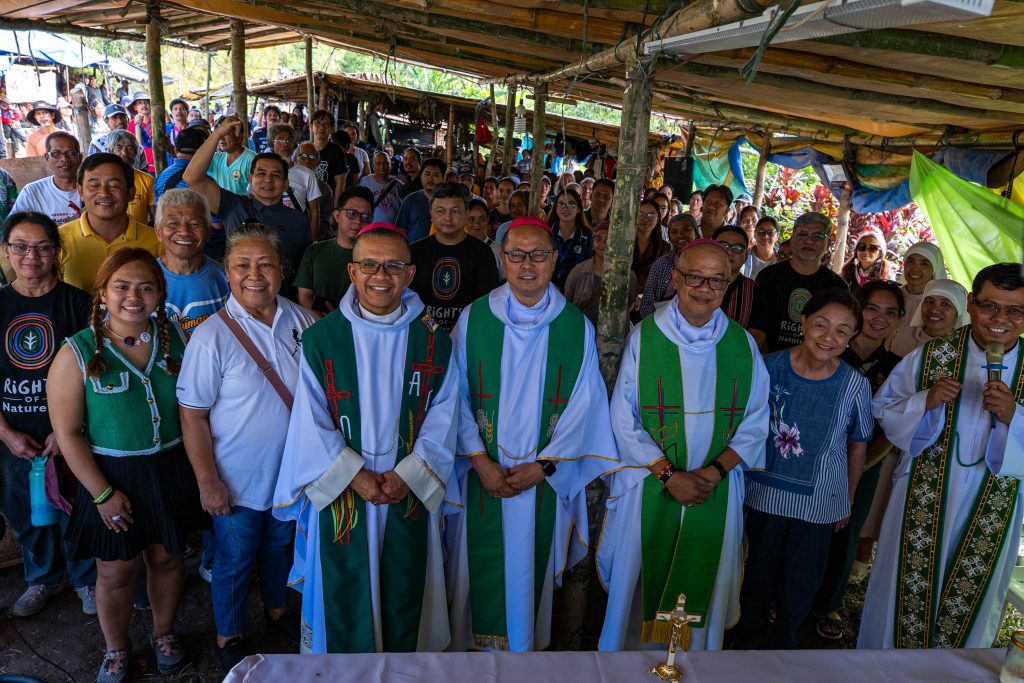
The bishop acknowledged the hardships faced by Indigenous families and other residents remaining at the barricades, including inadequate food and exposure to heat, rain and severe weather.
He said Church leaders could not remain comfortable while communities continued to suffer, emphasizing the urgency of organizing assistance.
He stressed that any Church intervention must be based on information and testimonies provided by the affected Indigenous communities themselves.
The bishop said he would continue discussions with Mangalinao and other Church partners to identify possible forms of legal, financial and institutional assistance.
In a joint statement issued during the Nov. 14 solidarity mission, Alminaza and Cuevas, chairman of the CBCP Episcopal Commission on Indigenous Peoples, affirmed that Indigenous communities must remain at the forefront of decisions concerning their ancestral domains.
“We recognize that Indigenous Peoples themselves are leading the struggle to protect their ancestral domains, cultures, and rights. We come not to speak in their place, but to listen to their voices, affirm their rights, and stand beside them in their pursuit of justice, dignity, and self-determination,” the bishops said.
The statement emphasized that ancestral lands are inseparable from Indigenous identity, culture, spirituality and community life.
Alminaza and Cuevas called on the National Commission on Indigenous Peoples, concerned government agencies and mining companies to respect customary laws, legitimate Indigenous institutions and the right to free, prior and informed consent.
They sought a transparent review of disputed Certificates of Non-Overlap and consent processes, with the full participation of affected Indigenous communities.
The bishops also urged the Department of Environment and Natural Resources, the Mines and Geosciences Bureau, and local governments to disclose relevant mining permits and compliance findings.
They called for independent assessments of the cumulative environmental, social, cultural and livelihood impacts of mining and exploration, particularly on Indigenous territories and communities dependent on agriculture and natural resources.
The joint statement raised concerns over accounts of intimidation, violent dispersals, red-tagging, judicial harassment and other alleged human rights violations involving Indigenous Peoples and community defenders.
Alminaza and Cuevas urged the Commission on Human Rights and other competent authorities to investigate the allegations and protect affected communities against threats and retaliation.
“No promise of economic development can justify violations of human dignity, the disregard of Peoples’ rights, or the destruction of the natural resources upon which communities depend,” the bishops said.
They emphasized that the Church does not reject development but supports initiatives that protect Indigenous rights, respect community decisions and preserve the environment.
The bishops also called for stronger recognition of Indigenous leadership, including support for community-led conservation, sustainable agriculture, ancestral knowledge and livelihoods chosen by the communities themselves.
They said government institutions, civil society organizations, universities and businesses should respect the collective decisions of Indigenous communities concerning development projects affecting their ancestral domains.
Alminaza and Cuevas also affirmed their commitment to continued accompaniment through the Diocese of Bayombong and other Church institutions.
“Together with the Diocese of Bayombong, we commit ourselves to sustained pastoral presence, rights education, humanitarian and legal assistance, and ecological action in partnership with affected communities,” the statement said.
For Mangalinao, the continued resistance of Indigenous communities in Kasibu reflects the Gospel’s call to persevere in seeking justice despite hardship and opposition.
He said the residents’ sacrifices have become a source of learning for Church leaders, challenging them to remain present alongside communities defending their ancestral lands, livelihoods and future generations.
The bishop emphasized that the struggle must remain rooted in peaceful action and solidarity, with the Church accompanying Indigenous communities rather than speaking or making decisions on their behalf.