
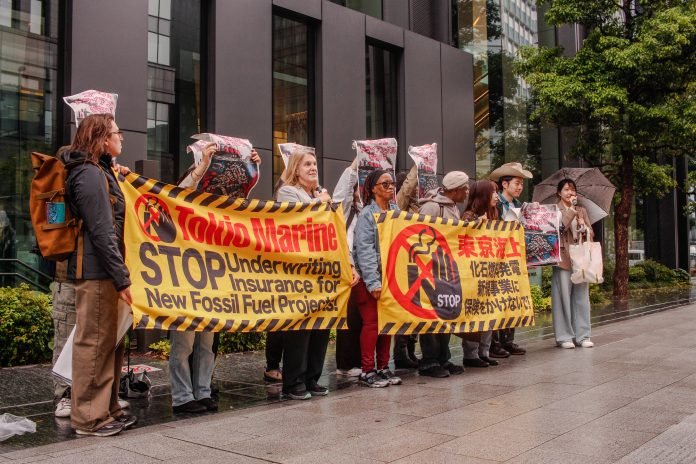
Civil society organizations, fisherfolk groups, and coastal communities across Southeast Asia launched a regional campaign on Coral Triangle Day calling for an end to fossil gas and liquefied natural gas (LNG) expansion.
The groups warned that new energy projects threaten marine biodiversity, fisheries, and the livelihoods of millions who depend on the region’s waters.
The campaign, “Sama-sama: Together for the Coral Triangle,” seeks to halt the expansion of offshore oil and gas extraction, LNG terminals, and gas-fired power plants in the marine ecosystem that spans six countries and contains nearly one-third of the world’s coral reefs and more than 6,000 fish species.
Campaigners cited data showing 113 operational offshore oil and gas blocks in the region, with 13 more under development and 50 newly discovered.
They also said 15 of 19 operating LNG terminals are located within 10 kilometers of sensitive marine habitats, while 64.4 gigawatts of gas-fired power projects have been proposed across the Coral Triangle.
“Fossil fuels are not a bridge to a sustainable future for the Coral Triangle; they are a direct threat to the biodiversity, fisheries, and communities that depend on healthy oceans,” said Anj Dacanay, lead campaigner of Energy Shift Southeast Asia.
Dacanay said governments and corporations “must halt fossil fuel expansion and pivot decisively toward truly sustainable, renewable energy solutions.”
The coalition also raised concerns about fossil fuel development in protected marine areas. Adam Farhan, co-founder and director of Rimbawatch, said an analysis found that “97% of marine protected areas in Malaysia are threatened by oil and gas production and exploration.”
“We are deeply concerned that Malaysia’s existing marine governance practices and environmental laws do not bar or discourage oil and gas production from taking place in Marine Protected Areas in the Coral Triangle,” Farhan said.
“Malaysia cannot claim to protect its oceans while allowing oil and gas projects to operate inside the very areas meant to safeguard biodiversity,” he added.
In Indonesia, communities are resisting LNG terminals, gas power plants, coal projects, and other extractive industries that threaten coastal ecosystems, according to Muhammad Reza Sahib, national coordinator of KRuHA.
“The Coral Triangle cannot survive if governments continue to sacrifice coastal ecosystems for fossil fuel expansion,” Sahib said.
He added that local communities continue to bear the costs of “pollution, declining fisheries, biodiversity loss, and climate impacts” while efforts to protect biodiversity require ending fossil fuel expansion and respecting the rights of communities that have long safeguarded their marine environments.
Organizers said the campaign will mobilize support across the region and internationally to press governments, corporations, and financial institutions to stop further fossil gas and LNG expansion in the Coral Triangle.