
Cardinal Pablo Virgilio David of Kalookan warned that the environmental destruction caused by war must be recognized alongside the human toll as conflicts continue to escalate in the Middle East.
In a reflection posted on his social media account, the Filipino cardinal said public attention often focuses on the immediate human suffering caused by armed conflict while overlooking the lasting damage inflicted on the planet.
“Every war is first and foremost a human tragedy,” the prelate said. However, David stressed that “there is another dimension of war that we rarely speak about. The ecological cost.”
David said warfare leaves deep environmental wounds that often persist long after the fighting ends.
“Beyond the suffering of people, war also wounds the Earth itself,” he said. “Forests burn. Rivers are polluted. Soil is poisoned. Wildlife habitats collapse. The land that sustains life becomes a battlefield—and long after the guns fall silent, the environmental damage often remains.”
The cardinal cited research showing that the global military sector has a major climate footprint, accounting for roughly 5.5 percent of global greenhouse gas emissions.
“If the world’s militaries were considered a single entity, they would rank among the largest emitters on the planet,” he said, noting that many military emissions remain largely invisible because nations are not required to report them in their climate commitments.
War also damages ecosystems directly, he said, with bombings igniting forests and wetlands, toxic residues contaminating soil and groundwater, and oil depots set ablaze.
Even after conflicts end, reconstruction can add to climate damage as cities are rebuilt using carbon-intensive materials such as concrete and steel.
“The environmental wounds of war can last for generations,” David wrote, citing the legacy of nuclear weapons testing that scattered radioactive fallout across the planet.
He warned that even a limited nuclear war could have global consequences.
“Scientists now warn that even a ‘limited’ nuclear war could darken the skies with soot, disrupt global food systems, and trigger famine affecting billions,” he said.
David said the environmental scars of war are already visible in several modern conflicts.
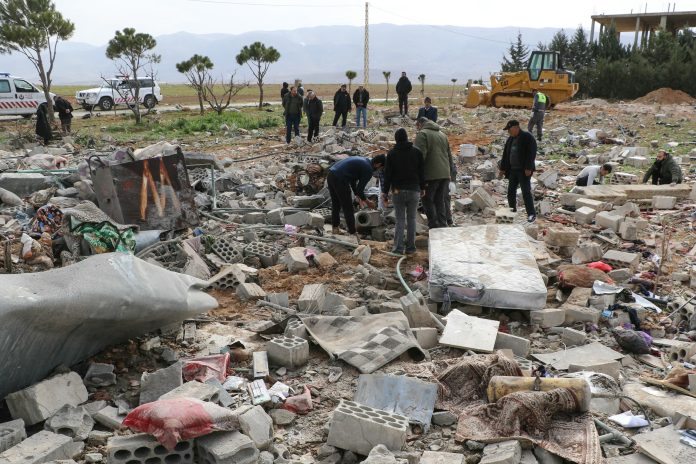
“We are seeing the environmental scars already in modern conflicts—from Ukraine to Gaza, from Syria to Sudan—where forests burn, farmland is ruined, rivers are contaminated, and cities become toxic rubble fields.”
Quoting Scripture, the cardinal said war harms the broader web of life.
“Scripture tells us that ‘all creation has been groaning in labor pains’ (Romans 8:22),” he wrote. “When human beings wage war against one another, we also wound the fragile web of life that sustains us.”
He also recalled Pope Francis’ teaching in Laudato Si’.
“Pope Francis has reminded us in Laudato Si’ that ecological conversion requires turning away from violence and domination toward care, reconciliation, and protection of our common home,” David wrote.
The cardinal ended his reflection with a challenge to the global community.
“While we count the human casualties, is anyone also counting the ecological cost?” he asked. “Peace is not only a humanitarian necessity. It is also a climate imperative.”