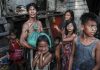
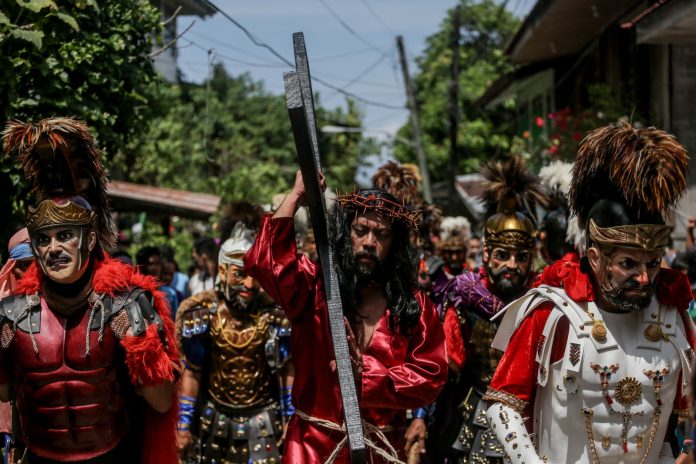
It is prayed for the bombed, the displaced, the bereaved, and all who refuse to give up on peace.
INTRODUCTION
This Way of the Cross is prayed in the shadow of bombs. It is prayed for the cities whose names have become synonymous with ruin, for the children who have never known a morning without fear, for the families scattered across borders, for the peacemakers who keep trying, and the exhausted who have stopped believing it is possible.
War is not an abstraction. It is a specific mother, a specific child, and a specific home reduced to a specific pile of rubble on a specific street in a city you might find on a map if you looked. This prayer asks us to look. To name names. To refuse the comfort of distance.
We walk this way with Jesus, who was himself a victim of state violence, who died under an occupying empire, whose family were refugees in a foreign land. He does not watch war from a safe distance. He is in it. He is in the rubble. He is in the boat. He is in the hospital corridor, the trench, and the ruins of the school. We walk toward him.
Lord Jesus, you know the face of war. Walk with us through it. Lead us out.
Station I: Jesus is Condemned to Death
When the powerful condemn the innocent
In courtrooms and command centres, the verdict is handed down. Pilate performs the ritual of innocence while signing the death warrant. Today, world leaders convene in air-conditioned halls and vote for wars they will never fight. The condemned are elsewhere — in Aleppo, in Gaza, in Kyiv, in Sudan, in Iran. They have names. They had plans. Lord, may those who hold power over life and death tremble before you. May the condemned faces of the innocent haunt every decision-maker until they choose peace.
We adore you, O Christ, and we praise you.
By your holy cross, you have redeemed the world.
Station II: Jesus Takes Up His Cross
When whole peoples carry what they did not choose
He lifts it. He did not start this. He did not vote for this. He simply finds himself here, at this moment, with this weight. A Syrian father lifts his family onto a rubber boat at three in the morning. A Ukrainian grandmother lifts the last of her belongings into a plastic bag. A Congolese boy lifts a weapon he should never have been given. Lord, you took up what was not yours. In doing so, you walk beside everyone carrying the unbearable weight of a war they did not begin.
We adore you, O Christ, and we praise you.
By your holy cross, you have redeemed the world.
Station III: Jesus Falls the First Time
When hope collapses under the weight
The road is long before it ends. He falls early. In war, the first fall often comes before the bombs — it is the fall of trust, the moment a neighbour becomes an enemy, the moment a child learns that the world is not safe. Families fall apart under the pressure of displacement and terror. Nations fall into the grip of hatred. Lord, you fell and rose. You show us that the fall is not the final word. Give fallen families, fallen communities, and fallen nations the ground from which to rise.
We adore you, O Christ, and we praise you.
By your holy cross, you have redeemed the world.
Station IV: Jesus Meets His Mother
When a mother cannot protect her child
Mary sees her son broken, bleeding, barely upright — and can do nothing to stop it. Every mother in a war zone knows this helplessness. The mother in Mariupol pressing her child to the floor as the ceiling shakes. The mother in Yemen is mixing flour with water, calling it food. The mother in Myanmar watched her son taken away in the early morning. God entered this helplessness deliberately. He stood in it. He calls it sacred. May we protect the mothers of the world’s war zones. May we hear them.
We adore you, O Christ, and we praise you.
By your holy cross, you have redeemed the world.
Station V: Simon Helps Jesus Carry the Cross
When strangers become the only saviours
Simon was a stranger from a foreign land — an African man in Jerusalem, pulled from the crowd. He did not choose this. And yet he carried the cross of another. Today, strangers are doing this everywhere: the Turkish fisherman who pulled bodies from the sea, the Polish family who took in refugees in the night, and the Jordanian hospital that treated children without papers. No one asked them to become rescuers. They simply saw the need and stepped in. May we all be Simon — unwilling at first, but faithful in the end.
We adore you, O Christ, and we praise you.
By your holy cross, you have redeemed the world.
Station VI: Veronica Wipes the Face of Jesus
When one gesture of kindness restores humanity
She had nothing that could change the outcome. No army, no authority, no cure. Only a cloth and the willingness to move through the crowd toward suffering rather than away from it. The journalists who stay in war zones to show the world a face, they are Veronica. The aid worker who holds a dying stranger’s hand — she is Veronica. The citizen who writes the name of a bombed child on a placard — he is Veronica. In a war that turns people into numbers, one act of recognition says, “You are a person, you are seen, you are not forgotten.”
We adore you, O Christ, and we praise you.
By your holy cross, you have redeemed the world.
Station VII: Jesus Falls the Second Time
When the same war keeps returning
Some conflicts are not new. They are the same wounds reopening — old borders drawn by empires, old grievances weaponised by new leaders, and old hatreds taught to new children. The Middle East. The Balkans. The Sahel. The fall happens again. Lord, break the cycle. Where war is inherited, give courage to the generation that will refuse the inheritance. Where hatred is passed down like property, raise children who will sell it for nothing and choose something better. May this falling be the last one. May this generation rise into a different future.
We adore you, O Christ, and we praise you.
By your holy cross, you have redeemed the world.
Station VIII: Jesus Speaks to the Women of Jerusalem
When grief must become action
He stops — exhausted, bleeding — to speak truth. “Do not weep for me,” he says. Weep for what is coming if nothing changes. He sees the deeper crisis: a world that will keep producing crosses unless something changes at the root. The women weeping at vigils for bombed hospitals, for drowned children, for mass graves — Jesus says: “Your grief is right.” But let it move you. Let it become testimony in parliaments. Let it become votes against warmongering leaders. Let it become the relentless refusal to accept that this is simply how the world works.
We adore you, O Christ, and we praise you.
By your holy cross, you have redeemed the world.
Station IX: Jesus Falls the Third Time
When exhaustion threatens to become surrender
Three years of siege. Five years of displacement. A generation raised in rubble. At some point, even the most resilient human spirit reaches its edge. This is the third fall — when people stop asking when it will end and simply try to survive the day. Lord, meet the exhausted. Meet the refugee who has stopped dreaming of return. Meet the aid worker who has seen too much. Meet the peacemaker who has been ignored too many times. You fell this way too. You know this edge. Do not let the world abandon those who have given everything and still have nothing left.
We adore you, O Christ, and we praise you.
By your holy cross, you have redeemed the world.
Station X: Jesus is Stripped of His Garments
When war takes everything
They take the last thing he has. In war, the stripping is systematic and total: homes, documents, language, history, safety, and identity. A Rohingya family stripped of citizenship. A Ukrainian family stripped of a city that was their whole world. A Palestinian child stripped of a future that has not yet happened. What war does is make people nothing — nameless, stateless, rightless, worthless. Lord, you were stripped bare, and you remained the Son of God. Teach us that human dignity cannot be confiscated. May international law, justice, and our own conscience restore what war has taken.
We adore you, O Christ, and we praise you.
By your holy cross, you have redeemed the world.
Station XI: Jesus is Nailed to the Cross
When violence becomes official and precise
Nails are not an accident. They are chosen, prepared, and driven deliberately. Modern war is like this too: coordinates entered, buttons pressed, buildings selected. The language of military strategy sanitises what is, in reality, iron through flesh. A hospital was targeted. A market was bombed at the busiest hour. A convoy hit on a road everyone knew was carrying civilians. Lord, make the world see what its weapons actually do. May every arms manufacturer, every general, every politician who signs the orders stand before the specific, named, human cost of their precision. May it undo them.
We adore you, O Christ, and we praise you.
By your holy cross, you have redeemed the world.
Station XII: Jesus Dies on the Cross
When the world goes silent
He dies. God dies. The earth shakes and goes dark. Somewhere, a family receives the news. A city falls silent for a moment. A child asks a question that no adult knows how to answer. In a world of endless war, we have become dangerously accustomed to the death announcements: the daily figures, the weekly tolls, and the yearly estimates. Lord, break our numbness. May every number be a name. May every name be a face. May every face be someone’s whole world. May the death of each person in war be felt by us as the outrage it truly is, until the outrage becomes the end of war.
We adore you, O Christ, and we praise you.
By your holy cross, you have redeemed the world.
Station XIII: Jesus is Taken Down from the Cross
When we must receive the broken and hold them
He is lifted down, cold and still, into his mother’s arms. She holds what the world destroyed. After every ceasefire, after every liberation, after every treaty — this is the work that remains: holding the broken. The traumatised soldier who cannot sleep. The child who flinches at loud sounds for years. The widow sorting through rubble for something to keep. The survivor who no longer knows who she is. The world rushes to rebuild buildings. Lord, teach us first to rebuild people. May every nation that has known war be given the long, slow grace of being held and healed.
We adore you, O Christ, and we praise you.
By your holy cross, you have redeemed the world.
Station XIV: Jesus is Laid in the Tomb
When we must sit with darkness before the dawn
The tomb is sealed. The disciples scatter. The world continues as if nothing decisive has happened. But something has. The most violent forces the world could produce — empire, religion, mob, betrayal — have done their worst. And it was not enough. The story does not end here. For every war-torn land tonight, lying in the dark, sealed in grief, scattered in exile, this is the promise buried in the stone: it is not over. The dawn is coming. Resurrection is not a metaphor. It is God’s final answer to every tomb, every bomb, every wall, every grave. Hold on. Hold on.
We adore you, O Christ, and we praise you.
By your holy cross, you have redeemed the world.
CONCLUSION
We have walked the road again. We have stood at each station and named the war — its faces, its specific cruelties, its exhausted survivors. We have not looked away. That refusal to look away is itself a form of solidarity. The disappeared are seen. The dead are named. The living are not forgotten.
Jesus walked this road all the way to the end. He did not negotiate a ceasefire before Golgotha. He went through it — through the full horror — and came out the other side as something the world had never seen: a love that death could not contain. That is the only power stronger than war.
Leave this prayer with something you can do. Write a letter. Join a peace organisation. Welcome a refugee family. Vote against leaders who profit from conflict. Refuse to pass hatred to your children. Pray daily for one country at war by name. The Way of the Cross is not a prayer we say and then forget — it is a direction we choose and keep walking.
Blessed are the peacemakers, for they shall be called children of God (Matthew 5:9).
John Singarayar, a member of the Society of the Divine Word, India–Mumbai Province, holds a doctorate in anthropology. He is the author of several books and a regular contributor to academic conferences and publications. His work focuses on sociology, anthropology, theology, philosophy, ecology, artificial intelligence, leadership, management, tribal studies, spirituality, and mission.