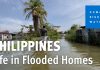
A flood-control project in Pampanga moved 90 families from an island community to a low-lying relocation site that now floods throughout the year, Human Rights Watch (HRW) said Oct. 13.
The families were relocated in 2022 from Pulo Island on the Pampanga River to a former fishpond in Barangay Candelaria, Macabebe, after authorities dredged the island as part of a flood-control project.
HRW said the relocation was carried out without adequate consultation or information and left residents struggling with flooding, reduced livelihood opportunities and difficulty reaching basic services.
“Philippine authorities in Pampanga have threatened the safety and livelihoods of Pulo Island residents by relocating them to a low-lying area as part of a flawed flood control project. The Philippine government should consult the community to find a better solution and ensure that future relocations related to flood control projects respect affected people’s rights,” said Lian Buan, Southeast Asia researcher at HRW.
Between 2020 and 2023, the Macabebe government and the Department of Public Works and Highways dredged Pulo Island and relocated its residents.
DPWH engineers told HRW that removing the island would increase the capacity of the Pampanga River and reduce flooding in surrounding communities.
Residents said they were not given meaningful alternatives before the move.
“They did not present any other solutions. There were no options,” said a 48-year-old mother.
HRW said residents also felt pressured to leave. Some were required to demolish their own homes before receiving full compensation.
“The personnel on site were slightly harassing us too, telling us that we are obligated to leave, that we have no choice, and that they will tell on us to higher authorities,” said a 57-year-old farmer.
Residents had raised concerns about the suitability of the relocation site before the transfer, according to HRW.
Community members said local authorities told them the site would be raised to the same height as the adjacent road dike, but the work never reached that level. One engineer involved in the relocation said the road dike design would not allow the site to be raised to the same height.
Engineers also said they made no such promise and had no role in selecting the relocation site, although one of their contractors carried out some embankment work to reassure the community.
During a July 12-14 visit, HRW said floodwater at high tide reached knee to thigh level. Researchers saw children wading through floodwaters and older residents unable to leave their homes.
A separate Aug. 5 assessment found 20 centimeters of water on the relocation site’s main street. HRW said the street was built about 1.9 meters below the adjacent dike.
Residents said the area floods frequently throughout the year, including during the dry season.
“The site was unfinished when we moved. It was half-baked,” said Ely Barsana, a 44-year-old massage therapist.
The flooding has damaged homes and restricted access to work, schools and health services, according to HRW.
Some residents have left their families at the relocation site to look for work elsewhere. Children have to wade through floodwater on their way to and from school.
The Department of Human Settlements and Urban Development, which was not involved in the relocation, told HRW that the “reported physical characteristics of the site raise concerns regarding its suitability for permanent housing.”
HRW said agencies normally involved in resettlement were not included in the project.
The human settlements department usually leads planned relocations with the National Housing Authority, while other government bodies have monitoring and oversight responsibilities.
“There was no check and balance,” said Ferdinand Zambrano, project development officer at the local Department of Human Settlements and Urban Development office.
The Commission on Human Rights told HRW that it could have helped ensure rights-based procedures had it been consulted. The commission said it would conduct a fact-finding investigation.
HRW sent right-of-reply letters outlining its findings on Sept. 21. The human settlements department and the Commission on Human Rights responded, while the DPWH, the Macabebe municipal government and the Presidential Commission on Urban Poor did not reply.
HRW said planned relocation should be used only as a last resort under international standards and should involve meaningful consultation with affected communities.
Pampanga experiences the country’s most severe flooding, which is worsened by storms, sea-level rise and limited dam capacity and is likely to become more severe as climate change accelerates, according to the group.
“Communities in the Philippines living in flood-prone areas are already facing the consequences of climate change and shouldn’t have to suffer further from botched government relocations. Donors supporting the Philippine response to the effects of climate change should press the government to ensure that every aspect of relocation meets international human rights standards,” Buan said.