A Filipino cardinal urged the Catholic Church on Monday to support families struggling with poverty, violence, and addiction, saying they need community support rather than judgment.
Cardinal Pablo Virgilio David of Kalookan cited families devastated by killings during the Philippine drug war, leaving widows, orphans and grandparents struggling to rebuild their lives.
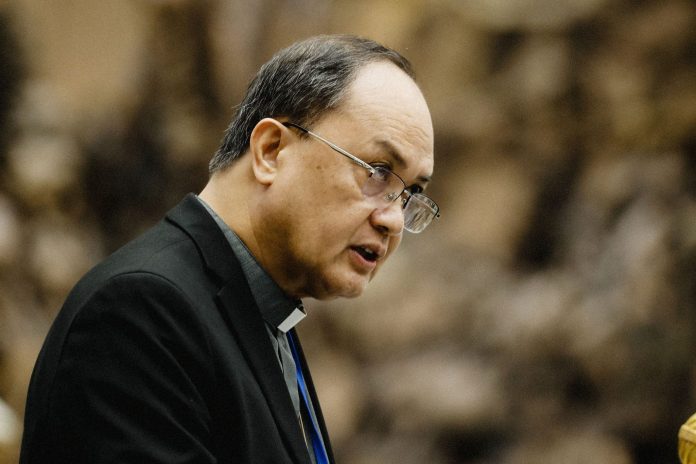
“A fragile family needs more than pastoral advice. It needs a community that can help carry what it can no longer carry alone,” David told participants of a Vatican meeting on the family convened by Pope Leo XIV.
Speaking at the Paul VI Hall, David said poverty, migration, addiction, violence and insecure work can make it difficult for families to meet Christian ideals.
He recalled a priest who initially questioned why children remained on the streets late at night, only to learn that some parents worked long hours to feed their families.
David also recounted the case of a father raising four children, ages 3 to 12, after separating from his partner. When the father was killed, relatives had to take responsibility for the children.
Many drug-war killings occurred in poor communities within his diocese, David said. Some families feared mourning publicly because their association with suspected drug users could expose them to suspicion.
In response, the diocese established neighborhood mission stations in communities that traditional parish structures struggled to reach. Priests, religious and lay missionaries visited homes, listened to residents and prayed with grieving families.
Widows began supporting other widows, while recovering addicts helped one another. Some people who initially received assistance later became pastoral leaders, accompanying other struggling families.
“Accompaniment then is not merely what a priest or a pastoral worker does for the family. It is what the Christian community gradually learns to become around that family,” David said.
The experience challenged the Church to stop asking why struggling families did not attend Mass and instead examine whether it was willing to reach them, he said.
Some poor Catholics felt excluded from parish life because they lacked money, education, proper clothing or social standing, despite identifying themselves as Catholic, David added.
He said the approach reflects Amoris Laetitia, Pope Francis’ 2016 apostolic exhortation on family love, which calls for pastoral accompaniment of families facing complex situations.
The Church must recognize families’ struggles without abandoning Christian ideals, accompanying them through gradual growth rather than judging them by rigid classifications, David said.
“The Church cannot always wait for people to come to her,” he said. “Sometimes she has to go where people live, where they struggle, where they grieve, where they hope and discover that Christ is already there waiting for us.”