
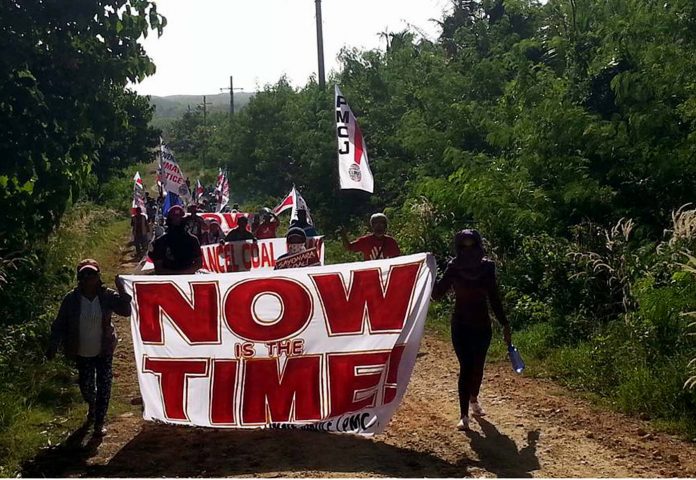
A Catholic bishop in the Philippines called for an immediate, government-backed transition plan for coal-dependent Semirara Island as workers face job losses and uncertainty over the future of mining operations.
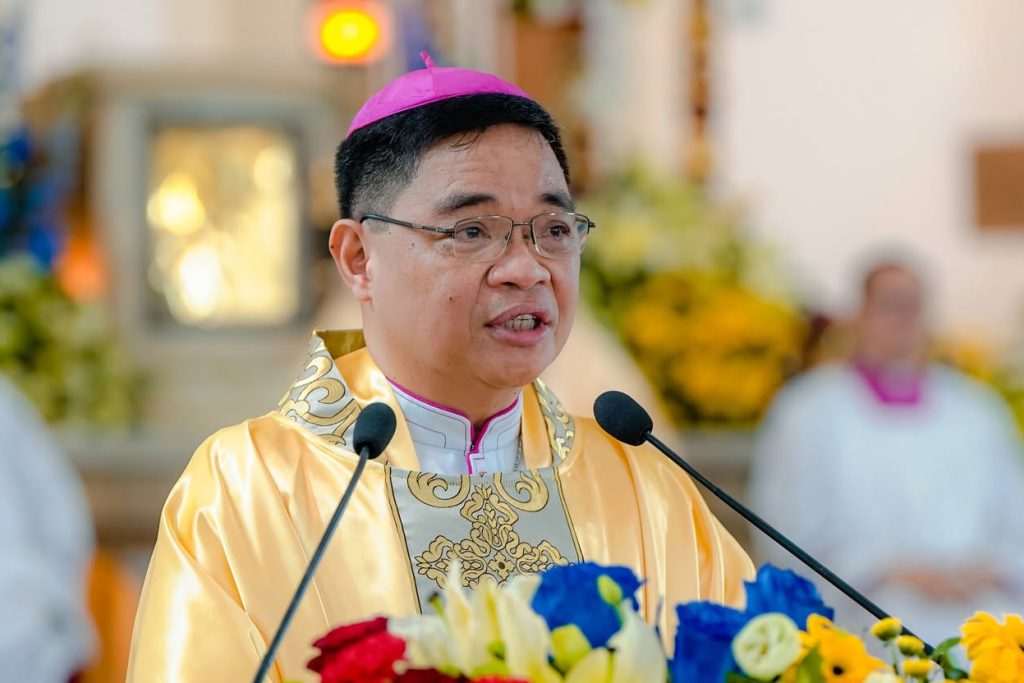
Bishop Marvyn Maceda of San Jose de Antique said the government should establish a clear, time-bound, and adequately funded Just Transition Roadmap before the island’s existing coal operating contract expires in 2027.
“The time to begin a just transition for Semirara is now,” Maceda said in a pastoral appeal dated Oct. 4, the feast of St. Francis of Assisi.
His appeal followed a peaceful gathering of residents on Semirara Island on Sept. 25 over concerns about jobs, livelihoods, and the island’s future. The Department of Energy had also terminated its recent Coal Bid Round to reassess the parameters for awarding coal operating contracts.
The prelate said workers who had already lost their jobs or were at risk of displacement should receive just compensation and appropriate assistance from industry, along with adequate social protection from the government.
“They and their families should not be left to bear alone the consequences of the present uncertainty and changes in mining operations,” he said.
The bishop stressed that the Church was not calling for an immediate shutdown of coal mining without regard for workers and the country’s energy needs.
“We are not asking that coal mining simply stop tomorrow without regard for the country’s energy requirements or the livelihood of thousands of workers and their families,” Maceda said.
He warned that an abrupt and unprepared closure could cause serious social suffering and urged the government, industry and local communities to begin preparing for the transition while coal production continues during an appropriate transition period.
Maceda proposed developing renewable energy and other sustainable industries in Semirara and Caluya, retraining workers and giving them priority for new employment, diversifying the local economy, providing social protection for affected families, and progressively rehabilitating land, waters and ecosystems affected by mining.
He said the cost of the transition should not be passed on to workers, arguing that government and industry, which had benefited from Semirara’s resources, bore responsibility for its people and the rehabilitation of the island.
Maceda urged the Department of Energy to incorporate a Semirara Just Transition Roadmap into the Philippine Energy Plan and the terms and conditions of any future coal operating contract.
Under his proposal, any future operator should be required to present not only a credible plan for coal extraction but also an enforceable plan for workers, communities, environmental rehabilitation, economic diversification and the island’s gradual transition away from dependence on coal.
The bishop acknowledged efforts by Semirara Mining and Power Corp. in worker welfare, environmental rehabilitation, livelihood programs and economic diversification, saying these initiatives should be strengthened.
He said, however, that what appeared to be lacking was an overarching, publicly articulated, time-bound and adequately funded roadmap that would bring the various efforts together toward reducing Semirara’s dependence on coal.
Maceda said the government’s reassessment of the coal bidding process provided an opportunity to address that gap.
The Department of Energy has acknowledged ongoing water seepage that could affect the volume of extractable coal reserves, along with legal uncertainties involving the current operator, according to the pastoral appeal.
Maceda said the Church would await the findings of scientific and government investigations and would not prejudge them, but said the reported seepage called for prudence.
“There comes a time when extraction must give way to restoration, when development must include rehabilitation, and when we must allow the land to rest and heal,” he said.
He also called for workers, families, affected communities, local government, civil society and other stakeholders to have a meaningful role in determining Semirara’s future rather than being informed only after decisions had been made.
Addressing workers and their families, Maceda said environmental protection should not come at the cost of their livelihoods.
“You should not be forced to choose between your livelihood today and the future of the island your children will inherit tomorrow,” he said.
The bishop said another path was possible through a gradual, adequately financed, environmentally responsible and socially just transition.
He said the displacement of workers made the appeal more urgent because the social consequences of uncertainty in mining operations were already being felt by families and communities.
Maceda said the transition to renewable energy must go beyond replacing one source of power with another. It should protect workers, strengthen communities, create sustainable livelihoods and restore land and sea affected by mining.
“This is not simply an environmental question. It is a question of justice. It is a question of human dignity,” he said.