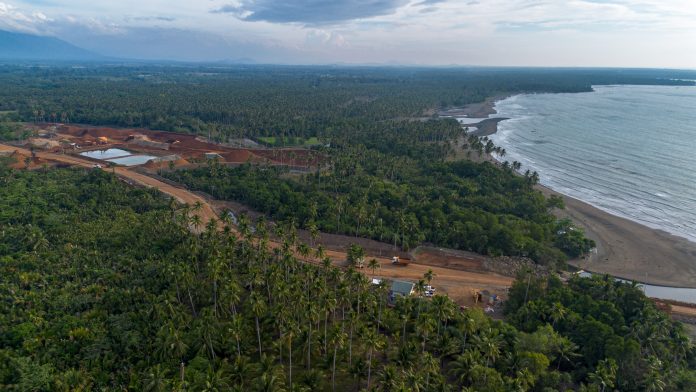
The Catholic Church in Puerto Princesa in the western Philippines marked the observance of the Season of Creation with a renewed call for the full enforcement of a 50-year moratorium on endorsements for new mining operations and applications in Palawan.
Bishop Socrates Mesiona, apostolic vicar of Puerto Princesa, said the moratorium is needed to protect the province’s forests, mountains, watersheds, and Indigenous communities as the climate crisis worsens.
“As part of our responsibility to care for creation, we also call for the full implementation of the 50-year moratorium on endorsing new mining operations and applications in Palawan,” Mesiona said in a pastoral letter dated Sept. 1.
The bishop described the provincial ordinance as the result of “a long struggle by various sectors” to preserve Palawan as the country’s “last ecological frontier” and protect communities threatened by destructive mining.
Mesiona said the moratorium covers new applications for exploration, mineral agreements and other mining-related agreements, as well as the expansion of operations into new areas.
“At a time of a worsening climate crisis, caring for our natural resources is not only an environmental issue but also an issue of justice for future generations,” he said.
The bishop urged residents to remain vigilant to ensure the moratorium is faithfully implemented and those responsible for protecting Palawan’s natural resources are held accountable.
Mesiona’s appeal came as the vicariate observed the Season of Creation against the backdrop of severe flooding in several parts of the Philippines.
He expressed solidarity with families who lost homes, livelihoods and loved ones, and said their suffering had been aggravated by reports that billions of pesos intended for flood-control and disaster-risk reduction projects had been lost to corruption.
“When these funds are diverted because of greed, corruption and abuse of power, the poor are the first to suffer and are affected the most,” Mesiona said.
He called for “truth, transparency and accountability,” saying those responsible for corruption should be immediately investigated and held accountable through due process.
Mesiona said corruption should not be understood only as the misuse of public funds. He also cited neglect, exploitation, illegal logging, irresponsible mining, slash-and-burn farming, improper waste disposal and actions that put personal interests ahead of the common good.
The bishop said climate change is already seriously affecting many people as extreme weather becomes more frequent and destructive.
Human activity, he said, has damaged fragile ecological systems through indiscriminate tree cutting, the destruction of forests and mountains, pollution of rivers and seas, and the release of toxic substances into the atmosphere.
Mesiona also cited Pope Francis’ warning against a “throwaway culture,” which treats people and creation as things that can simply be used and discarded.
He called for more responsible production and consumption, conservation of natural resources for present and future generations, limits on the use of nonrenewable resources, and greater reuse and recycling.
“The cry of nature and the cry of the poor are interconnected and cannot be separated,” Mesiona said.
The bishop said poor communities are often directly affected when forests are destroyed, waterways are clogged or polluted, and public funds are stolen because they are more likely to lose their homes, livelihoods, health, and security.
“We cannot remain deaf to their cries,” he said. “We must act together to save Mother Nature, because in saving her, we also save humanity, especially the poor.”
Mesiona urged people to plant more trees, protect remaining forests, recycle, reduce unnecessary waste, and support environmental policies, including full enforcement of Palawan’s mining moratorium.
He also called on voters to choose responsible leaders who care for the common good and the environment. “Our future depends on how we become true stewards of God’s creation,” Mesiona said.