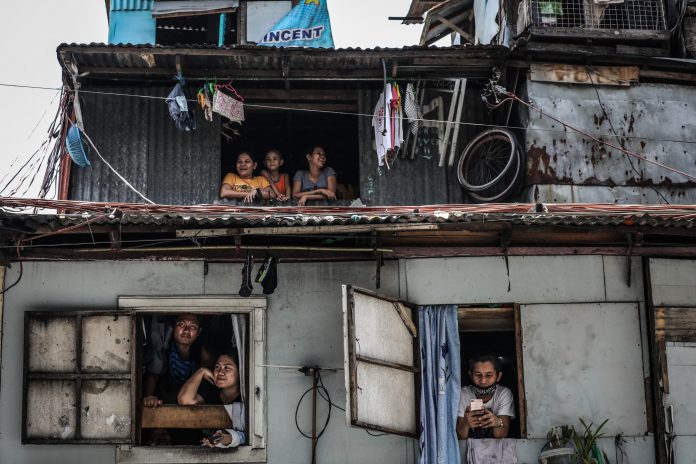
In the Gospel, the poor are never outside God’s story. They are at its center.
That is why when we speak of hope, we must be careful. Hope is not a slogan. It is not something we say to make suffering easier to accept.
Hope, if it is real, must be seen. It must be witnessed.
Witnessing Hope at the Table: The Three Chairs That Cannot Be Empty
Every decision we make, whether in government, in our communities, or even within the Church, is like a table where choices are made. Around it, directions are set, resources are allocated, and futures are shaped. But the Gospel quietly asks a question that we often avoid: who is actually seated at that table?
To witness hope, the table cannot be complete unless three chairs are present.
There must be a chair for the poor, the anawim. Not simply as beneficiaries of decisions, but as participants in shaping them. Hope begins to take flesh when the poor are no longer spoken for, but are truly listened to. And yet, in many of our systems, their absence is precisely what allows injustice to continue unnoticed.
There must also be a chair for the environment, our common home. Hope is witnessed when we begin to treat creation not as something to be consumed, but as something entrusted to us. But we know how often decisions are made as if the Earth were silent, as if its wounds did not matter.
And there must be a chair for future generations. For those who cannot yet speak, but whose lives are already being shaped by what we decide today. Hope is witnessed when we begin to act not only for what is immediate, but for what is just. Yet too often, we choose what benefits us now, even when it will burden those who come after us.
When even one of these chairs is missing, what we call development quietly becomes exclusion.
To witness hope is to insist, again and again, that the poor, the Earth, and the future must always be present.
Witnessing Hope Through Hayuma: Mending What Has Been Broken Together
In many Philippine coastal communities, there is a word that captures something essential about life: Hayuma. It is the act of mending torn fishing nets together.
At first, it seems like a simple, everyday task. But if we look more closely, it reveals something deeper about our world today.
Because what we are facing is not only individual hardship. The net itself is broken.
The poor fall through it.
The environment is worn down through it.
The future becomes uncertain because of it.
And no one can repair a torn net alone.
Hope becomes visible when people come together to mend what has been broken. It is witnessed when communities refuse to face hardship in isolation, when they organize, rebuild, and stand with one another in the long, patient work of restoration.
Catholic Social Teaching reminds us that salvation is not only about the soul. It is about life as it is lived in history. It is about transforming the conditions that deny people their dignity.
This is why Hayuma is not charity. It is something deeper. It is solidarity.
It is choosing to enter into the struggle of the poor, not only to respond to immediate needs, but to help change the conditions that created those needs in the first place.
When we begin to mend together, hope stops being an idea. It becomes something we can see in relationships, in shared action, in the quiet but persistent rebuilding of what injustice has torn apart.
Witnessing Hope by Naming Tolerated Evils
But hope cannot take root without truth.
One of the most troubling realities of our time is not only that injustice exists, but that it has become familiar. There are things that should disturb us, but no longer do.
We see poverty, and we begin to think it is simply part of life.
We see environmental destruction, and we call it development.
We see inequality, and we accept it as necessary.
Slowly, without realizing it, we begin to live with what should never be accepted.
These are not just difficult realities. They are tolerated evils.
And as our faith reminds us, sin is not only personal. It is also structural. It is embedded in systems that continue to produce suffering, even when no one individual seems directly responsible.
To witness hope is to refuse this normalization. It is to name things as they are. It is to speak, even when it is uncomfortable, even when silence would be easier.
Because silence, in situations like this, is never neutral. It quietly protects what already exists.
The Church cannot remain at a distance. We are called not only to accompany those who suffer, but to ask why they suffer, and to challenge the structures that keep them there.
Hope is witnessed when truth is spoken.
From Pilgrims of Hope to Missionaries of Hope
We have just come from a special time in the life of the Church, when we were invited to walk as pilgrims of hope. It was a time of grace, a time of renewal, a time of remembering that God remains faithful even in difficult times.
But the Jubilee was never meant to end with its closing.
Because a pilgrimage that remains a memory does not change the world.
The call now is to move forward, to become missionaries of hope.
A pilgrim receives hope along the journey, often in moments of grace and encounter. But a missionary carries that hope into the lives of others, especially into places where hope seems most fragile.
To be a missionary of hope is to allow what we have received to shape how we live. It is to bring hope into the realities of daily life, into decisions, into relationships, into the struggles of communities.
It means that the poor are no longer forgotten.
That the environment is no longer sacrificed.
That the future is no longer ignored.
The Church continues to remind us that the spirit of the Jubilee must be lived beyond its celebration. Hope must move beyond prayer into action, beyond reflection into transformation.
In this way, hope is no longer something we experience only in sacred moments.
It becomes something we carry.
Witnessing Hope as a Way of Life
Hope is not optimism. It is not pretending that things are better than they are.
Hope is something deeper.
It is choosing to act, even when the situation is difficult.
It is choosing to believe that transformation is possible, even when it is slow and uncertain.
Hope is witnessed in quiet but real ways. It is seen when the poor are included in decisions that affect them. It is seen when creation is protected rather than exploited. It is seen when the future is considered, not ignored. It is seen when communities act together rather than remain isolated. And it is seen when injustice is named rather than overlooked.
This kind of hope is demanding. It asks something from us. It asks us to change, to stand, to act.
But this is the hope of the Gospel.
Sustaining Solidarity: Becoming Missionaries of Hope Through a Synodal Journey
If hope is to endure, and if solidarity with the anawim is to last, then it cannot depend only on moments of inspiration. It must become a way of life, something that continues even when the initial energy has faded.
Because solidarity that is only felt but not sustained will slowly disappear. And hope that is only spoken but not lived will eventually lose its meaning.
To sustain solidarity, we are called to become missionaries of hope. But we are not called to do this alone.
The Church today invites us to walk a synodal path, a way of journeying together. Synodality is not simply a method or a program. It is a way of being Church, a way of recognizing that we are not isolated individuals, but a people called to walk, listen, and discern together.
To walk synodally is to learn how to listen again. To listen to the anawim, not as objects of concern, but as voices that reveal truth. To listen to communities, whose lived experiences show us realities we might otherwise ignore. To listen to one another, so that decisions are not imposed from above, but shaped together through discernment.
In this way, solidarity is no longer an act of generosity. It becomes a shared journey, a shared responsibility, a shared mission.
We do not walk ahead of the poor.
We do not walk behind them.
We walk with them.
And in walking together, hope begins to take deeper root. It is no longer fragile or temporary. It becomes something that grows, something that spreads, something that transforms not only individuals, but communities.
The Anawim as Witnesses of Hope
In the end, we begin to see something we may not have noticed at first.
The anawim are not only those to whom we bring hope.
They are those who show us what hope looks like.
They know what it means to struggle and still believe. They know what it means to endure and still stand. They know what it means to hope, not because life is easy, but because faith remains.
To sustain solidarity with the anawim is not only to help them.
It is to walk with them.
To learn from them.
To allow their lives to transform how we understand hope.
And perhaps, if we truly do this, we will become a Church that not only speaks of hope, but truly witnesses it. Thank you.
Bishop Gerardo Alminaza is the prelate of San Carlos in the central Philippine province of Negros. He is the chairperson of the Episcopal Commission on Justice, Peace, and Integrity of Creation of the Catholic Bishops’ Conference of the Philippines and the president of Caritas Philippines.
Bishop Alminaza delivered this Biblio-Theological Reflection during the 8th anniversary of the ANAWIM MISYON sa mga MAHIHIRAP, Inc on April 10, 2026.