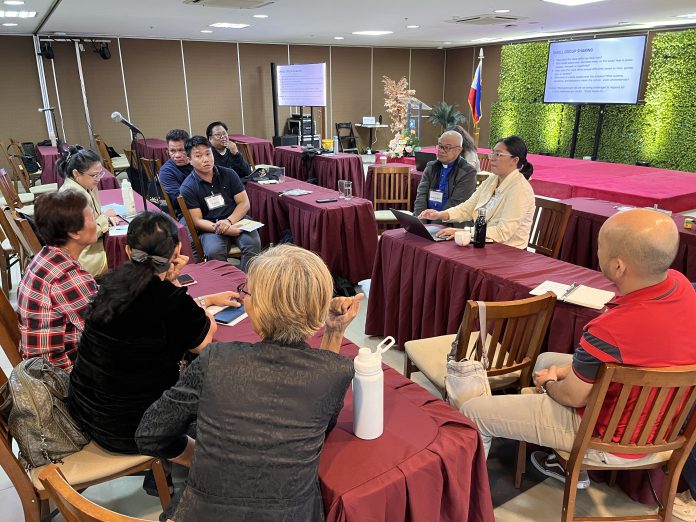
Church leaders and civil society groups opened a three-day convergence in Manila on Wednesday aimed at confronting what organizers described as “tolerated evils” embedded in Philippine governance, ecology, and the economy.
The gathering runs from Jan. 14 to 16 at the University of Santo Tomas and brings together Church leaders, climate advocates, labor groups, people’s organizations, and sectoral representatives.
Organizers said the event seeks to address interconnected social crises through dialogue rooted in Catholic social teaching and the lived realities of Filipinos.
Bishop Gerry Alminaza of San Carlos, president of Caritas Philippines, said corruption scandals reflect deeper systemic problems.
“The corruption scandal in government is but the tip of the iceberg of systemic injustice in Philippine society,” Alminaza said, adding that Hayuma marks “the commencement of even stronger collaboration” between the Church and civil society toward systemic change.
Archbishop Romulo Valles Garcera, president of the Catholic Bishops Conference of the Philippines, framed the convergence as a response to synodality.
“This convergence is a response to the call of Pope Francis and of Pope Leo for the implementation of synodality,” Garcera said. “It is the Lord that guides us.”
The event is organized by Caritas Philippines, the Conference of Major Superiors of the Philippines, and the Center for Energy, Ecology, and Development, with participants from workers, women, youth, Indigenous Peoples, and marginalized communities.
Fr. Angel Cortez of CMSP cited weak institutions, impunity, political dynasties, and corruption as major crises, calling the convergence “ang konkretong tugon sa mabuting balita.”
CEED Executive Director Gerry Arances warned against allowing crises to divide communities, while labor leader Leody De Guzman of Partido Lakas ng Masa emphasized the role of workers, urging communities to organize “patungo sa lipunang inuuna ang tao.”