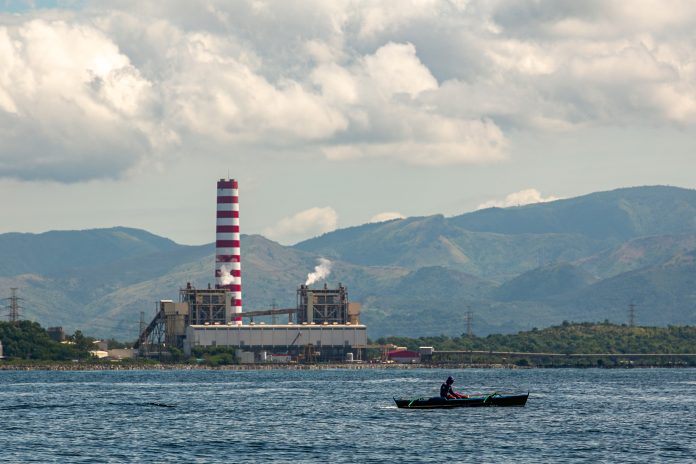
Philippine business leaders called for a faster shift to renewable-powered electrification after a global survey found that 92% believe the country is too dependent on imported fossil fuels, the highest level recorded among 18 countries surveyed.
The survey, released June 15 by E3G, the We Mean Business Coalition, and the Global Renewables Alliance, found Philippine executives were the most concerned among respondents about the country’s reliance on imported fossil fuels and the risks it poses to energy security and economic stability.
The findings come as the Philippines remains heavily dependent on imported fuels, which account for about 78% of the country’s total energy supply and leave it vulnerable to price swings and disruptions in global energy markets.
The survey also found unanimous support for electrification among Philippine business leaders, with 100% saying electrifying their operations would improve energy security.
Executives linked electrification not only to resilience but also to business performance. Nearly all respondents said it would make their companies more competitive and support growth, while 92% agreed businesses should prioritize electric technologies over fossil fuel-powered equipment over the next decade.
Researchers said rising geopolitical tensions and volatility in global energy markets have heightened concerns about dependence on imported fuels. Across all countries surveyed, 79% of business leaders said recent instability had made their shift to electrification more urgent.
“Businesses today are operating in a structurally more volatile energy landscape, where continued reliance on fossil fuels exposes companies and economies to recurring shocks,” said Dimitri de Vreeze, CEO of dsm-firmenich.
“The transition to renewable energy, and particularly electrification using clean power, is the most pragmatic way to strengthen resilience, improve cost stability, and sustain competitiveness,” he said.
The Philippines has set targets for renewable energy to account for 35% of electricity generation by 2030 and 50% by 2040, up from its current 22.2% share.
The government also views distributed renewable energy systems and resilient infrastructure as key to achieving full household electrification, particularly in remote and disaster-prone communities.
Despite broad support for electrification, many executives said government action is not keeping pace with business needs.
Nearly nine in 10 respondents, or 89%, said government policies are moving too slowly to support the pace of electrification required by businesses. Eight in 10 said the Philippines is falling behind in the global race to electrify.
Almost half of those surveyed identified public grants and subsidies as among the most effective measures to accelerate the transition.
The findings also pointed to potential economic consequences if policy support remains insufficient. About 78% of Philippine executives said they would consider relocating operations overseas if the government fails to provide enough support for electrification.
José Manuel Entrecanales, chairman and CEO of ACCIONA, said businesses increasingly view dependence on imported fuels as a strategic risk.
“This is not the first fossil fuel crisis, and it will not be the last,” Entrecanales said.
“The lesson is becoming increasingly clear: dependence on imported fuels is a strategic vulnerability and an unnecessary burden on the balance of payments of countries that do not produce fossil fuels,” he said.
He added that “access to abundant, affordable electricity is emerging as a decisive competitive advantage” and described electrification as “not merely an energy transition” but “an industrial strategy.”
The survey covered 1,994 senior executives from medium and large companies across 18 countries. Globally, 91% said electrification would improve energy security, while 90% expected their operations to be largely electrified by 2035.
Maria Mendiluce, CEO of the We Mean Business Coalition, said the findings reflect a broader shift in how businesses view the energy transition.
“Businesses are increasingly seeing electrification as the foundation of future competitiveness, energy security, and economic resilience,” she said. “At a time of geopolitical instability and fossil fuel volatility, companies are not retreating from the transition – they are moving faster toward it.”
For Philippine businesses, however, the survey suggested that the challenge is no longer whether to electrify, but whether policies, infrastructure, and incentives can keep pace with the growing demand for a less import-dependent energy future.