The unprecedented length and scale of this year’s Traslacion of the Jesus Nazareno did not happen in a vacuum. It unfolded in a city, and a country, burdened by rising prices, insecure work, recurring disasters, and a growing sense that justice remains distant for many. In such moments, popular piety becomes more than ritual. It becomes language.
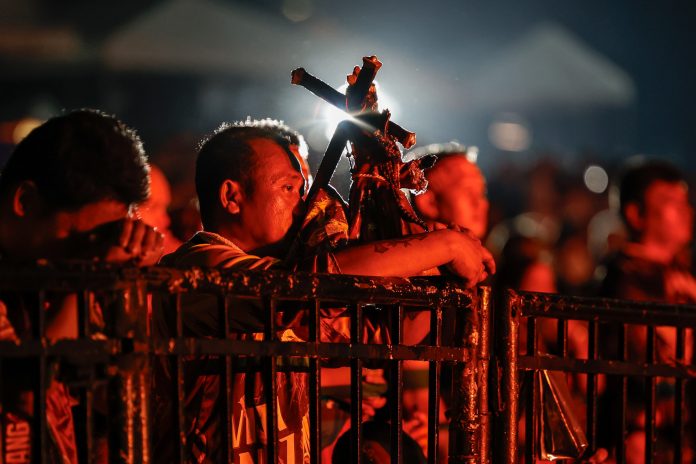
For millions of Filipinos, devotion to the Black Nazarene is not an abstract belief. It is embodied faith. It is faith that walks barefoot on asphalt, reaches out through exhaustion, and insists on nearness to a suffering Christ who looks like them, who bears wounds they recognize as their own.
The desire to come close, even to touch the image, is often misunderstood as excess or fanaticism. Yet for the poor and the excluded, distance has long been imposed by systems that deny access to power, protection, and dignity. In a society where many feel unheard and unseen, touching the suffering Christ becomes an act of recognition. It says that pain matters because it is shared.
This year’s Traslacion stretched beyond 30 hours not only because of numbers, but because devotion itself has taken on new weight. For many, the procession was not simply about fulfilling a vow. It was about endurance in a time when endurance is demanded daily. Rising food costs, unstable livelihoods, climate displacement, and unresolved injustices have turned survival into a prolonged test. The slow movement of the andas mirrored the slow grind of life under economic strain and political fatigue.
The image of Christ bent under the weight of the cross resonates precisely because it does not glorify triumph. It sanctifies struggle. For the Filipino masses, faith is not an escape from reality. It is a way to face reality without surrendering one’s humanity.
Popular religiosity thrives in times of poverty because it speaks where institutions often fall silent. It does not require polished language or access to formal power. It allows people to bring their bodies, their fatigue, their wounds, and their hopes into public space. The streets of Manila become a sanctuary because many have found no sanctuary elsewhere.
This does not mean faith replaces the demand for justice. On the contrary, the devotion exposes the cost of injustice. When millions risk injury simply to walk with a suffering Christ, it raises an unsettling question. Why must people cling so fiercely to hope embodied in wood and cloth, rather than in systems meant to protect them?
The Nazarene procession is not merely about touching an image. It is about refusing to accept that suffering should remain invisible. It is about asserting presence in a society where the poor are often asked to endure quietly. Faith, in this sense, becomes an act of resistance against despair.
In a country flooded by injustice, faith remains relevant because it refuses to normalize suffering or explain it away as fate. The devotion to the Black Nazarene is not an acceptance of pain as virtue, but a protest against a world where pain is too easily imposed on the poor. By drawing near to a suffering Christ, the faithful are not seeking hardship. They are naming a truth: suffering persists because systems remain broken, and because compassion and accountability are often absent where they are most needed.
The image does not offer triumph without cost. It does not rush toward resurrection while ignoring the cross. The Black Nazarene moves slowly because life for many Filipinos moves slowly toward relief. He stumbles because millions stumble under debt, displacement, hunger, and loss. He bleeds because injustice still wounds real bodies, in overcrowded communities, disaster zones, and forgotten workplaces. In that shared vulnerability, the faithful recognize a God who does not stand above their condition, but enters it fully.
This is why the streets matter. When the poor claim the roads of Manila as sacred space, they are asserting visibility in a society that often pushes them to the margins. The procession becomes a public confession that faith cannot be confined to church walls when life itself is a daily struggle. In walking with the Nazarene, the people declare that their suffering has meaning, and that it demands response, not silence.
For many Filipinos today, that shared journey remains the last space where hope still feels within reach. It is hope not rooted in certainty, but in companionship. Not in quick solutions, but in the stubborn belief that suffering is seen, dignity endures, and walking together, even slowly, is itself an act of faith against despair.