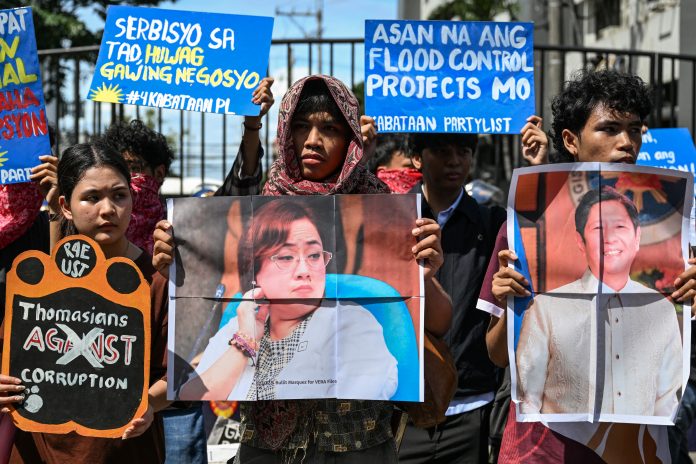
The Catholic Bishops’ Conference of the Philippines (CBCP) has called on young Filipinos to take the lead in challenging corruption, particularly in flood-control projects, saying they hold “the keys to a new culture” where truth and accountability can thrive.
In a pastoral letter released September 8, the Feast of the Nativity of the Blessed Mother, the bishops urged the youth to use their digital platforms not only for outrage but for vigilance. “Expose injustice, share facts, demand reforms. Make corruption shameful again,” the letter read.
The bishops said the younger generation, living in a digital space where “truth and lies battle daily,” can shape a culture that resists the normalization of dishonesty, dynastic politics, and survival-driven patronage systems. “To our young people: you hold the keys to a new culture,” the bishops emphasized.
Floods of corruption
The pastoral letter, titled “Beyond Survival: Rising Above the Floods of Corruption,” denounced long-standing anomalies in public works projects, particularly flood-control initiatives.
It cited findings from Senator Panfilo Lacson and city mayors Benjamin Magalong and Vico Sotto, who exposed that commissions and kickbacks consume up to 60 percent of project funds, leaving behind substandard infrastructure.
“Shame must be inclusive: legislators, district engineers, government auditors, and political patrons also share in the plunder,” the bishops said, recalling the biblical rebuke: “Your rulers are rebels, partners with thieves; they all love bribes and run after gifts” (Isaiah 1:23).
Beyond survival politics
The CBCP warned that corruption persists not only because of powerful elites but also because of a culture of dependency and disinformation that conditions people to accept handouts as a substitute for genuine development.
“Survival cannot be the standard of our politics,” the bishops stressed, quoting Christ’s words: “I came that they may have life, and have it abundantly” (John 10:10).
The letter also challenged all sectors—from government and oversight bodies to ordinary citizens—to demand accountability, restitution of stolen wealth, and integrity in public service.
It outlined nine steps, including rejecting patronage politics, supporting independent probes into anomalies, and modeling honesty in daily life.
Educators back bishops’ call
Catholic educators expressed support for the bishops’ stance, warning that corruption has become so entrenched that many Filipinos have grown numb to it.
In a statement, the Catholic Educational Association of the Philippines (CEAP) described corruption as “a process of death that hardens hearts, normalizes injustice, and poisons hope.”
CEAP cited international reports ranking the Philippines poorly in global corruption indexes and echoed Pope Francis’ warning that greed and dishonesty “deaden conscience” and leave the poor more vulnerable.
“CEAP supports all calls to turn outrage into a sustained proclamation of hope, with firm commitment to change and moral renewal,” the group said.
Both bishops and educators urged young Filipinos to rise as “a generation of integrity,” unafraid to demand justice, track government projects, expose anomalies on social media, and volunteer in community monitoring.