
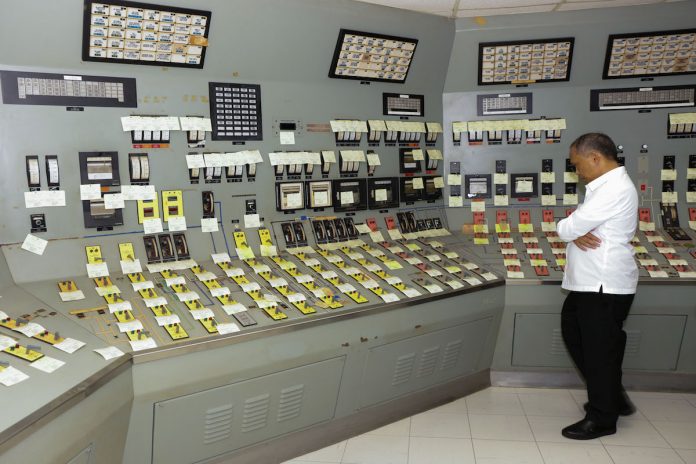
Anti-nuclear groups marked the anniversary of a historic mass protest against the Bataan Nuclear Power Plant (BNPP) on Thursday, renewing calls for the Marcos administration to abandon plans to revive the facility and pursue new nuclear energy projects.
The commemoration of the 1985 Welgang Bayan Laban sa BNPP came as businessman Mark Cojuangco, one of the country’s leading advocates for rehabilitating the mothballed plant, prepared to visit the facility on June 19.
The Welgang Bayan, or People’s Strike, was held from June 18 to 20, 1985, when thousands of Bataan residents, joined by supporters from Metro Manila and nearby provinces, staged a province-wide shutdown to oppose the planned operation of the BNPP.
Transportation halted, businesses closed and work stopped as protesters challenged a project they believed posed risks to public safety and the environment.
The action came as the BNPP was preparing for fuel loading and commercial operation. Anti-nuclear campaigners later viewed the strike as a turning point in the movement against the plant and a precursor to the 1986 People Power uprising that ended the Marcos dictatorship.
Organizers said the anniversary remains relevant as the government continues to explore nuclear energy as part of its response to the country’s power and energy security challenges.
The observance also coincided with the No Nukes Asia Forum, which returned to the Philippines from June 17 to 21 amid renewed debate over the role of nuclear power in the country’s energy future.
Built during the presidency of Ferdinand Marcos Sr., the BNPP was completed but never operated. The project cost billions of dollars and left the government paying off related debts for decades.
Environmental and community groups said the Philippines must transition away from fossil fuels but warned that nuclear power poses significant risks in a country vulnerable to earthquakes, volcanic activity and extreme weather.
“A safe future and a healthy planet are not luxuries—they are fundamental rights that must never be treated as an afterthought,” said Derek Cabe, coordinator of the Nuclear-Free Bataan Movement.
“It is alarming that the government is doubling down on dangerous, false solutions like nuclear power while ignoring the abundant, clean, and safe energy sources already available across the Philippines,” he said.
The groups pointed to last week’s magnitude 7.8 earthquake in Mindanao as a reminder of the country’s exposure to natural hazards.
“This historic day of resistance against the BNPP must not simply end with a commemoration, but with an open invitation for all to keep the Philippines nuclear-free,” said Jefferson Chua, climate campaigner for Greenpeace Philippines.
“Last week’s 7.8 magnitude earthquake in Mindanao is a testament to how unfit this type of energy source is for the Philippines as we remain one of the most vulnerable countries in the world,” he added.
The groups urged President Ferdinand Marcos Jr. to halt plans to rehabilitate the BNPP and develop new nuclear projects, including Small Modular Reactors, and instead prioritize renewable energy, energy efficiency, and community-based energy systems.
Enrique Beren of the Young Bataeño for Advocacy Network said the anniversary also honors the thousands of residents who opposed the plant four decades ago.
“Over 38,000 Bataeños marched out of their homes, risked everything, and stood as a human wall to oppose that nuclear plant. They defended our land,” he said.