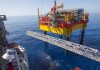

A Philippine energy think tank has disputed President Ferdinand Marcos Jr.’s claim that increased natural gas production from the Malampaya field could lower electricity rates, warning that costly offshore exploration could burden consumers and threaten marine ecosystems.
The Center for Energy, Ecology, and Development (CEED) said Nov. 10 that additional domestic gas supplies would not necessarily make electricity cheaper because prices remain tied to international markets.
The warning followed Marcos’ remarks that increased natural gas production from newly developed Malampaya wells could help reduce electricity rates. The Malampaya consortium has also called for further exploration after integrating the Malampaya East-1 and Camago-3 wells into the production system.
“More gas, even from domestic sources, does not necessarily mean cheaper electricity as these are not immune to the volatility of the global market,” said Gerry Arances, executive director of CEED.
Arances said Malampaya and other offshore gas projects remain tied to international oil and gas pricing benchmarks. He warned that companies could pass exploration and production costs on to consumers as they seek to recover their investments.
According to CEED, drilling a single exploratory well can cost more than 9 billion pesos, with only one in five wells typically succeeding.
CEED cited Palawan’s high electricity rates as evidence that hosting fossil gas infrastructure does not guarantee affordable power for nearby communities.
The group’s October 2026 report, “Don’t Drill Paradise,” found that communities affected by gas exploration receive little protection or benefit despite bearing the industry’s social and environmental risks.
“Palawan remains dependent on expensive bunker fuel despite hosting gas wells in its waters and despite the Malampaya pipeline passing straight through it. It is proof that hosting fossil fuel infrastructure does not guarantee affordable power,” said Arances.
In 2025, the Palawan Electric Cooperative recorded an average distribution utility rate of 16.65 pesos per kilowatt-hour, while the Busuanga Island Electric Cooperative posted 18.32 pesos per kilowatt-hour, the highest nationwide, according to CEED.
The group also warned that expanding offshore gas operations could damage Palawan’s marine ecosystems and threaten the livelihoods of coastal communities.
Palawan, a UNESCO biosphere reserve and a major food-producing region, accounted for about 7.45% of national fisheries production in 2024, according to CEED.
Its report identified at least 14 active offshore petroleum service contracts around the province, raising concerns about the impact of exploration and drilling on marine biodiversity, fisheries and coastal livelihoods.
Arances warned that seismic surveys could drive marine wildlife away, reducing fish catches, while drilling could damage seabed habitats. He also cited risks of water pollution, methane emissions and toxic spills from gas infrastructure.
“Moreover, the opening of new wells goes against climate imperatives to move away from fossil fuels, hampers the advancement of sustainable development pathways, and harms the climate resilience of the country by harming critical ecosystems,” said Arances.
CEED urged the Marcos administration to prioritize affordable, distributed renewable energy systems rather than expand dependence on fossil gas.
The group said energy security policies must account for the economic and environmental costs of offshore drilling, particularly for communities whose livelihoods depend on healthy marine ecosystems.
“Advancing renewables—especially distributed renewable energy systems—is the best way forward in developing our domestic energy sources, which enables us to also eliminate avoidable compromises,” said Arances.