
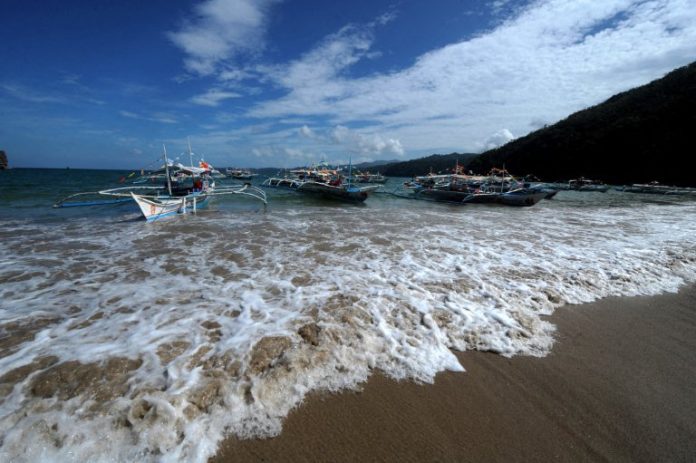
Fourteen of the Philippines’ 22 active petroleum service contracts are concentrated around Palawan, raising concerns over risks to protected marine areas, fishing grounds and coastal livelihoods, according to a new report.
The Center for Energy, Ecology, and Development (CEED) said the concentration of oil and gas contracts has made Palawan the center of the country’s upstream petroleum expansion despite the province’s ecological importance.
Its report, Don’t Drill Paradise, said at least four contract areas are near protected areas, including Tubbataha Reef, the El Nido-Taytay Managed Resource Protected Area and Malampaya Sound Protected Landscape and Seascape.
Four active contracts are within municipal waters, while all petroleum service contracts in Palawan overlap with Fisheries Management Areas, placing upstream oil and gas activities in waters directly tied to municipal fishing and coastal livelihoods.
“From the exploration stage itself, oil and gas extraction entails noise pollution that causes hearing damage and stress to marine animals and interferes with their essential activities. The risks of spills, methane pollution, risks to livelihoods, and health impacts also accumulate over time,” said Gerry Arances, executive director of CEED.
The report said seismic surveys used during exploration can generate underwater noise of up to 255 decibels, while drilling and pipeline construction can damage seabeds, destroy habitats and pollute surrounding waters.
Palawan is also one of the country’s major fishing provinces. It produced 123,245 metric tons of municipal marine and commercial fisheries in 2024, or 7.45% of national production, according to the report. Fisheries production in the province has fallen by more than half since 2006.
The report warned that further declines in fish catch could affect incomes in coastal communities and constrain the availability and affordability of fish elsewhere in the country.
“For a country that has an abundant potential for renewable energy, it makes no sense to harm critical biodiversity and our last ecological frontier for energy sources that only contribute to worsening the climate crisis,” Arances said.
Atty. Gerthie Mayo-Anda of the Environmental Legal Assistance Center in Puerto Princesa also questioned the scale of petroleum development around Palawan.
“It is very ironic that we have these many service contracts now surrounding us. Worse, it’s worrisome that stakeholders do not know of what new master plan is being implemented for energy in the province. Where is science, where is consultation in the whole process?” she said.
The report said the expansion followed government policies favoring domestic fossil gas. The number of active petroleum service contracts nationwide has risen to 22, with 12 awarded under the current administration.
CEED urged the government to stop awarding new petroleum service contracts, halt the development of new gas fields and restrict oil and gas exploration in biodiversity-rich and protected areas. It also called on local authorities in Palawan to reject new upstream fossil gas projects that threaten biodiversity.
Church leaders, environmental advocates, Indigenous Peoples’ groups, fisherfolk organizations and other sectors launched the “Defend Palawan” campaign on Oct. 20 to oppose extractive fossil fuel activities in the province.
“We call for a serious and transparent review of offshore oil and gas exploration proposals, especially those that may threaten protected areas, marine biodiversity, and the livelihoods of vulnerable communities,” said Fr. Mon Herher of the Social Action Center of the Apostolic Vicariate of Puerto Princesa.
“Our seas sustain fisheries, support local tourism, and provide food for countless families. Oil and gas exploration carries risks that must never be taken lightly, particularly in ecologically sensitive areas. We must not wait for irreversible damage before we act,” he added.