
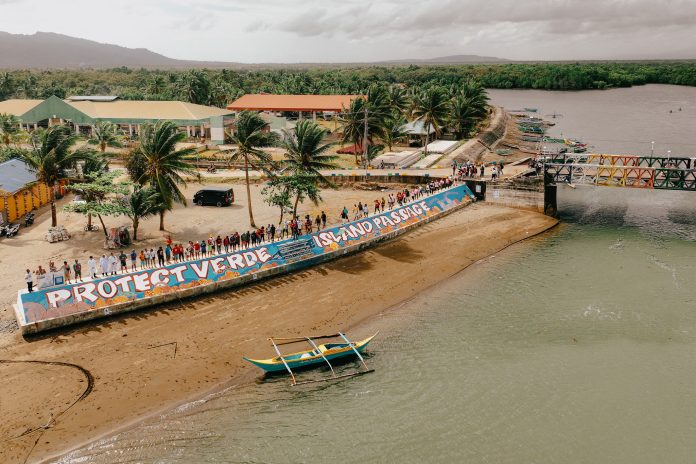
Protect Verde Island Passage warned Aug. 10 that a Supreme Court ruling striking down a vessel monitoring regulation could weaken enforcement against illegal commercial fishing and called on the government to immediately establish a replacement system that meets constitutional standards.
The coalition raised concern over the Court’s decision declaring Fisheries Administrative Order No. 266 unconstitutional. The regulation provided for the use of a Vessel Monitoring System, or VMS, to track commercial fishing vessels.
“While we respect the Court’s duty to safeguard constitutional rights, this development opens a dangerous gap in fisheries governance, leaving commercial fishing vessels essentially unmonitored and threatening both the marine environments in which they operate and the livelihoods of the fisherfolk who depend on them,” said Fr. Edwin Gariguez, lead convenor of Protect VIP.
Protect VIP said the satellite-based system allowed regulators to track vessel movements and identify routes in real time. It also helped authorities detect incursions into protected or restricted waters and gather data for enforcement and fisheries management.
The coalition said vessel monitoring was particularly important for protecting municipal and small-scale fisherfolk, who depend on coastal waters for their livelihoods and food security.
It said an earlier Supreme Court ruling allowing commercial fishing in 15-kilometer municipal waters had already placed small-scale fisherfolk in direct competition with larger commercial vessels.
“Our ocean is not a resource to be exploited; it is a gift entrusted to our care,” Gariguez said.
He said Philippine fisheries were already under pressure from overfishing, habitat destruction, pollution and the effects of the climate crisis.
“Weakening regulatory safeguards risks further undermining the country’s ability to protect its already depleted marine ecosystems,” he said. “This is especially alarming for biodiversity hotspots such as the VIP, where destructive and illegal fishing threatens one of the world’s richest centers of marine biodiversity.”
According to Protect VIP, the Court ruled against FAO No. 266 over concerns involving the protection of commercially sensitive information and procedural deficiencies in the regulation’s adoption.
The coalition argued that vessel monitoring systems are internationally accepted fisheries management tools that can promote transparency and accountability without necessarily exposing proprietary business information.
“Far from advancing the public interest, this ruling weakens the State’s capacity to protect its marine resources,” Gariguez said. “It will further erode the safeguards meant to uphold preferential rights, protect municipal waters from illegal incursions, and ensure that coastal communities can continue to fish sustainably.”
Protect VIP called on the Department of Agriculture and the Bureau of Fisheries and Aquatic Resources to work with fisherfolk, scientists, civil society groups, local governments and legal experts on a replacement framework.
“The government must urgently adopt a constitutionally sound vessel monitoring framework that restores transparency, accountability, and effective oversight of commercial fishing activities,” Gariguez said.
The coalition said any new framework should protect legitimate commercial interests while preserving the government’s ability to monitor commercial fishing, combat illegal fishing and conserve marine resources.
“Ultimately, what deserves the greatest protection is not the confidentiality of commercial fishing data but the future of our oceans,” Gariguez said.
“The challenge now to the government is not whether to regulate commercial fishing but how to do so in a manner that is both constitutionally sound and environmentally effective,” he said.