Conservation projects accounted for nearly four in 10 project-related human rights violations documented against Indigenous Peoples from 2021 to August 2026, according to a report.
It warned that protected areas and carbon projects have contributed to the criminalization of communities on their ancestral lands.
Indigenous Peoples Rights International (IPRI) documented 715 cases during the period. Of 204 cases linked to mining, infrastructure, tourism, conservation and other projects, 79 — or 38.7% — were related to conservation, the largest category in its database.
The conservation-related cases affected about 777,000 Indigenous people, with cases concentrated in India, Cambodia, Kenya, Tanzania, Thailand and Peru. Mining, the next largest category, accounted for less than half as many cases.
The report, When Conservation Undermines Indigenous Peoples’ Rights, identified a recurring pattern in which protected areas, wildlife corridors, tiger reserves, conservancies and carbon projects were established or expanded without recognition of customary tenure or free, prior and informed consent, or FPIC.
Traditional farming, grazing, hunting, gathering, housing and cultural or spiritual practices were then treated as encroachment, trespass, forest destruction, illegal hunting or other offenses. Communities that resisted or sought accountability faced surveillance, harassment, arrests, physical violence, forced eviction, and legal action in some of the documented cases.
IPRI recorded violations that included criminalization, forced displacement, physical injury, land grabbing, violations of FPIC, killings, sexual violence, cultural destruction, loss of livelihoods, threats, harassment and intimidation.
The violations frequently overlapped or developed through an escalating sequence rather than occurring as separate events, the report said.
State agencies responsible for environmental and wildlife protection, including forest departments, police and forest officers, were the most frequently identified alleged perpetrators. Private conservation institutions and carbon-credit actors were also implicated in a number of cases.
IPRI identified the failure to recognize Indigenous customary land tenure and self-determination as a fundamental factor behind the violations.
When states treat customary territories as vacant, state-owned or available for protected-area designation, Indigenous presence and traditional land use can be rendered unlawful, transferring authority from Indigenous institutions to government agencies or private conservation entities, the report said.
Protected areas established or expanded without FPIC can also remove Indigenous Peoples from decisions over land use, mobility, resource management and cultural practices. Traditional activities such as rotational agriculture, fishing, hunting and gathering forest products may then become grounds for arrest, prosecution, fines or eviction.
The report raised similar concerns over carbon markets and private conservation projects. Without strong safeguards, conservation leases and carbon projects can restrict grazing, farming and mobility, lead to land loss or eviction, and shift decision-making power away from Indigenous landholders.
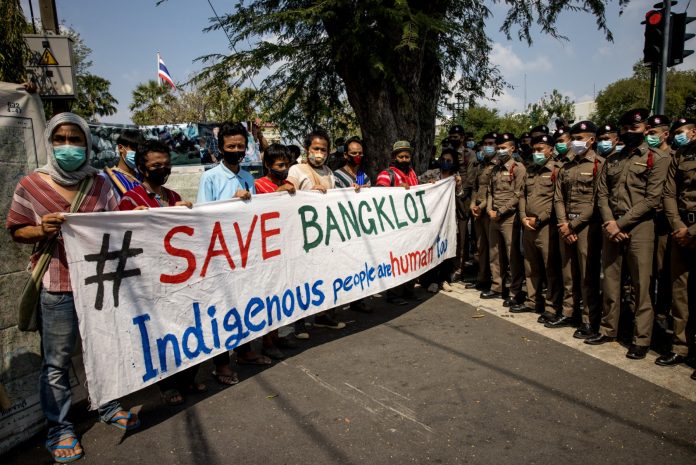
In Thailand, two Karen villagers from Upper Bangkoi were arrested in October 2025 for alleged encroachment and hunting inside Kaeng Krachan National Park while carrying out traditional livelihood activities on ancestral lands.
The forest complex had been listed as a World Heritage Site without meaningful consultation or FPIC, according to the report. Bail requests were reportedly denied under pressure from park officials, and the villagers were indicted.
In Cambodia, 48 members of the Brao community in Tabouk Village were charged with illegally clearing state land while practicing rotational agriculture.
The community learned in 2024 that its customary lands had been incorporated into an expanded national park without its knowledge, participation or FPIC. The prosecutions imposed legal costs, restricted subsistence farming and created continuing fear through surveillance by environmental officers and local authorities.
IPRI also cited two carbon projects affecting Maasai pastoralists in Tanzania that reportedly proceeded without the FPIC of affected communities.
Community organizations warned that the Longido and Monduli Rangelands Carbon Project and the Resilient Tarangire Ecosystem Project could restrict communal access and pastoral mobility, weaken Indigenous governance, threaten food security and cause displacement.
The findings come as governments implement the Kunming-Montreal Global Biodiversity Framework, adopted in 2022. The framework recognizes the rights, roles and contributions of Indigenous Peoples and calls for equitable governance, FPIC and protection of environmental human rights defenders.
IPRI said the cases showed continuing gaps between those international commitments and their implementation at the national level.
The group called on governments to stop forced evictions and prosecutions arising solely from customary occupation and use of ancestral lands, recognize Indigenous territories and require FPIC before creating or expanding protected areas or imposing restrictions on customary livelihoods.
It urged conservation organizations, donors and carbon-market actors not to finance, certify or purchase credits from projects where land tenure is disputed, FPIC is absent, defenders face reprisals or communities are threatened with eviction.
“Conservation objectives are legitimate and urgent, but they cannot be achieved at the expense of Indigenous Peoples’ rights, cultures, livelihoods and self-determination,” the report said.
IPRI acknowledged that its documentation does not represent a complete global picture, citing difficulties in accessing Indigenous territories, security risks and limits on sustained documentation and monitoring.