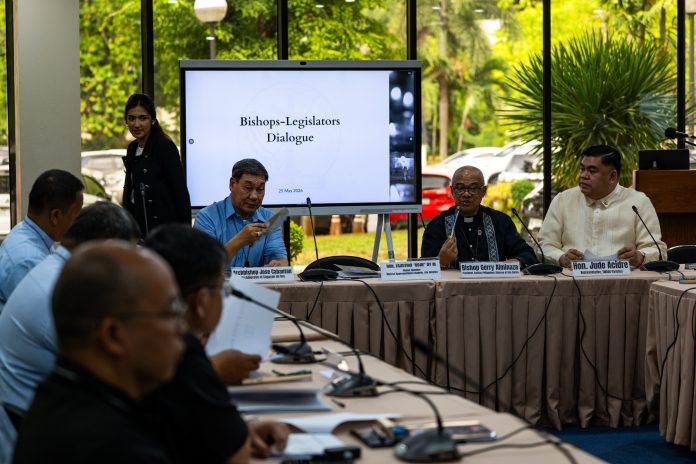
Catholic bishops and members of the House of Representatives revived the Bishops-Legislators Forum on May 25, seeking to create what organizers described as a space for “dialogue, discernment, and collaboration” amid deepening public distrust, corruption, ecological crisis, and widening inequality in the Philippines.
The renewed initiative, called the Bishops-Legislators Committee on Integral Human Development, was presented during a gathering at the House of Representatives in Quezon City attended by bishops, lawmakers, and representatives from civil society.
Organizers said the platform seeks to promote “a better kind of politics” inspired by Pope Francis’ encyclical Fratelli Tutti, which calls for politics rooted in the common good and human dignity.
In his address, Bishop Gerardo Alminaza of San Carlos, president of Caritas Philippines, said the country is facing “declining public trust and persistent poverty” amid governance systems “often associated with corruption, patronage, and weak accountability.”
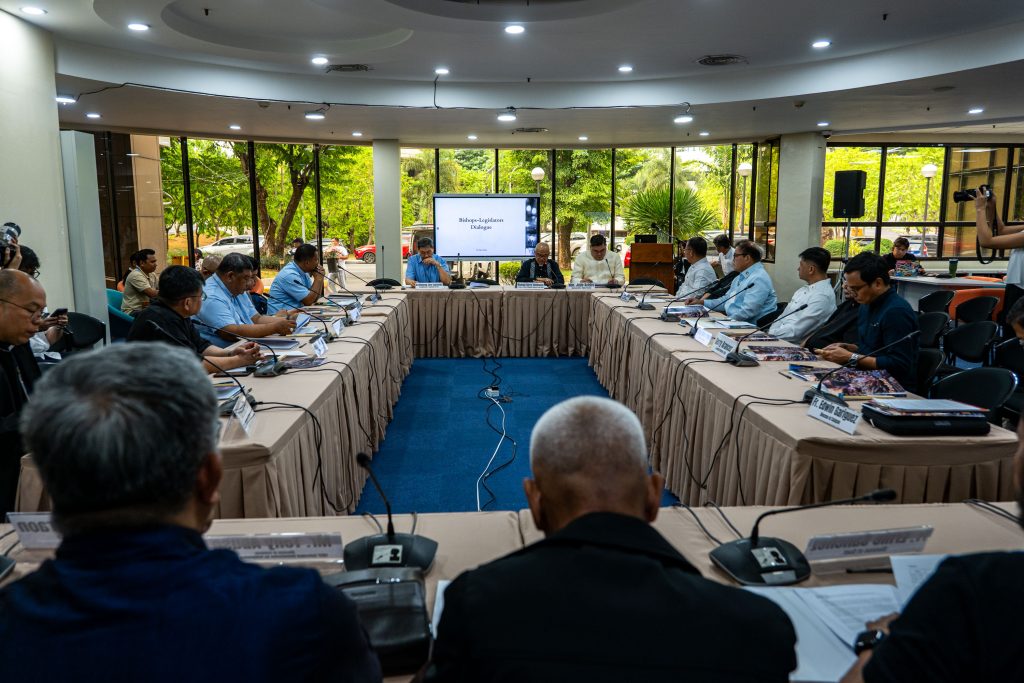
The prelate also cited the 2025 Corruption Perceptions Index released by Transparency International, saying the country remains “among the most corruption-challenged in Southeast Asia.”
“These conditions point to the need for governance that is not only participatory, but also accountable, ethical, and oriented toward long-term social and ecological well-being,” Alminaza said.
The initiative draws heavily from the “Hayuma” framework, which Alminaza described as “mending what is broken, together,” offering “a unifying approach” to rebuilding trust, accountability, solidarity, and meaningful participation in governance.
The framework also integrates themes from Pope Francis’ Laudato Si’ and Laudate Deum, as well as Pope Leo XIV’s “Dilexi Te,” which organizers said calls for “transformative love” expressed through “justice, accountability, and solidarity with those most affected by poverty, ecological degradation, and exclusion.”
Organizers stressed that the forum is not intended to blur constitutional boundaries between Church and State. Instead, it was described as “a respectful space for servant-leaders to meet” and “a space of encounter, listening, and moral reflection.”
Organizers outlined five pillars guiding the forum’s work: dialogue, discernment, discipleship, dignity of life, and development.
Under “discernment,” the framework acknowledged that legislative decisions are often shaped by “strategy, transactions, or reactive shifts in public opinion under immense pressure,” while urging “guided ethical reviews, prayerful reflection, and Catholic social teaching.”
The initiative also linked governance concerns to broader economic and geopolitical pressures, including the global energy crisis and rising inflation triggered by instability in the Middle East.
The bishops and legislators identified several legislative priorities, including the protection of municipal fisherfolk, the declaration of the Verde Island Passage under the Expanded National Integrated Protected Areas System, and measures advancing renewable energy and distributed energy systems.
The gathering also emphasized that governance should be measured not merely through economic outputs, but through its impact on people and communities.
Representative Jude Acidre, whose office helped initiate the effort alongside Caritas Philippines in 2023, echoed the framework during the meeting, describing politics as “love made public.”
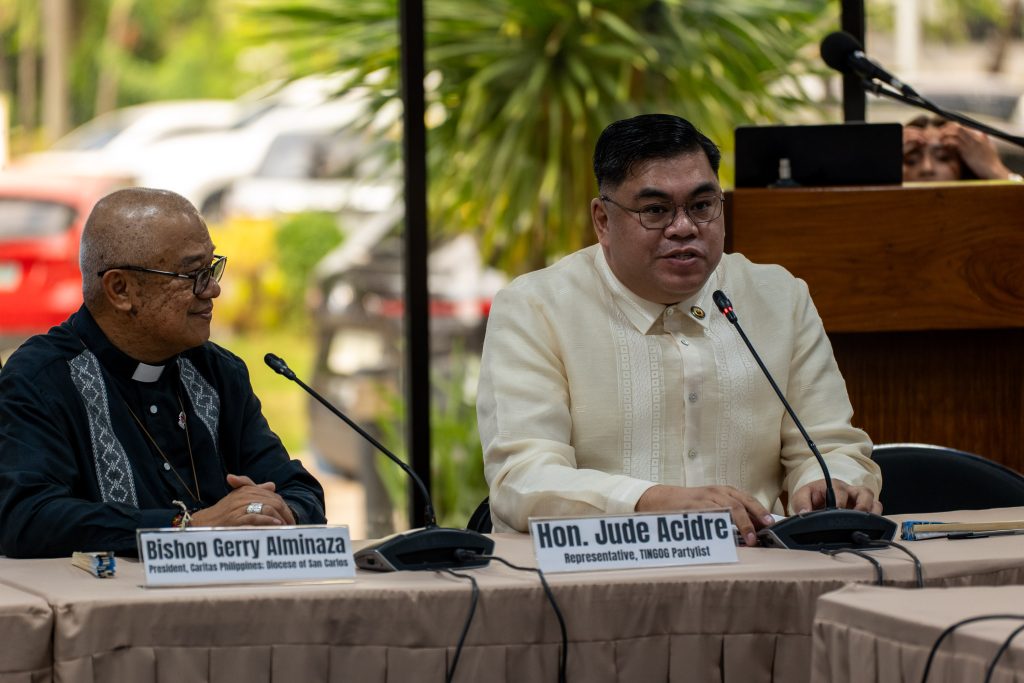
“If this Committee succeeds, it can help recover a nobler understanding of politics: not powerful, but love made public,” he said.
Acidre said lawmakers joining the revived Bishops-Legislators Committee on Integral Human Development could expect “a space of renewal away from the noise of political life,” where they could engage in “honest dialogue with Church leaders,” receive “moral and spiritual accompaniment,” and deepen their engagement with Catholic social teaching.
The initiative, he said, aims to promote “a more humanized understanding of politics” and encourage public officials to see governance “as a responsibility, not merely power.”
At the same time, Acidre emphasized that participation in the committee requires humility and sincerity from legislators.
“Come with humility, not entitlement,” he said, urging lawmakers to “participate sincerely, not ceremonially,” “listen deeply,” and “speak honestly about governance realities.”
He also called on legislators to “govern with conscience and protect human dignity” while embracing “co-responsibility with other sectors.”