After months of sadness and darkness, Vincent now expresses a jubilant sense of joy. For the first time, he was assigned to a rural parish called “Clichy” (Clichy-la-Garenne). In his later years, with a sense of nostalgia, he recalled this happy assignment as a young priest.
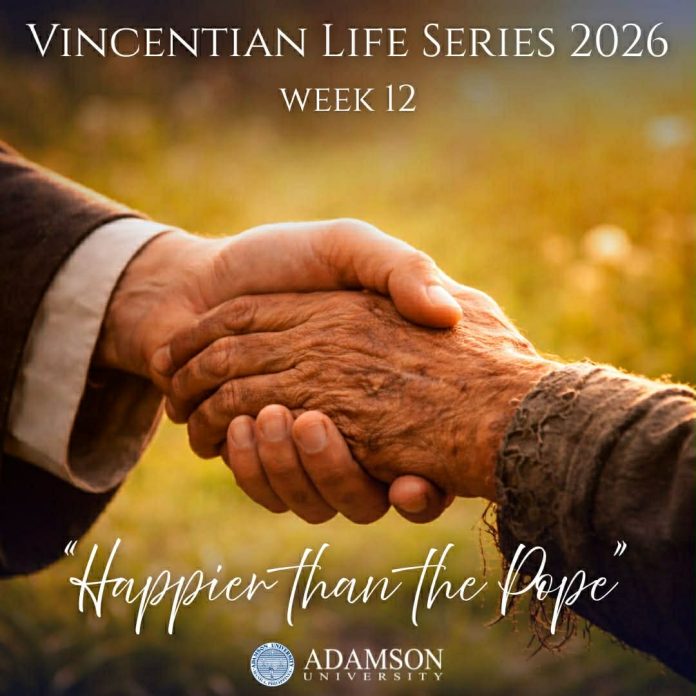
“I was once parish priest in a certain village (a poor parish priest!). This gave me so much consolation, and I felt so happy that I used to say to myself, ‘My God, how happy I am to have these people in my care!’ And I would add: ‘I do not even think the pope can be as happy as a parish priest with such good-hearted people.’”
“And one day, Cardinal de Retz said to me, ‘How are things going? How are you?’ I told him, ‘Monsignor, I cannot explain how happy I am. Why? Because I have parishioners who are so good and so obedient in doing everything I ask them that it seems to me that neither the Holy Father nor you, Your Eminence, could be as happy as I am.’”
This was his first parish involvement, his first engagement with people on the ground—twelve years after his ordination. In his own words, one can only imagine his excitement.
Clichy was a village near Paris, now accessible by the Metro. When I first went to Paris years ago, this was the first place I explored alone and visited on pilgrimage. But in Vincent’s time, it was a rural area. The residents were simple farmers and poor people. The church was in poor condition when he first arrived, and he asked his friends in Paris to help rehabilitate it.
He repaired the pulpit and had a new baptismal font made, which can still be seen today. He never hesitated to borrow money; after six months of being assigned there, he had incurred a debt of 320 livres. He arranged liturgical celebrations, preached with zeal, visited the sick, and cared for the poor.
Like many clerics of his time, his seminary training was not solid. Seminary formation, though already mandated by the Council of Trent, was not yet well implemented in France during Vincent’s time. He also lacked direct pastoral experience for many years. It may have been the people of Clichy who taught him how.
“I must confess, to my shame, that when I was in a parish I did not know what to do. I used to listen to these country people intoning the psalms without a single wrong note. And I would say to myself, ‘You are their spiritual father, and you do not know anything about this.’ It made me very sad.”
There was another initiative he began in Clichy: he gathered a small group of ten or eleven young men who wished to become priests. He taught them the rudiments of the faith and the ideals of ministry. One of these young men was Antoine Portail, later Vincent’s first collaborator in the missions and his successor as Superior General.
What does this phase of Vincent’s life tell us?
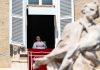
First, profound joy is found in direct service—not in secluded idleness or the frantic pursuit of personal advancement. Pope Francis once said: “Greatness and success in God’s eyes are measured differently: they are measured by service. Not on what someone has, but on what someone gives. Do you want to be first? Serve. This is the way.”
Second, private ministries may be necessary at certain stages of life, but everyone is called to direct engagement with God’s people. In Vincent’s experience, this first direct apostolate with the poor brought him the deepest joy.
Third, Clichy offered a blueprint for Vincent’s future work: liturgical service in the Church, evangelization among the poor, and the formation of clergy—ministries he would later organize more systematically.
Finally, Vincent’s experience of consolation in ministry left a mark even on how he was addressed. It was in Clichy that people began to call him “Monsieur Vincent.” Priests in France at the time were addressed as “Mon Père” (Father), but Vincent preferred “Monsieur Vincent” (Mr. Vincent). He was addressed this way by the Queen and cardinals, by bishops, priests, and sisters, and also by ordinary people in the missions and in the streets. This all began in Clichy.
Pope Francis once said: “True joy does not come from things or from possessing. No! It is born from encounter, from relationship with others. Joy is born from the gratuitousness of an encounter!”
Father Daniel Franklin Pilario, C.M., is the President of Adamson University in Manila. He is a theologian, professor, and pastor of an urban poor community on the outskirts of the Philippine capital. He is also the Vincentian Chair for Social Justice at St. John’s University in New York.