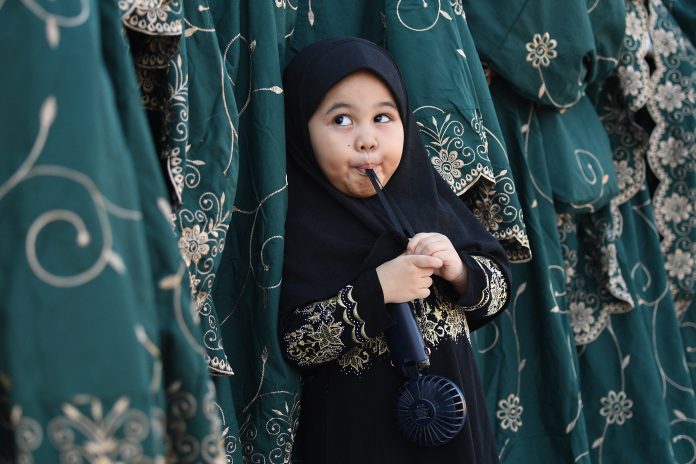
The rare convergence of Ramadan and the Christian Lenten season on Feb. 18, 2026, offers Muslims and Christians a shared opportunity to deepen peace, solidarity, and care for the vulnerable, a Filipino Catholic bishop said.
In a message marking the joint observance, Bishop Jose Colin M. Bagaforo of Kidapawan described the simultaneous beginning of the two sacred seasons as “a grace” that invites believers “to slow down, to return to God, and to walk together in faith.”
“This shared beginning is a grace,” said Bagaforo, who heads the Catholic Bishops’ Conference of the Philippines’ Commission on Inter-religious Dialogue and Co-President, PAX Christi International.
The prelate noted that both traditions enter a period of “prayer, fasting, repentance, and generosity.”
Addressing a world “marked by violence and division,” the bishop said the coincidence of Ramadan and Lent calls faith communities not only to pray for peace but “to live it and work for it.”
“Our sacred texts call us to peace,” he said, citing Jesus’ words, “Blessed are the peacemakers” (Matthew 5:9), and the Qur’anic teaching that God “invites all to the Home of Peace” (Qur’an 10:25).
Bagaforo stressed that fasting in both traditions is meant to transform personal faith into concrete action, particularly toward those who are marginalized.
“Fasting opens our eyes to suffering and enlarges our compassion,” he said. “Love of God is proven in love of neighbors, especially the poor and the forgotten.”
He said peace should not be understood merely as the absence of war, but as “the right relationship—with God, with one another, and with creation.”
“When forests are destroyed, waters poisoned, and land abused, peace is broken,” Bagaforo said, linking ecological degradation to social injustice and conflict.
Drawing on Catholic social teaching, he said Pope Francis’ call to human fraternity affirms that “no one is meant to be excluded” and that “no one is meant to be left behind,” a vision he said resonates with both Ramadan and Lent.
Speaking from the Philippine context, Bagaforo highlighted Alay Kapwa, a Lenten practice whose name means “offering to one’s neighbor,” as an example of how prayer and sacrifice can be translated into service for communities affected by poverty, conflict, disaster, and environmental harm.
“It is not simply an act of charity, but a way of seeing the other as kapwa—one who shares our humanity and our future,” he said.
Referring to Pope Leo’s World Day of Peace message, “Towards an Unarmed and Disarming Peace,” Bagaforo said genuine peace cannot be built on fear or violence.
“Peace must be patient. Peace must be inclusive. Peace must be lived,” he said.
He invited Christian and Muslim communities, interreligious dialogue groups, and civil society organizations worldwide “to pray together and to work together,” describing care for the poor, protection of creation, and education for peace as “sacred tasks” and “works of peace.”
“May this shared observance of Ramadan and Lent become a living prayer,” Bagaforo said, “a prayer lived through fraternity, compassion, and care for our common home.”