The social action arm of the Catholic Church in the Philippines raised grave concerns over the ₱8.1-billion allocation for the anti-communist task force, warning that peace cannot be built through patronage or conditional aid.
Caritas Philippines said the proposed budget for the National Task Force to End Local Communist Armed Conflict (NTF-ELCAC) demands “serious moral scrutiny,” particularly as it is framed as a “reward” for local government units and barangays declared cleared of insurgency.
In a pastoral statement, Bishop Gerardo Alminaza, president of Caritas Philippines, said the allocation raises moral and justice concerns at a time of widespread poverty and limited public resources.
“Peace is not a prize to be handed out, nor a favor to be earned. Peace is the fruit of justice,” the prelate said, adding that peace should not be framed as an incentive.
While acknowledging the government’s stated intention to bring peace and development to conflict-affected areas, Caritas Philippines said “good intentions cannot justify approaches that undermine justice, human dignity, and democratic participation.”
The group warned that linking development assistance to security classifications risks politicizing public funds. “Framing development assistance as a reward converts public funds into instruments of patronage rather than tools of empowerment.”
Such an approach, it added, “breeds fear instead of participation, dependence instead of empowerment, and short-term obedience instead of lasting social transformation.”
Caritas Philippines said infrastructure and assistance projects are necessary but insufficient if they fail to address structural injustice.
“Infrastructure projects—such as farm-to-market roads, health stations, and water systems—are necessary,” the statement said, but warned that when delivered as palliatives, “they merely manage suffering rather than end it.”
It raised unresolved questions about poverty and inequality, asking: “Why do communities remain poor? Why do farmers remain landless? Why does public wealth continue to be concentrated in the hands of a few political families?”
Without addressing political dynasties, corruption, landlessness, insecure work, and weak accountability, the group said development initiatives “will not bring lasting peace.”
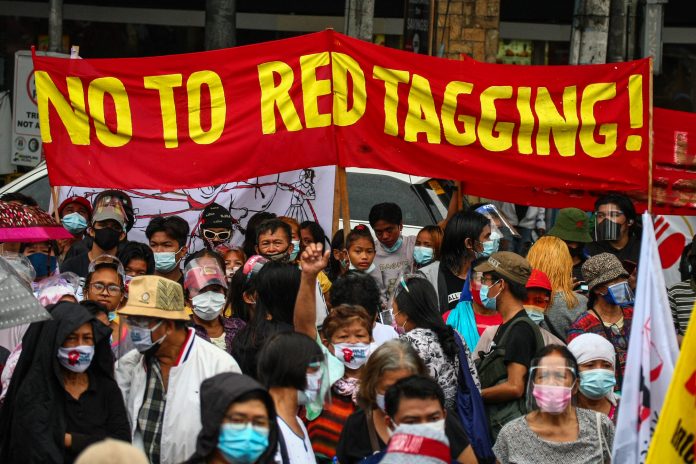
Caritas Philippines also expressed alarm over reports linking NTF-ELCAC implementation to red-tagging, harassment of civil society actors, and alleged human rights violations.
“Development must never be tied to security labels,” it said
Public assistance, it added, must not come at the cost of democratic freedoms. “Peace cannot grow where dissent is criminalized. It cannot take root where communities are treated as targets rather than partners in development.”
Calling for a justice-centered approach to peace, Caritas Philippines urged a shift “from patronage to participation, from rewards to rights, from short-term relief to systemic reform.”
The group called on leaders to invest in dismantling political dynasties, strengthening transparency and accountability, advancing genuine agrarian reform, ensuring decent work and a living wage, and pursuing peace through dialogue and social justice.
Caritas Philippines said it stands with communities “not only for assistance, but for dignity; not only for projects, but for justice; not only for temporary calm, but for a peace that is rooted, inclusive, and lasting.”