
Caritas Jerusalem has welcomed the announcement of a peace agreement in Gaza, calling it a long-awaited sign of hope after months of devastation.
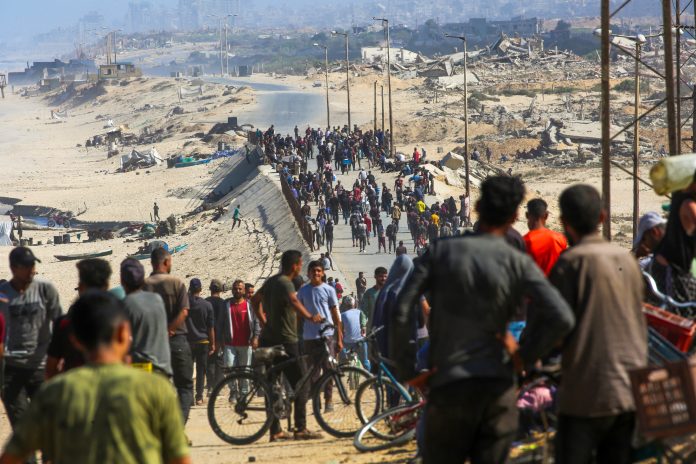
Since September 22, 2025, the mass evacuation in Gaza forced Caritas Jerusalem to suspend operations at five of its ten medical points, including its main medical center.
Despite the challenges, “102 Caritas employees continued their vital work south of Wadi Gaza, operating across the five remaining medical points,” the organization said.
It added that “three new medical points were inaugurated yesterday in the south of Wadi Gaza to further expand humanitarian outreach.”
Caritas Jerusalem Secretary General Anton Asfar expressed relief and hope following the announcement of the ceasefire and the planned release of captives from both sides.
“This morning we woke up to the news of the agreement ending the war and releasing prisoners, detainees, and abductees from both sides,” he said.
“All our colleagues in Gaza are overjoyed with the news, and they are very keen on helping all those afflicted by the war — the patients, the casualties, and the grief-stricken in Gaza,” he added.
Asfar said Caritas Jerusalem now looks forward to “rebuilding people’s souls in the Holy Land, particularly in Gaza,” as part of its post-war mission of healing and restoration.
Cardinal Pierbattista Pizzaballa, Latin Patriarch of Jerusalem and President of Caritas Jerusalem, described the ceasefire as “good news” and “a first step” toward restoring trust and hope among both Israelis and Palestinians.
“It is good news, obviously. We are very happy. It is a first step, first phase. Of course, there are many others. For sure, there will be other obstacles. But now we have to rejoice about this important step that will bring a little more trust for the future and also bring a new hope, especially to the people, both Israeli and Palestinians. And now we finally see something new and different,” he said.
The patriarch noted that the ceasefire could help create an atmosphere conducive to continued negotiations and long-term recovery in Gaza, which he acknowledged will remain difficult for some time.
He said the Church now looks ahead to a new phase focused not on war but on the gradual rebuilding of lives and communities.
Caritas Jerusalem and the Latin Patriarchate said they welcomed the ceasefire announcement “with gratitude and hope,” and are awaiting details on the opening of humanitarian corridors to resume aid delivery.
In Geneva, Mirjana Spoljaric, president of the International Committee of the Red Cross, said the agreement “must mark a turning point in two years of unimaginable horror. It offers a vital chance to save lives and ease suffering.”
She said ICRC teams in Israel, Gaza, and the West Bank “will support its implementation by helping to return hostages and detainees to their families” and “are prepared to bring more lifesaving aid into the Gaza Strip and distribute it safely to those most in need.”
“The coming days are critical. I urge the parties to hold to their commitments. Release operations must be carried out safely and with dignity. Humanitarian assistance must resume urgently at full capacity and be delivered to people safely wherever they are. The ceasefire must hold. Lives depend on it,” Spoljaric said.