Hong Kong’s Court of Appeal has upheld the conviction of Cardinal Joseph Zen and four other former trustees of a fund that aided protesters.
The Sept. 3 ruling dismissed the appeal of Zen, lawyer and former lawmaker Margaret Ng, former lawmaker Cyd Ho, academic Hui Po-keung, and singer and activist Denise Ho.
All five were former trustees of the now-defunct 612 Humanitarian Relief Fund, which provided legal and medical assistance to people arrested during the 2019 anti-government protests.
They were convicted in November 2022 for failing to register the fund under Hong Kong’s Societies Ordinance and were each fined about HK$4,000.
The case marked the first prosecution of its kind under the ordinance.
A three-judge panel upheld the lower court’s finding that the fund constituted a society and was therefore required to register or seek an exemption.
“Nothing in the evidence suggests that any individual, including the appellants, would be subject to an unacceptably harsh burden by the restrictions imposed by the registration scheme on their exercise of the right to freedom of association,” the court said.
The defendants argued that the fund was a trust rather than a company or association and challenged what they said were disproportionate restrictions on freedom of association.
Ng said the group would appeal to the Court of Final Appeal, Hong Kong’s highest court. “The definition of ‘society’ is very very broad, it could affect a lot of people,” she told reporters.
“It will make people think that if a few people get together to do something, they could fall under the definition of society, and so under the regulation, they will need to register with police, or get an exemption,” she added.
Chief Judge Jeremy Poon wrote that the five had intended to use the fund as a vehicle to collect and use public donations in support of the 2019 protests. “The Fund was more than ‘a mere sum of money held by the appellants in trust’,” the court said.
It added that the five had administered and managed the fund’s activities “like a management committee or a governing body”.
During the trial, prosecutors said the fund raised as much as HK$270 million and argued that part of the money “was used for political activities and non-charity events,” including donations to protest groups and activists overseas.
The defense maintained that the fund was “merely a name given to a sum of money” and that the defendants had not formed a society.
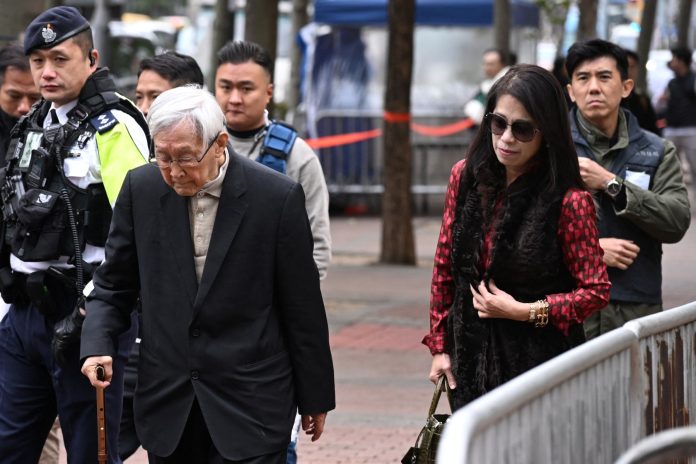
Zen, the 94-year-old retired bishop of Hong Kong, attended the hearing using a walking stick, according to a report by Agence France-Presse.
He and the other defendants were briefly arrested in May 2022 on accusations of collusion with foreign forces. They were later released, and that charge was dropped.
The 612 Humanitarian Relief Fund was established in June 2019 as protests spread over a proposed law that would have allowed the extradition of detainees from Hong Kong to China.
The proposal was later withdrawn, but the demonstrations developed into a broader pro-democracy movement.
Protesters called for an independent inquiry into police actions, amnesty for those arrested and the withdrawal of the characterization of the protests as “riots.”
The fund disbanded in 2021 after national security police demanded operational details, including information about its donors and beneficiaries.
Ng said the implications of the case extended beyond the former trustees and the dissolved fund.
“If every time a group of people comes together to do something, this becomes an organisation that has to apply to the police for registration or an exemption, this will have a huge impact on Hong Kong’s civil society,” she said.