
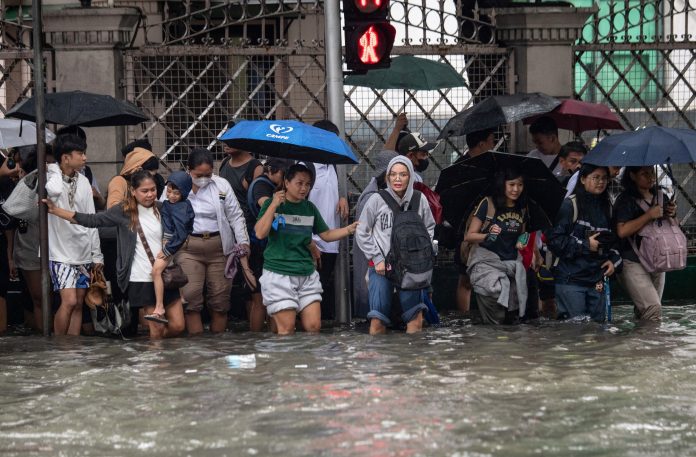
Government corruption and incompetence are indirectly causing an outbreak of a disease in the country, worsened flooding due to failed infrastructure forcing many Filipinos to contract leptospirosis.
Street floods have not only prolonged work and class disruptions since the start of the country’s monsoon season, the number of cases of the dreaded disease have spiked in Metro Manila and adjoining areas.
The Philippine Department of Health reported 3,440 cases nationwide from January 1 to August 8, 2026, with 220 deaths, majority of which happened as the country’s rainy season commenced.
One of government’s biggest specialty hospitals, the National Kidney and Transplant Institute (NKTI), announced it would temporarily refuse “walk-in patients” to dedicate its beds to leptospirosis patients. NKTI’s emergency ward has reached its limit, and the hospital has repurposed its covered gymnasium into a temporary overflow ward to handle the influx of patients.
What is leptospirosis?
The disease is a bacterial illness passed from animals to people. A person contracts it when water or dirt carrying animal urine touches skin wounds, eyes, nose, or mouth.
In most cases in the Philippines, patients contracted leptospirosis by wading through floodwaters they share with sewer rats.
The disease causes flu-like signs, but it can turn into a severe, dangerous condition, even death. Signs of illness may show themselves as early as two days or as late as three weeks later.
Filipino infectious disease expert Dr. Rotgene Solante advises those forced to wade Manila’s flooded streets to immediately and thoroughly wash themselves with bacterial soap as soon as possible.
He added taking antibiotic prophylaxis within 24 to 48 hours of exposure is a must, emphasizing that high mortality stems from delayed hospital visits and severe kidney complications.
Corruption, incompetence causes disease spikes
Flooding of Metro Manila’s streets is expected during heavy rains, monsoons and typhoons. Built on river deltas and caught between the sea and the country’s biggest lake, the metropolis is in fact partly below sea level.
But Europe’s low countries, especially The Netherlands, have long shown that such a condition is no longer an excuse for perennial, even permanent flooding.
Why Manila’s sewerage, pumping stations, river dikes and seawall protection systems could not seem to ever cope are their wrong designs, substandard construction and phantom projects that only manage to worsen street floods, affecting the city of 16 million residents and workers.
Confusion as to when work and class suspensions must be announced—and by whom—also cause residents to be caught in floods and exposing them to bacteria and disease.