
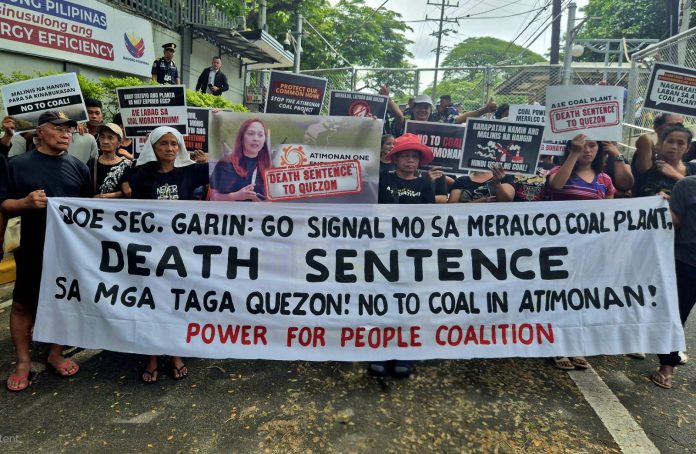
Quezon communities and faith-based environmental groups have renewed their opposition to Meralco PowerGen’s proposed 1,200-megawatt coal plant in Atimonan and warned that the project rests on a decade-old environmental assessment.
Quezon for Environment said Tuesday that the plant’s proposed ultra-supercritical technology may reduce emissions but would not eliminate the health and environmental risks associated with coal-fired power generation.
The coalition said the project could contribute to cardio-respiratory diseases, environmental degradation, and worsening climate change. It also warned that effluents from the plant could pollute surrounding waters and threaten the livelihoods of local fisherfolk.
“Malinaw na handang isakripisyo ng Meralco ang kalikasan, karagatan at ang kabuhayan ng pangkaraniwang mamamayan para sa proyektong higit sampung taon nang pinipigilan ng mga komunidad. Napakarami nating alibi kapag kita ang pinag-uusapan,” said Ramon Grimaldo, president of Sagip Karagatan and a veteran fisherfolk from Atimonan.
The groups also questioned the government’s continued support for the project despite an environmental impact assessment completed more than a decade ago.
They said the assessment no longer reflects present environmental conditions and the social realities facing communities in the area.
“The provincial ordinance that was meant to shield the communities and environment from ill impacts of coal became the same provincial ordinance that exempted the biggest coal project in Quezon. Compliance does not always equate to common good,” said Fr. Warren Puno, convenor of Quezon for Environment.
The groups also rejected MGen’s position on the viability of alternative energy sources if the coal plant operates until its planned retirement in 2050.
They said renewable energy technologies, particularly rooftop solar systems, have advanced enough to provide alternatives to fossil fuel-based power generation.
“It’s not just renewable energy that we need, we need renewable energy that is owned by the people and as a nation being struck by even-aggravating disasters worst among the world, we can not ironically seek refuge while pushing for the culprit,” said Monsignor Emmanuel Ma. Villareal, an Atimonan resident and priest.
The communities said the project would cause more harm than benefit in the long term and prolong the province’s dependence on coal for decades.
They also said government officials who support the project as a “necessary evil” should be held accountable for its effects on affected communities.