In the pre-dawn stillness of Bangkok’s rural outskirts, a quiet spiritual experiment is unfolding as Vietnamese monks establish the first Cistercian presence in the heart of Thailand.
Long before the first light touches the horizon in the remote district of Lam Sai, the rhythmic cadence of Vietnamese chanting rises from a modest chapel. Following an ancient monastic tradition, six monks of the Cistercian Order of the Common Observance gather in the darkness.
Their voices eventually give way to profound, expansive silent prayer, a spiritual “magisterium” anchored in a landscape more accustomed to the bells of Buddhist temples than the Gregorian modes of the West.
The Monastery of Our Lady of Chau-Son-Bangkok has remained one of the lesser-known communities of the Thai Church since its quiet inception in 2023. Beginning with four members, the community has grown to six, all originally from Chau Son Monastery in Vietnam.
Dedicated to a cloistered life of intercession, these pioneers represent a “hidden” mission, offering a contemplative heart to a nation where the Catholic minority is more often recognized for its schools and hospitals than its monasteries.
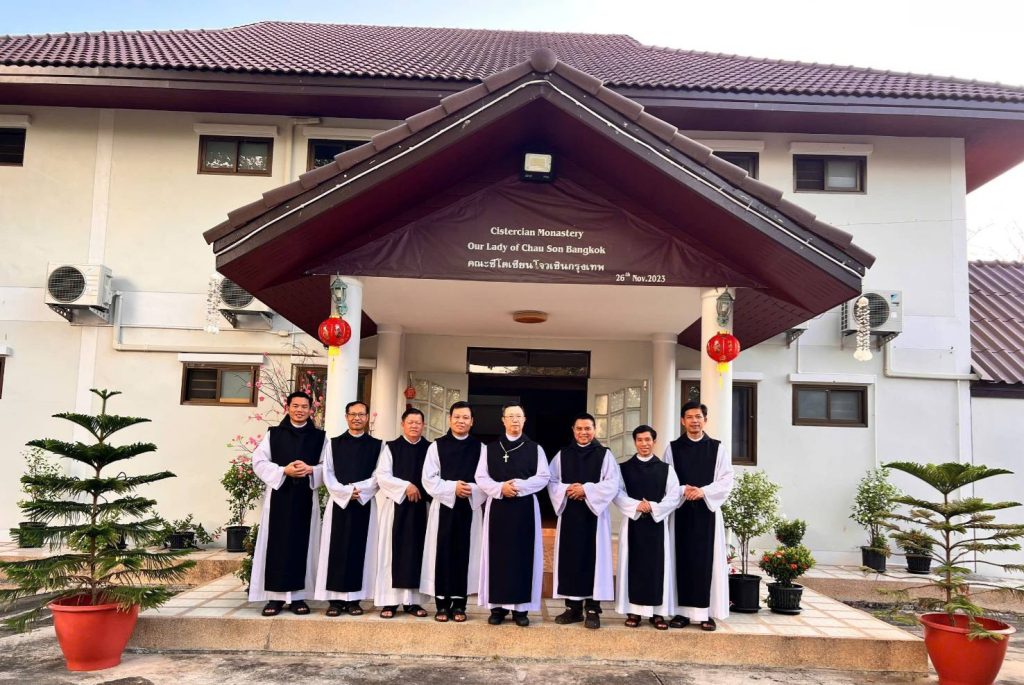
Photo by The Cistercians
The Vietnamese Spring
While monasticism has faced declines in some corners of the world, the Cistercian tradition in Vietnam is experiencing a period of remarkable growth. Founded in 1918 by French missionary Fr. Henry Denis, also known as Benedict Thuan, the congregation has grown into a thriving community of more than 1,000 members across 12 monasteries.
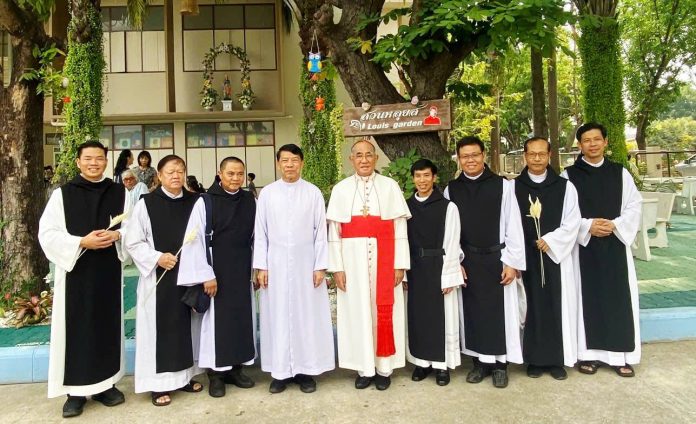
“We were invited to Thailand by Cardinal Francis Xavier Kriengsak Kovithavanij,” explained Brother Anthony Lieu, O.Cist. “He felt the profound need for a contemplative presence, a spiritual lungs for the Archdiocese of Bangkok.”
The monks now occupy a sprawling compound in Lam Sai, a site with a poignant history. Once a sanctuary for people living with HIV/AIDS managed by several religious orders, the facility became available as medical advancements changed the needs of the local community.
Today, the white tunics and black scapulars of the Cistercians have replaced the clinical bustle, bringing a new rhythm of prayer and silence to the property.
Ora et Labora: The Rhythms of Grace
The Cistercian charism is defined by the balance of Ora et Labora—prayer and work. The monks maintain a rigorous schedule, rising at 4 a.m. and observing the “Great Silence” from 7 p.m. until the following morning.
• Communal Prayer: The Divine Office is chanted seven times daily.
• Manual Labor: The monks maintain their grounds and facilities, following the example of their motherhouse, Chau Son Monastery, known for its distinctive Gothic architecture and largely built by the monks themselves.
• A Path to Self-Sufficiency: While the community is still financially supported by the Archdiocese of Bangkok and the Chau Son motherhouse, the monks hope to become ecologically and economically sustainable through farming and hospitality.
“This is the model of monastic life I wished to see in Thailand,” Cardinal Kriengsak told LiCAS News before his retirement. “A life consisting of prayer, silence, and manual labor, a witness to the primacy of God.”
Navigating the Thai Frontier
The transition has not been without challenges. Brother Anthony Lieu, O.Cist., who arrived in Thailand in 2023, speaks fondly of the warmth of the Thai people while acknowledging the cultural adjustments that come with building a monastic community in a new country.
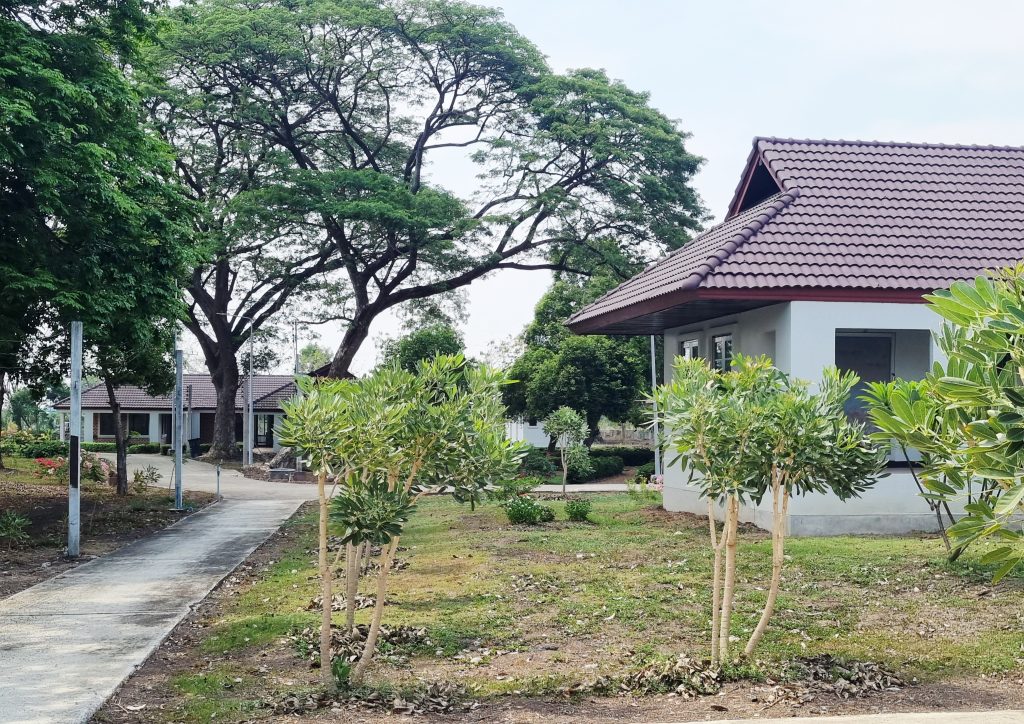
Photo by LiCAS News
In a lighthearted reflection on local realities, he noted that while neighboring residents have been supportive, the monastery’s fishponds occasionally fall prey to local “poachers.”
The greater challenge, however, remains the cultivation of local vocations. Fr. Calixto Toi, O.Cist., remains realistic about the demanding nature of monastic life.
“Vocation is the work of the Holy Spirit,” he said. “The rigor may deter some, but we invite the youth to come and see, to understand our peace before they judge our sacrifice.”
The Open Door
Though currently in a probationary period to assess the long-term viability of the foundation, the Monastery of Our Lady of Chau-Son-Bangkok has already opened its doors to the public.
The compound serves as a retreat center for those seeking respite from the frenetic pace of Thailand’s major cities, offering space for meditation, seminars, and spiritual direction.
As the Cistercians of Chau Son tread softly on the soil of Lam Sai, they do so with the hope of establishing a permanent presence. Their community serves as a bridge between Vietnam’s thriving Catholic tradition and Thailand’s growing spiritual needs.
In the silence between their chants, visitors encounter not an absence but a presence, a gentle invitation to rediscover the transformative power of stillness.