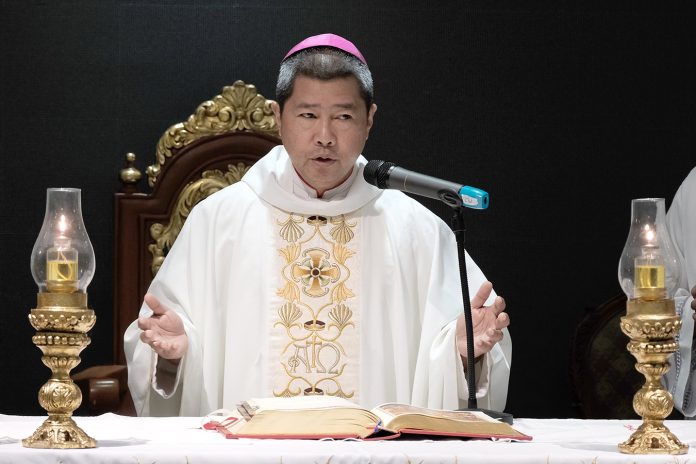
Bishop Joel Baylon of Legazpi has urged Catholics to support a People’s Initiative seeking the passage of an anti-dynasty law on May 31.
The prelate described political reform as a necessary response to corruption, abuse of power, and worsening economic hardship in the Philippines.
In a pastoral letter issued for the Solemnity of the Most Holy Trinity, Bishop Baylon called on the faithful to combine prayer, civic formation, and social action as the country grapples with political and economic challenges.
The bishop said the nation continues to suffer from corruption, disinformation, and weak accountability in public life.
“Today, however, we cannot fail to see how God’s will continues to be disregarded in public life,” he wrote, pointing to growing corruption, the spread of disinformation, abuses of power, and resistance to efforts to hold public officials accountable.
Baylon said the consequences are felt most heavily by ordinary Filipinos, particularly the poor.
“As the gap between politics and public service widens, political reforms are not sustained, economic progress slows, and many of our people – especially the poor – are conditioned to depend on patronage and ayuda rather than being empowered to participate fully in their own development,” he said.
The bishop also expressed concern over local governance issues in Albay and within the Diocese of Legazpi, saying “unchecked power breeds corruption,” resulting in “elections that are bought, roads that benefit private interests, public works that take too long to finish, jobs and income opportunities lost, and greater suffering among our people.”
Among the concrete actions he proposed was support for efforts to curb political dynasties, an issue that remains unresolved despite a constitutional provision directing the state to prohibit political dynasties as may be defined by law.
“In particular, we encourage our parishes, Catholic schools, and lay organizations to assist in educating and gathering signatures for a People’s Initiative, led by the Dapat Isa Lang movement, in order to pass a genuine anti-dynasty law, as one means of curbing corruption and abuse of power, and fostering broader participation in public life,” Baylon said.
The bishop also urged Catholics to remain attentive to major developments affecting the nation and to approach them with discernment.
“As significant events unfold in our nation – including the proceedings of the Senate sitting as an impeachment court, the arrest and trial of individuals accused of crimes against humanity and of plunder, and the establishment of a Church-led Truth Commission on Extrajudicial Killings – let us seek the guidance of the Holy Spirit in discerning truth from falsehood, good from evil, and the right course of action from what merely serves partisan interests,” he wrote.
Baylon encouraged parishes, schools, communities, and families to conduct formation and discernment programs on responsible citizenship rooted in Christian values, saying these efforts can help foster love of country, commitment to the common good, and active participation in public life.
He likewise called on Catholics to support those affected by economic difficulties and the continuing impact of Mayon Volcano’s activity through outreach programs, community pantries, livelihood initiatives, and assistance in accessing government services.
At the same time, the bishop stressed that charitable work must be accompanied by efforts to address the roots of poverty and injustice.
“Charity must be accompanied by efforts to address the causes of poverty and injustice,” he wrote, urging support for educational and advocacy initiatives that promote “political reforms aimed at strengthening democratic institutions, accountability, and good governance.”
Baylon concluded by calling for vigilance and accountability not only in government but also within Church institutions.
“Let us all be vigilant and actively engaged in demanding integrity, transparency, and accountability in all who are in public service, as well as anyone else who holds any form of public office and service before the community – including all of us who are in the service of the Church,” he said.