Updated: (June 1, 2:13 pm) Adds comments from journalist Inday Espina-Varona
Journalist Christian Esguerra has publicly challenged Caritas Philippines to explain the “internal editorial guidelines and basic values” it cited in removing an episode of its youth-oriented program YSpeak 2.0, raising questions about self-censorship and the space for critical civic discourse.
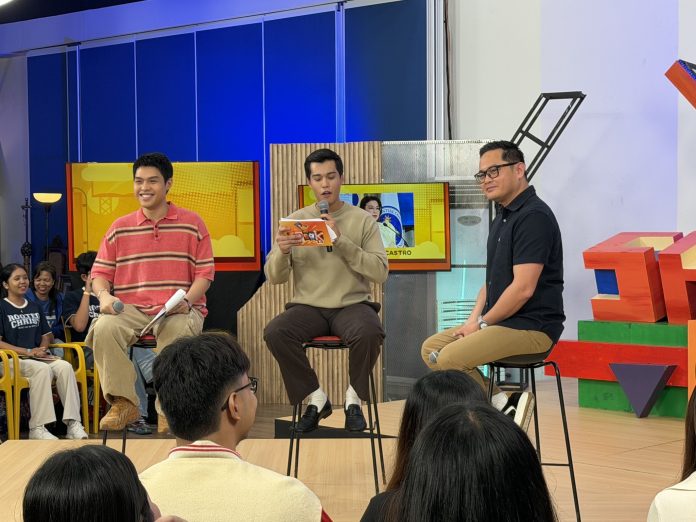
The controversy follows the removal of the program’s third episode, which aired on May 23 and featured Esguerra as guest.
The episode was later taken down from online platforms, while a subsequent episode scheduled for broadcast on ALLTV2 on May 30 was not aired.
Produced by Caritas Philippines, YSpeak 2.0 is a youth-oriented civic education and formation program that brings together young Filipinos to discuss social and political issues affecting the nation.
In a statement dated May 31, Fr. Tito Caluag, executive director of Caritas Philippines, said the decision to remove the episode came from him.
“I wish to clarify that I, as the representative of Caritas Philippines, the producer of the show, was the one who asked that the episode be taken down,” Caluag said.
“It was a difficult decision to make, but there are internal editorial guidelines and basic values of Caritas Philippines I needed to consider. Furthermore, there were other factors I had to take into consideration. I had discussed these with the people concerned,” he added.
The priest also addressed questions about why the fourth episode was not aired on free television.
“Again, this was my decision in part due to the other considerations I referred to in the previous paragraph. The other consideration was to focus on and strengthen our online presence where most of the youth are,” he said.
He said YSpeak and YSpeak 2.0 were intended to remain spaces for young people to engage in public issues and civic formation.
“YSpeak and YSpeak 2.0 were created to always be a safe space for the Filipino youth and will continue to strive to be such. Yes, we want our youth to have the platform to speak the truth with courage, but also to take all things into consideration. We are primarily a civics formation and education program and hope to be as inclusive as possible,” Caluag said.
On June 1, Esguerra questioned the explanation offered by Caritas Philippines and suggested that the decision contradicted the program’s mission of encouraging civic engagement.
“It’s easy to preach ‘civics’ in the comfort of an air-conditioned studio. But the true test comes when things become uncomfortable and fear, whether real or imagined, sets in,” he wrote.
The veteran journalist also pointed to what he described as an irony in the episode’s removal.
“It’s also ironic that during my guest appearance, I discussed how ‘self-censorship’ is ‘the worst form of censorship’ — which is exactly what the producer did,” Esguerra said.
He further challenged Caritas Philippines to clarify the standards behind the decision.
“I am genuinely curious about the ‘internal editorial guidelines and basic values of Caritas Philippines’ that needed to be considered in taking out the episode,” he said.
Veteran journalist and editor Inday Espina-Varona also questioned the explanation provided by Caritas Philippines.
“This is even more opaque. What internal editorial decisions? And what was in the [Christian] Ian Esguerra guesting that would in any way go against the Church’s mission of social justice and truth telling?” Espina-Varona said.
She also questioned whether the decision was consistent with the program’s educational mission.
“Isn’t free and responsible speech a major part of civic formation? Or is free speech only for a select group of folk?” she added.
Her remarks echoed calls for greater clarity from Caritas Philippines, which has yet to publicly identify the specific content or statements that led to the episode’s removal.
The episode featured Esguerra answering questions from hosts Elijah Canlas and Robbie Jaworski, including a segment called “YSpeak Your Mind,” in which he was shown photographs of political figures and asked to respond with words or brief descriptions associated with them.
According to reports on the episode, Esguerra described Sen. Rodante Marcoleta as “Tsinador,” referred to Sen. Risa Hontiveros as “decent,” called Pasig City Mayor Vico Sotto “promising,” and described Vice President Sara Duterte as “evil.” When shown photographs of Sens. Ronald “Bato” dela Rosa and Robin Padilla, he remarked, “Bakit at paano naging senador ito?”
Other public figures discussed during the segment included Ombudsman Jesus Crispin Remulla, Presidential Communications Office Undersecretary Claire Castro, and former senator Antonio Trillanes IV.
Clips from the interview circulated widely online and drew mixed reactions before viewers noticed that the full episode could no longer be accessed on YouTube and other social media platforms.
LiCAS News was unable to independently review the full episode because it had already been removed from public platforms.
In his statement, Caluag did not identify any specific remarks from the episode that prompted its removal. He also did not specify which editorial guidelines or values were considered in making the decision.
Neither did the statement allege that any information presented during the episode was inaccurate.
The removal has since sparked discussion online about editorial discretion, self-censorship, and the role of Church-affiliated youth platforms in fostering critical engagement on public affairs.