Catholic theologian Daniel Franklin Pilario, CM, warned Wednesday that silence on killings linked to former president Rodrigo Duterte’s anti-drug campaign risks shaping a generation of young Filipinos through “false narratives” and disinformation.
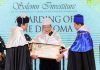
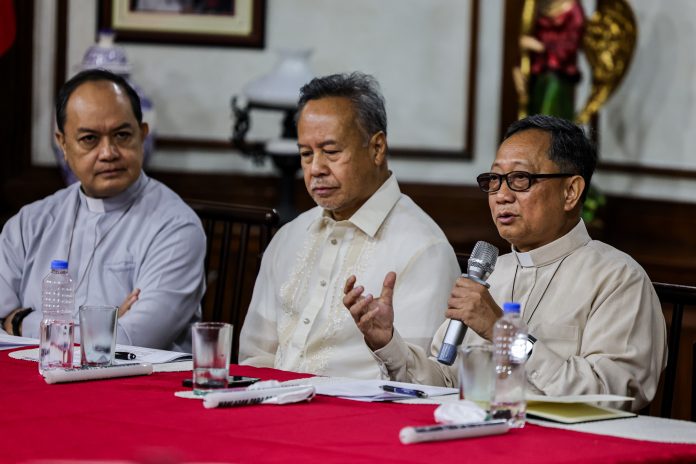
Speaking during the launch of the Philippine Truth and Reconciliation Commission in Mandaluyong City, the Vincentian priest said the commission’s work should help educational institutions confront the legacy of the killings and preserve historical truth for younger generations.
“I think the truth commission could be very helpful in the direction of education—not only Catholic education, but education in general,” Pilario said.
Pilario, president of Adamson University, said the commission’s findings should reach not only government agencies, but also schools and universities, including the Catholic Educational Association of the Philippines and the Philippine Association of Catholic Universities, to help develop educational initiatives grounded in truth and remembrance.
“Because if the whole society remains silent about what happened in the past ten years, what moral direction can we give to the youth?” he said.
The Truth and Reconciliation Commission was launched Wednesday by church leaders, human rights advocates, forensic experts, academics, and civil society groups to document extrajudicial killings linked to Duterte’s anti-drug campaign, which human rights groups estimate left thousands dead beginning in 2016.
Recently, Senate President Alan Peter Cayetano drew criticism from human rights advocates, Catholic leaders, and drug policy reform groups after describing Duterte’s anti-drug campaign as a “human rights campaign” and a “pro-life campaign” during a Facebook livestream.
Pilario drew parallels with Germany’s efforts to teach the Holocaust in schools, saying the country had been “very forward and upfront in telling their younger generations about what happened.”
He warned that the absence of a credible public narrative about the killings in the Philippines could allow disinformation to shape public memory.
“If there is no such official narrative, if we cannot counter the false narrative of ‘Oplan Tokhang’ being good, there will always be fake news all over the place in the formation of the minds of our young people,” Pilario said.
“That is why this is important. Whatever truth we can get from this should reach educational institutions,” he added.
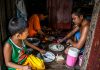
Pilario also recalled his ministry in Payatas during the height of the anti-drug campaign, saying church communities were at times burying “eight to 10 young men” in a short period, many of them fathers and breadwinners.
He said remembrance and truth-telling were essential not only for justice, but also for moral formation and healing.
Citing Pope Francis’ encyclical Fratelli Tutti, Pilario said society “can never move forward without remembering the past” and must bear witness to future generations about “the horrors of war and violence.”