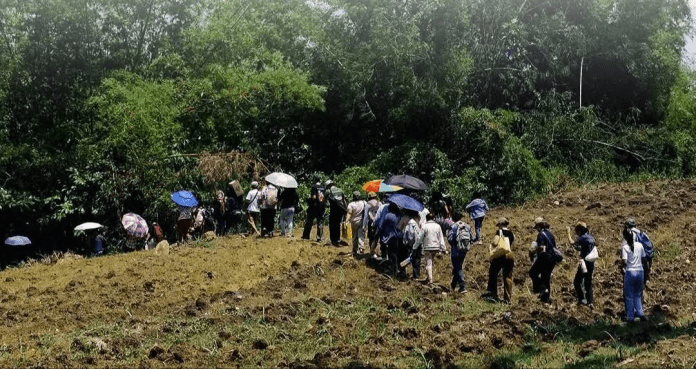
A Philippine labor rights organization backed calls for an independent investigation into the April 19 killings in Toboso, Negros Occidental, after a fact-finding mission reported allegations of militarization, human rights abuses, and forensic inconsistencies surrounding the incident.
The Ecumenical Institute for Labor Education and Research (EILER) urged the Commission on Human Rights to conduct what it described as an “independent, transparent, and impartial investigation” into possible violations of human rights and international humanitarian law.
The appeal followed the release of initial findings from a fact-finding mission that questioned the military’s account of the operation that left 19 people dead in the central Philippine province.
According to EILER, the mission documented “intense militarization in the area even before the incident,” including drone surveillance, house-to-house military operations, interrogations of residents at gunpoint, restrictions on civilian movement, and the alleged illegal detention of residents.
“These strongly suggest the operation was not a spontaneous firefight,” the group said.
“The findings warrant an independent, transparent, and impartial investigation into possible violations of human rights and international humanitarian law,” said Mark Darwin Santos, EILER research head.
The labor group also raised concerns over alleged tampering of the crime scene and the handling of bodies, citing “strong evidence suggesting inconsistencies between publicly released photographs and forensic observations.”
The statement referenced findings associated with forensic pathologist Raquel Fortun, including observations on gunshot wounds and the alleged misidentification of the remains of Errol Wendel.
“The testimonies gathered from residents directly contradict official claims that all 19 fatalities were armed combatants,” Santos said.
He said EILER joined civil society organizations and trade unions in urging authorities to conduct “a thorough probe that fully considers community testimonies, forensic evidence, and allegations of military abuses documented during the investigation.”
EILER said the violence in Negros was rooted in long-standing social and economic conditions on the island, including “deep rural poverty, landlessness and chronic labor exploitation.”
“It is precisely these long-standing social and economic conditions that continue to motivate labor organizers, researchers, church workers, journalists and human rights advocates to undertake solidarity missions and community investigations in Negros to document conditions on the ground and support communities asserting their rights,” Santos said.
The group also called for broader scrutiny of the case beyond military institutions.
“The initial FFM report warrants an independent investigation with forensic transparency, witness protection, and scrutiny beyond military institutions,” Santos said.
“We call on independent forensic experts, churches, lawyers’ organizations, and the international community to closely monitor the case and push for justice for the victims and affected communities,” he added.