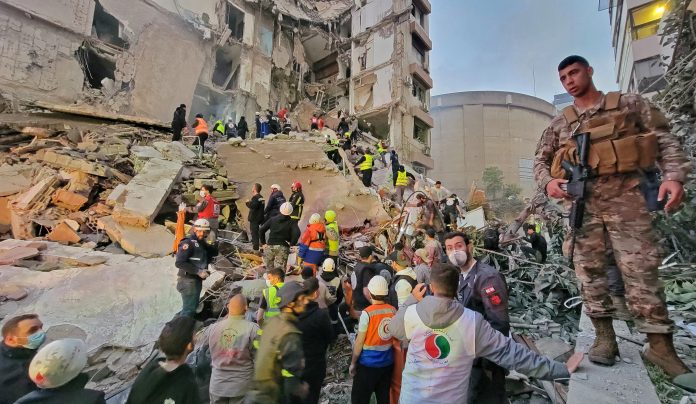
Israeli airstrikes struck Beirut and other parts of Lebanon hours after a ceasefire between the United States and Iran was announced, killing dozens and overwhelming hospitals, in an escalation that cast doubt on efforts to halt the widening regional conflict.
The attacks, which Lebanese authorities said left at least 112 people dead and hundreds wounded in a single day, came as Pakistan prepared to host talks to consolidate the fragile truce and as the United Nations warned that civilian casualties and humanitarian conditions were rapidly worsening.
“Today’s wave of IDF strikes came just as hopes for an end to violence and destruction were rising,” UN Special Coordinator for Lebanon Jeanine Hennis-Plasschaert said. “This cannot go on. Neither side can shoot or strike their way to victory.”
Israeli forces carried out more than 100 airstrikes in roughly 10 minutes, according to UN humanitarian coordinator Imran Riza, who described the bombardment as “dramatic” and said “it’s been enormous, the level of these strikes.”
“The hospitals are overwhelmed, and of course, there’s a huge, huge call out for blood donations throughout the country,” he added.
UN officials said early assessments suggested the death toll could rise further, with hundreds feared killed and many more injured. Some of the strikes were carried out without warning to civilians, worsening the toll.
Blerta Aliko, the UN Development Programme’s resident representative in Lebanon, said the situation had become “extremely critical” as bombardment intensified in Beirut.
“I personally heard the sound of nine strikes. There have been over 40 strikes in Beirut, and hundreds more across the country,” she said.
The escalation has intensified a humanitarian crisis that UN officials say has reached unprecedented levels. More than 1.2 million people have been displaced since hostilities escalated in March, with women and children among the most affected.
Laila Baker of the UN Population Fund described mothers “carrying their children with nothing but the clothes on their back,” and pregnant women “searching desperately for care under fire.”
Health services remain under strain, with the World Health Organization verifying more than 100 attacks on healthcare facilities. Emergency and intensive care services are “under severe pressure,” said regional director Dr. Hanan Balkhy.
The violence has also disrupted humanitarian and Church-led efforts. A convoy led by Maronite Patriarch Bechara Rai and Apostolic Nuncio Paolo Borgia was unable to reach the southern village of Debel due to ongoing clashes involving Israeli forces and UN peacekeepers.
Amid the escalation, Shehbaz Sharif said Islamabad would host US and Iranian delegations on April 10 to “further negotiate for a conclusive agreement to settle all disputes,” expressing hope the talks would achieve “sustainable peace.”
The ceasefire, brokered with support from regional mediators including Turkey, Egypt, and China, has so far failed to hold in Lebanon.
Hezbollah said it would respect the truce and halted attacks, but Israeli officials indicated operations would continue, saying the agreement did not apply to their campaign against the group.
US President Donald Trump also said Lebanon would not be included in the agreement “because of Hezbollah.”
Lebanese leaders, including President Joseph Aoun and Prime Minister Nawaf Salam, welcomed the ceasefire but urged Israel to respect it within Lebanese territory, stressing that only the state has the authority to negotiate.
Despite the diplomatic push, strikes continued to hit civilian areas, including a café in the southern city of Saida, causing further casualties.
“The ceasefire between the US and Iran offers an opportunity to prevent further loss of lives between Lebanon and Israel,” said UN Deputy Spokesperson Farhan Haq.
“Now is the time to pursue talks to resolve outstanding differences and work towards a permanent ceasefire and a long-term solution to the conflict,” he said. “There is no military solution to the conflict.”