
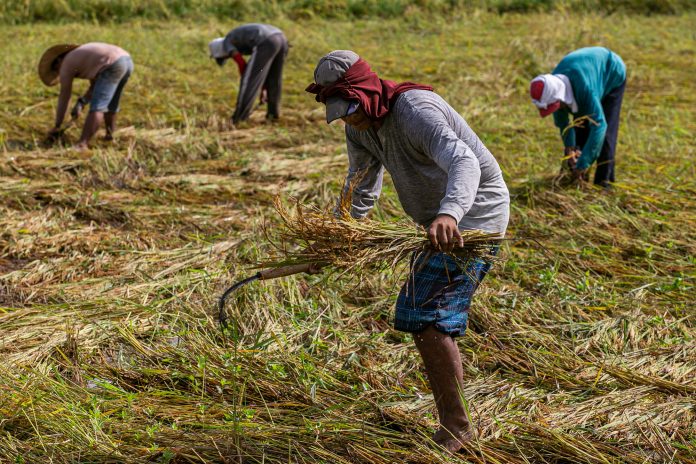
Land conflicts in the Philippines are rising and remain unresolved for decades, trapping farmers and Indigenous communities in disputes that continue to displace livelihoods and deepen insecurity.
The 2025 Philippine Land and Resource Conflict Monitoring Report recorded 281 ongoing cases affecting 109,208 households and nearly 796,586 hectares, up from 262 cases the previous year, according to the Asian NGO Coalition for Agrarian Reform and Rural Development (ANGOC).
“None of the cases were resolved, indicating the inadequacy of the current legal framework to address the concerns of those whose land rights are under threat,” the report said.
The data show a deepening crisis as long-standing disputes persist while new conflicts emerge, driven by development projects, private investments, and weak enforcement of existing laws.
Decades-long disputes persist
Many of the conflicts have remained unresolved for years, with some stretching across generations.
The report found that 73 cases have persisted for more than 20 years, while others have lasted between 10 to 15 years. In nearly half of the cases, the duration remains unknown.
“Another 73 cases have remained unresolved for more than 20 years,” the report noted.
The persistence of these disputes reflects longstanding structural issues in land governance and dispute resolution.
Farmers, Indigenous peoples most affected
Smallholder farmers account for about 60 percent of the cases, making them the most affected sector. Indigenous peoples follow at 19 percent, with many disputes involving ancestral domains.
“Ancestral domains account for 81 percent of the contested areas,” the report said.
These conflicts often involve land and resources critical to food production and community survival, leaving already vulnerable sectors at greater risk of displacement and loss of livelihood.
Development and power interests drive disputes
Private companies are involved in 37 percent of cases, while powerful individuals such as politicians, landlords, and former officials account for 32 percent.
“These result in displacement, destruction, or dehumanization that led to conflict,” the report said, citing activities such as mining, agribusiness, real estate development, and energy projects.
Government programs and policies also contribute to the disputes, particularly when due process is lacking or communities are displaced.
“These may come in the form of public utilities, infrastructure projects, land reclamation, special economic zones, and housing and urban developments that drive rights holders from their land,” the report said.
Calls for urgent government action
The report urged authorities to address the growing crisis by enforcing laws and ensuring accountability.
“It should rigorously implement and enforce laws and regulations to prevent land conflicts or ensure their swift resolution,” said Nathaniel Don Marquez, ANGOC executive director.
He also warned against pursuing development at the expense of communities.
“Government cannot cite benefits from its policies while rights-holders suffer,” the report said.
The study stressed that economic development and environmental protection must not come at the cost of people’s rights to land and resources.
Justice remains out of reach
Despite existing legal frameworks, gaps in implementation continue to fuel disputes and prolong conflicts.
“Government’s lack of diligence in implementing laws and regulations have resulted in conflicts between communities,” the report said.
With no cases resolved and more than 100,000 households affected, the report underscores how land disputes continue to outpace government response, leaving vulnerable communities without clear pathways to justice.