As the global community grapples with escalating violent conflicts and instability, the Church enters the sacred days of the Easter Triduum in 2026, urging the faithful to transform this central liturgical celebration into a powerful moment of prayer for peace.
From the Vatican to the parishes of Southeast Asia, the message for this liturgical pinnacle—spanning from the evening of Holy Thursday to the dawn of Easter Sunday—is singular: an urgent, intensified plea for peace in a world “trembling under the weight of violent conflict.”
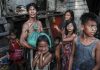
Across continents, Catholics are being called to intensify their prayers for a world increasingly marked by war, displacement, and human suffering.
Leading this appeal, Pope Leo XIV has encouraged believers to approach these holy days with renewed depth and sincerity. The faithful are invited to bring before God their fears, grief, and hopes for a world “trembling under the weight of violent conflict.”
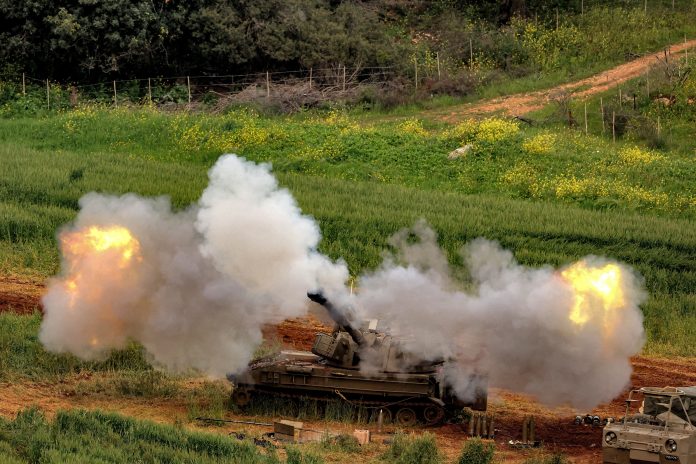
Prayer initiatives this year are specifically targeting the Middle East and other regions devastated by bombs and displacement. The Church’s objective is twofold: seeking immediate solace for victims and calling for the radical conversion of hearts, particularly among world leaders who hold the levers of power.
In this context, the Church presents the Triduum as a profound counter-witness. While the world turns to weapons, the Church “runs to her knees,” seeking to radiate the light of Christ’s Resurrection into places overshadowed by violence and despair.
“The Risen Christ, the Prince of Peace, shows us that hatred does not have the final word, that reconciliation is possible, and that love is stronger than death,” said Archbishop Peter Brian Wells, Apostolic Nuncio to Thailand.
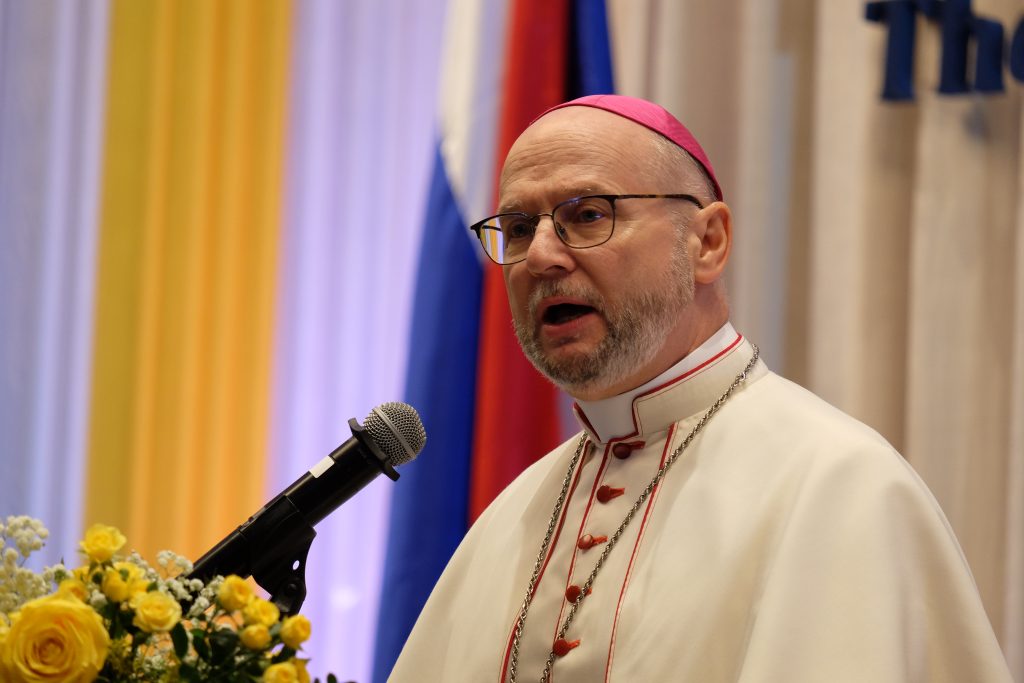
In a formal message issued on April 2 to the bishops, clergy, and lay faithful across Thailand, Cambodia, and Laos, Archbishop Wells emphasized the “particular urgency” of the Easter message in 2026. He invited the local Church to walk the path of the Passion as a means of processing the global sorrow of Good Friday and the silence of Holy Saturday.
Inviting them to enter deeply into the sacred mysteries, he wrote, “As we enter the holy days of the Triduum and prepare to celebrate the glorious Resurrection of our Lord Jesus Christ, we are called to walk once more with Jesus through His Passion and Death on the Cross, and then stand in awe before the empty tomb.”
Reflecting on the spiritual journey of these days, the nuncio highlighted the silence of Good Friday, the sorrow of Holy Saturday, and the radiant joy of Easter morning as moments to contemplate the depth of God’s love—a love that embraces human suffering, conquers sin and death, and opens the path to new life.
He underscored that the Easter message carries particular urgency in today’s world. “In a world still torn by violence, strife, and war—where so many of our brothers and sisters endure conflicts, displacement, fear, and loss—the message of Easter resounds with particular urgency,” he said. “The Risen Christ, the Prince of Peace, shows us that hatred does not have the final word, that reconciliation is possible, and that love is stronger than death.”
Calling the faithful in Thailand, Cambodia, and Laos to become active witnesses of this hope, Archbishop Wells urged them to be instruments of peace within their communities, families, and societies.
He issued a call for intensified prayer throughout the Triduum and the Easter season—for an end to wars, for the conversion of hardened hearts, for wisdom among world leaders, and for healing and reconciliation wherever division prevails.
The nuncio also affirmed the quiet but powerful witness already being offered by local Catholic communities. Through acts of charity, interfaith presence, and service to the poor and marginalized, he said, the light of the Risen Christ continues to shine.
“Your witness—offered in simplicity and fidelity amid the challenges of today—is already a powerful sign of the Resurrection,” he noted, encouraging the faithful to remain steadfast in their mission.
As Easter approaches, the Church’s message is clear: in a world shaken by violence, the path to lasting peace begins not with force, but with prayer, conversion, and the enduring power of love revealed in the Risen Christ.