Violence is all over. War has erupted in the Middle East. Its repercussions have reached the countries of Asia and the rest of the world. Earlier, Israel razed Gaza to the ground; Russia bombed Ukraine; the US attacked Venezuela, and so on. On its own, the Asian region is also a highly charged context. Violence can erupt at any time.
Yet internally, violence also characterizes many of our countries. ICE (Immigration and Customs Enforcement) beats undocumented migrants. The IDF (Israel Defense Forces) hunts Palestinian Muslims. The IRGC (Islamic Revolutionary Guard Corps) punishes its own citizens. The DDS (Davao Death Squad) hunts down poor drug addicts.
What does the Church’s social teaching say about violence and war?
Before all the populist rhetoric erupted into violence, Pope Francis’ last social encyclical, Fratelli Tutti (FT), had already said something about the situation we are in.
Chapter Seven of this encyclical can be read from the perspective of Asia. I will comment on three areas of this chapter that are relevant to the Asian situation:
(1) capital punishment and extrajudicial killings;
(2) the morality of war;
(3) the work of peace and reconciliation.
1. Extrajudicial Killings and the Death Penalty
FT 267 states: “Particularly serious are so-called extrajudicial or extralegal executions, which are homicides deliberately committed by certain states and by their agents, often passed off as clashes with criminals or presented as the unintended consequences of the reasonable, necessary and proportionate use of force in applying the law.”
Though the quotation comes from the pope’s address to the delegates of the International Association of Penal Law (23 October 2014), by quoting it here one cannot help but feel that the pope is referring to the Philippine phenomenon and similar events worldwide.
Did Pope Francis know about the Filipino situation? Yes, he does. Bishop Pablo David of the Diocese of Kalookan, one of the most badly hit areas by extrajudicial killings in Metro Manila, narrates: “When I asked Pope Francis whether or not he was aware of what is going on in the Diocese of Kalookan, he told me he is keeping well informed.” “I want you to know that I know your situation. I know what you are going through. I am praying for you. Please continue,” the pope told him.
The pope discusses extralegal executions in the context of the death penalty. “Here I would stress that ‘it is impossible to imagine that states today have no other means than capital punishment to protect the lives of other people from the unjust aggressor’ (FT 267).” “The death penalty is inadmissible and the Church is firmly committed to calling for its abolition worldwide” (FT 263).
On November 17, 2020, the United Nations resoundingly voted for a moratorium on capital punishment. Eleven countries out of the 39 that voted against the resolution were from Asia: Afghanistan, Brunei Darussalam, China, India, Japan, Maldives, North Korea, Pakistan, Papua New Guinea, Singapore and Tonga.
Asia is the “global outlier” on the death penalty issue. Some others abstained, including Indonesia, Vietnam and Laos, and have executed hundreds of criminals in recent years. Even those who signed abolition measures remain indecisive. The Duterte government, for one, campaigned to reinstate it into law.
Asia’s ambivalent relationship with the death penalty rests on two factors: zero tolerance toward crime, whose deterrent value is statistically unproven, and resistance to foreign intervention on human rights issues, thus strengthening the sovereignty and autonomy discourse of many Asian leaders.
But Fratelli Tutti sharply points to the dangers of the death penalty in authoritarian states, many of which are found in Asia: “There is at times a tendency to deliberately fabricate enemies: stereotyped figures who represent all the characteristics that society perceives or interprets as threatening” (FT 266).
The dangers mentioned by the pope abound in Asian countries: the possibility of judicial errors, suppression of dissent, and religious or cultural persecution (FT 268). In short, they reflect the problem of racism and “othering” prevalent in contemporary populist societies. It shows that Asian societies remain far from Pope Francis’ vision of a world without capital punishment, as he even casts “life imprisonment” in a negative light, describing it as a “secret death penalty” (FT 268).
2. The Immorality of War
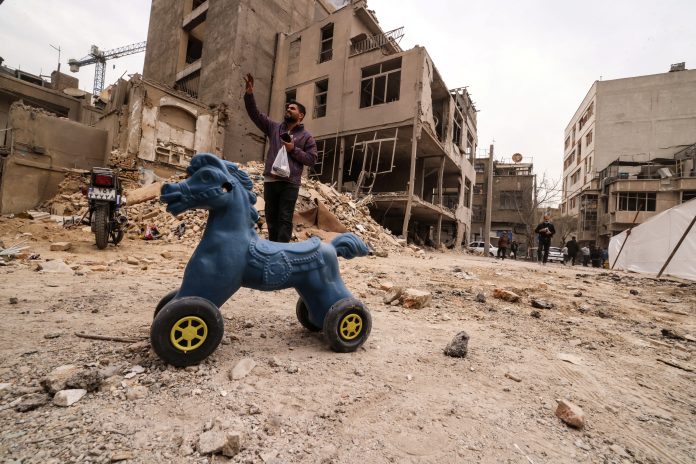
The danger of contemporary war is now playing out in the Middle East. Missiles and rockets fly through the air like scenes from video games on our screens. We do not yet see the full destruction of lives and property on the ground. That is the tragedy of present wars: they hide their victims. In the meantime, real people, women, children and the elderly, endure tremendous suffering.
Aside from subnational conflicts triggered by intercultural and ideological factors, several international hotspots in Asia could escalate into war among interested countries. Among them are the territorial disputes in the South China Sea, the North Korean crisis, the Afghanistan conflict, and tensions in the East China Sea.
The South China Sea dispute, also called the West Philippine Sea, offers one example. China’s economic interest in the area is obvious. Despite a favorable ruling by the UNCLOS Permanent Court of Arbitration in The Hague in July 2016 on sovereignty over the area, China rejected the decision and continues to reclaim islands, build new ones, install military facilities and deploy warships.
This not only heightens tensions with claimant countries such as the Philippines, Vietnam, Taiwan, Brunei, Indonesia and Malaysia, but also risks provoking larger powers. The United States, whose economic interests in the disputed waters include major trade routes and potential natural gas reserves, has increased its military presence.
It is often said that the Asia-Pacific region is the most militarized region in the world, with the three superpowers, the United States, China and Russia, pursuing strategic interests there. Will these tensions trigger the next world war?
Reading Fratelli Tutti from the perspective of this highly charged context reveals it as a sharp critique of geopolitical positioning in Asia. The encyclical offers several reasons for rejecting war today: humanitarian, defensive and precautionary justifications for war; the manipulation of information; the uncontrollable destructive power of nuclear, chemical and biological weapons; the treatment of persons as collateral damage; the ineffective deterrent value of mutual destruction; and the reality that the risks of war outweigh its supposed benefits.
Fratelli Tutti therefore challenges the long moral tradition of the “just war theory” from Augustine to modern times. It questions the “war as last resort” position found in the Catechism of the Catholic Church (CCC 2307–2317) and the Compendium of the Social Doctrine of the Church (CSDC 488–520). Instead, the encyclical encourages reliance on the rule of law and on strategies such as negotiation, mediation and arbitration in the spirit of fraternity and social friendship. “Never again war!” (FT 256–262).
3. Healing and Reconciliation in Post-Conflict Societies
The greater part of Chapter Seven (FT 225–252) discusses healing and reconciliation in so-called post-conflict societies.
In Asia we can easily think of several examples: Cambodia after the fall of the Khmer Rouge, Timor-Leste after Indonesia’s withdrawal, Sri Lanka after the defeat of the Liberation Tigers of Tamil Eelam (LTTE), Afghanistan after the withdrawal of US troops, and Mindanao in the southern Philippines after the creation of the Bangsamoro Autonomous Region in Muslim Mindanao (BARMM).
In such places, Pope Francis writes, “there is a need for paths to heal open wounds. There is also a need for peacemakers, men and women prepared to work boldly and creatively to initiate processes of healing and renewed encounter” (FT 225).
The encyclical builds on decades of peacebuilding practice often described in international politics and academia as “transitional justice,” the process of rebuilding societies after war, gross human rights violations and political upheaval.
Four key themes emerge.
First is the role of truth and memory (FT 226–230, 246–252). There is a need to cultivate “penitential memory,” to listen to the narratives of what truly happened, including the stories of missing relatives, recruited minors and abused women. “Those who truly forgive do not forget” (FT 251).
Second, there must be a viable roadmap, an architecture of peace. Dialogue and negotiation should lead people to work together “side by side, in pursuing goals that benefit everyone” (FT 228). “Authentic reconciliation does not flee from conflict, but is achieved in conflict, resolving it through dialogue and open, honest and patient negotiation” (FT 244).
Third is the centrality of the human person and the common good in political, social and economic programs. “May this determination help us flee from the temptation for revenge and the satisfaction of short-term partisan interests” (FT 232).
Fourth is the critical role of forgiveness. While forgiveness is essential, justice must also be pursued. Criminals, corrupt officials and those who trample human dignity must still be held accountable.
This statement is particularly powerful when confronting tyranny:
“We are called to love everyone, without exception; at the same time, loving an oppressor does not mean allowing him to keep oppressing us… True love for an oppressor means seeking ways to make him cease his oppression; it means stripping him of a power that he does not know how to use” (FT 241).
Conclusion
We have shown Fratelli Tutti’s dialectical reception of violence and reconciliation in the Asian context.
On the one hand, Asia’s long history of conflict and its volatile present situation highlight the urgent need for Pope Francis’ message of healing and reconciliation. The absence of the rule of law and strong institutions in many places risks the return of military elites, as seen in Myanmar, or the escalation of geopolitical rivalries, such as in the West Philippine Sea.
An old maxim says: “If you only have a hammer, sooner or later most problems will look like nails.” Given the growing military arsenals in the region, the military option remains a real temptation in resolving disputes.
On the other hand, the same long history of violence has produced communities that have learned to cultivate dialogue and peacebuilding from the ground up. Their local knowledge and practical experience of survival offer an important corrective to the encyclical’s more theoretical and universal directions.
Father Daniel Franklin Pilario, C.M., is the President of Adamson University in Manila. He is a theologian, professor, and pastor of an urban poor community on the outskirts of the Philippine capital. He is also the Vincentian Chair for Social Justice at St. John’s University in New York.