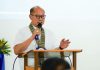
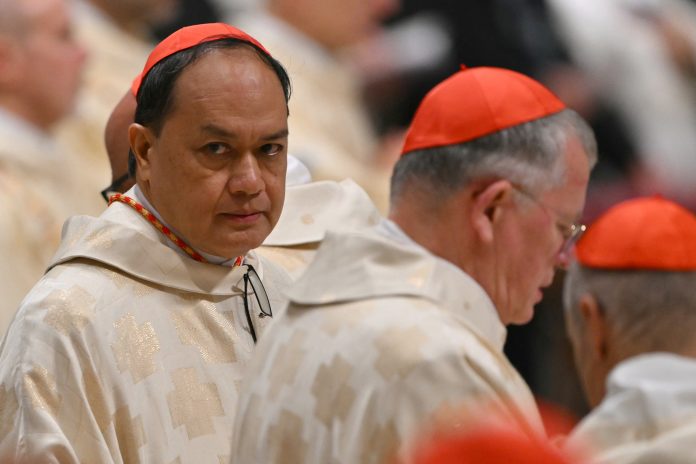
Cardinal Pablo Virgilio David of Kalookan suggested that religious diplomacy, including possible mediation by the Vatican, could help open a path to dialogue as political channels struggle to contain the escalating crisis involving the United States, Israel, and Iran.
In a reflection shared on Facebook on March 16, the Filipino cardinal said faith leaders could help revive dialogue if conventional diplomacy fails to prevent a wider war.
“A well-known political analyst suggested something interesting to me today: perhaps the Vatican could help mediate an off-ramp in the escalating crisis between the United States, Israel, and Iran?” David said.
“It may sound improbable, but history shows that when political channels break down, religious diplomacy sometimes succeeds where governments cannot,” he added.
The prelate pointed to the Holy See’s long-standing diplomatic engagement in international conflicts, noting that its influence rests on moral authority rather than military or economic power.
He said the Holy See carries “moral credibility and a network of relationships that crosses ideological and religious boundaries.”
He said efforts to reopen dialogue could require cooperation among religious leaders across traditions.
“If any meaningful dialogue is to emerge, it will likely have to happen within an interreligious framework, where ethical considerations can re-enter a conversation that has become dominated by military calculations,” he said.
David said Muslim religious leaders in countries such as Indonesia, Egypt, and Turkey, along with Jewish rabbis who do not necessarily subscribe to Zionist ideology, could play a role in such efforts.
The cardinal warned that cycles of violence and humiliation often fuel radicalization and deepen conflict.
“History repeatedly teaches us that terrorism and radicalization rarely grow out of religion alone. More often they emerge from humiliation, resentment, and cycles of violence that make revenge appear justified in the eyes of those who suffer,” he said.
He said wars launched while negotiations are ongoing risk intensifying anger and instability.
David said moments of crisis call for voices capable of appealing to conscience rather than political power.
“If our political institutions prove unable to stop the descent into a wider war, then perhaps religious leaders—Christian, Muslim, Jewish, and others—must remind nations of something politics often forgets,” he said.
“Peace is not weakness. Justice cannot grow out of humiliation. And vengeance has never built a stable world.”
“Perhaps this is also a moment for believers of every faith to pray—each according to their own tradition—that the God of peace may soften hardened hearts and guide the leaders of nations away from the path of destruction.”