
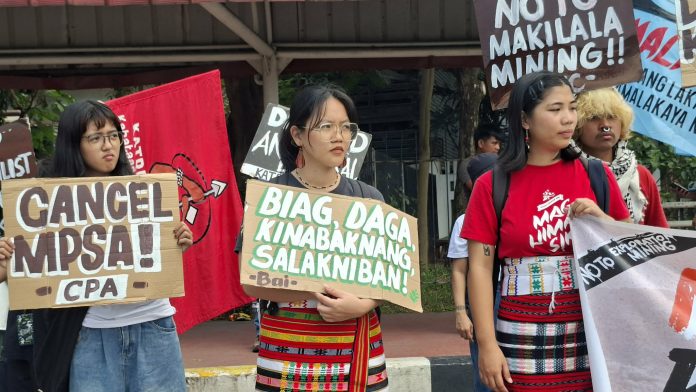
Indigenous peoples’ alliance Katribu Kalipunan ng Katutubong Mamamayan ng Pilipinas renewed its call to scrap the Philippine Mining Act of 1995 on the law’s 31st anniversary, saying it has enabled decades of environmental destruction, land grabbing, and human rights violations affecting ancestral lands.
In a statement issued March 3, the group said the mining law has opened vast areas of the country to foreign corporations while undermining Indigenous rights.
“For more than three decades, the [mining act] has enabled the unhampered plunder of our country’s mineral resources, opening vast portions of our lands to foreign mining corporations and facilitating the systematic land grab of Indigenous Peoples’ ancestral lands,” the group said.
Katribu said the law has failed to bring development to Indigenous communities.
“Instead of bringing genuine development to Indigenous Peoples and local communities, it has bled our lands dry and left behind poisoned rivers and displaced communities,” the statement read.
The alliance cited ongoing disputes in several regions. In Dupax del Norte in Nueva Vizcaya, communities continue to oppose the exploration activities of Woggle Corporation despite a temporary suspension issued by authorities, warning that drilling could threaten irrigation systems, rice fields, and watersheds.
In the Cordillera region, Katribu reported alleged violations of Free, Prior, and Informed Consent linked to the renewal of mining projects in Itogon and Mankayan. In Kalinga, residents seeking the cancellation of Makilala Mining Company Inc.’s permit said that “no consensus was actually reached by the community.”
The group also cited opposition to mining projects among Palaw’an and Tagbanua communities in Palawan, Mangyan communities in Mindoro, and Lumad communities in Mindanao.
“Mining operations are often accompanied by armed presence, further undermining the principle of free and voluntary decision-making and criminalizing Indigenous resistance,” Katribu said.
The alliance warned that “mining applications, exploration permits, or production agreements now cover more than 20% of the country’s land area, with over half overlapping ancestral lands.”
Calling the law a “structural policy of imperialist plunder,” Katribu urged support for alternative legislation such as the People’s Mining Bill.
“Our mineral resources must serve the Filipino people, including Indigenous Peoples, not foreign corporations, not imperialist powers!” the group said.