A Filipino bishop called on leaders to step down voluntarily when their actions harm the poor, deepen suffering, or damage the nation.
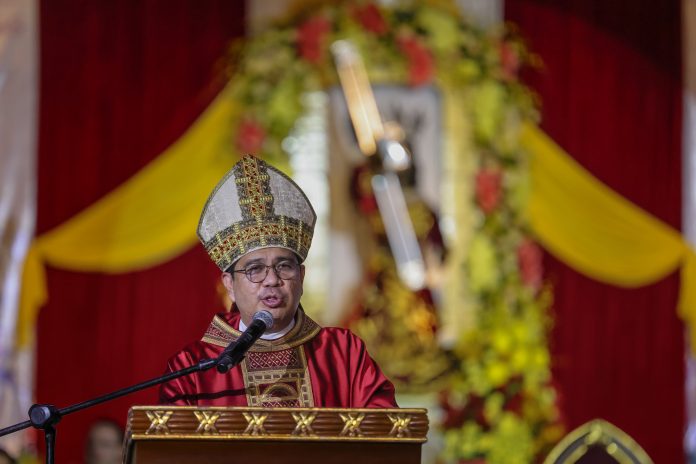
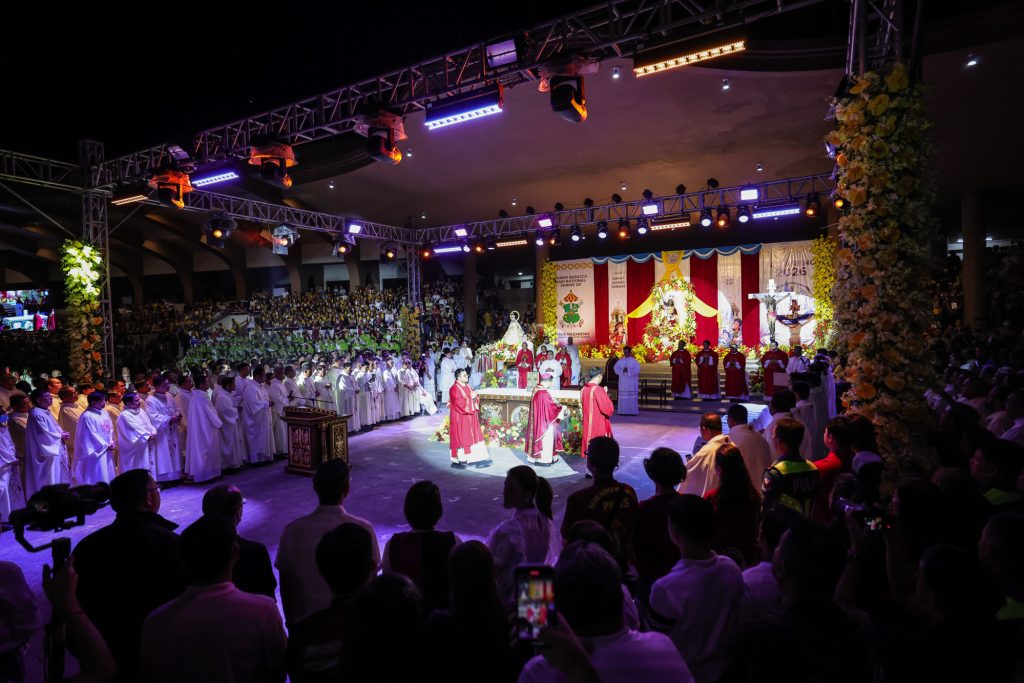
Presiding over the Holy Mass of the 2026 Traslacion of Jesus Nazareno, Bishop Rufino Sescon of Balanga said the devotion to the image of the suffering Christ is a call to humility, accountability, and service, warning that clinging to power despite wrongdoing contradicts the Gospel.
“There are those who refuse to step down even when they are already wrong and exposed,” Sescon said. “They refuse to step down even when the people are already suffering, even when the poor are already in pain, even when the nation is being flooded and destroyed.”
Sescon led the Mass on behalf of Cardinal Jose Advincula of Manila, who is in Rome attending an Extraordinary Consistory at the Vatican.
Without naming individuals, the bishop contrasted the persistence of worldly power with the example of Christ, whom he described as freely choosing humility out of love.
“Christ went down freely,” Sescon said. “He was not pushed down by anyone. He was not forced. His going down was not the result of defeat, weakness, or loss of power. It was a free decision of love.”
He stressed that true exaltation does not come from political authority or public approval.
“The greatest exaltation does not come from the hands of the world, but from the hands of God,” he said.
Sescon warned that refusing to relinquish power can itself become a moral failure.
“Not all forms of going down are disgrace,” he said. “There are times when refusing to go down is the real disgrace.”
Linking humility to public responsibility, the bishop urged leaders and citizens to prioritize service over status.

“Let us not compete for positions, but for mission,” he said. “Let us not compete to show who is better, but to serve.”
He also challenged devotees to understand that authentic Nazareno devotion goes beyond physical acts during the Traslacion and must lead to moral listening and obedience.
“Jesus went down not only so that he could listen to us,” Sescon said. “He went down so that we could learn how to come close, listen, and obey.”
The bishop asked whether faith allows believers to hear God’s call for justice and compassion.
“Do we hear God’s call for justice and truth, for goodness and peace, for unity and genuine development?” he said. “Do we hear his voice in those who are oppressed, in those who cry out for justice?”
Sescon said devotion should not be measured by physical closeness to the carriage or the rope during the procession.
“This is not measured by who gets to climb higher on the carriage,” he said. “The true devotee is measured by who truly listens to Jesus Nazareno and learns to lift others through love.”
The prelate called on the faithful to help renew the nation by stepping away from self-interest, silence in the face of abuse, and indifference to suffering.
“Christ went down to lift us up,” Sescon said. “And he now calls us to help lift our people, lift our nation, and lift the dignity of every person.”
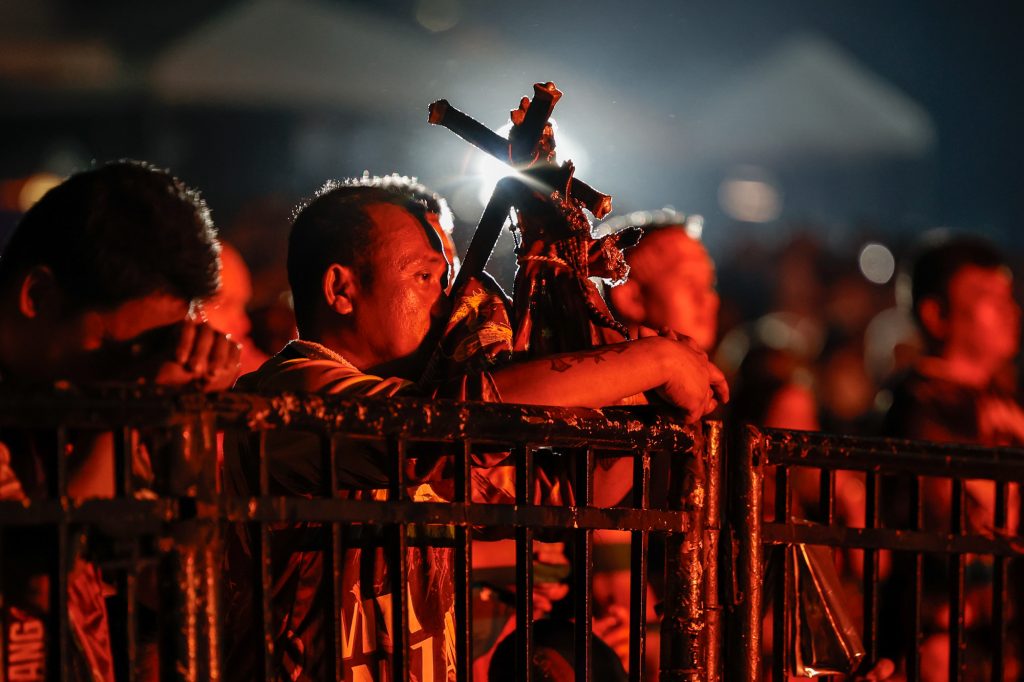
The Traslacion is the annual Jan. 9 procession marking the transfer of the image of Jesus Nazarene from Luneta to Quiapo church, drawing millions of devotees in a public act of faith and penitence.
The charred life-sized image of the suffering Christ carrying the cross originated in Mexico in the early 17th century and was brought to Manila by Augustinian Recollect missionaries in 1606.
The image became the center of a deep popular devotion in the Philippines, especially among the poor, who associate it with suffering, perseverance, and hope amid hardship.
All photos by Jire Carrreon