What began quite inconspicuously as an address on the present “State of the Nation” is now turning into a much more critical reflection on the precarious future state of our nation.
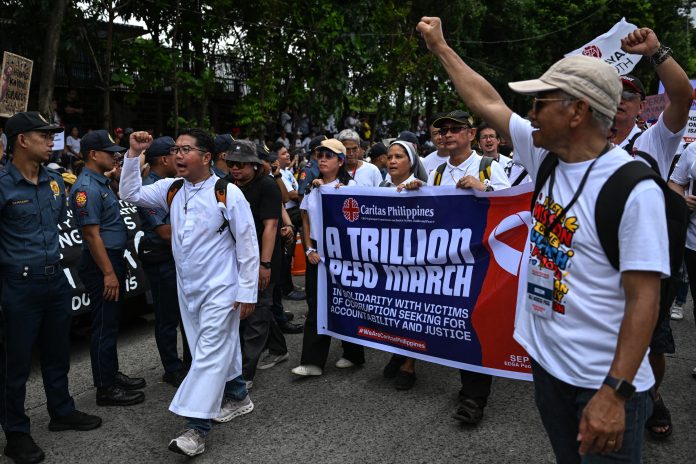
In the past few weeks, we have all been literally bombarded by the rapid revelation of the unimaginable breadth and depth of the culture of corruption firmly entrenched in the systems of government.
Though not a few of us are already aware of the shenanigans of those who, in good faith, we have elected into the corridors of power—a culture of mischief and deceit that has been going on for decades—many were surprised at the magnitude of theft, the intricate web of relationships and techniques that enabled it, and the variety of imaginative ways and means with which one can easily steal from the pockets of the honest taxpayer.
Now we are beginning to wake up to this grim reality. We have barely begun to scratch the skin of this colossal monster of corruption, fattened by avarice, hardly impeded, yet threatening now to pit the branches of our government against each other. What will happen when we begin to see how gargantuan this corruption monster actually is? Are we today at a crossroad, in which our collective decision as a people is so important and consequential that the ultimate stake is our very own survival as a nation?
When we are at a crossroad, we get to choose between several paths, leading to different directions. We are not usually given the choice of a ‘middle path,’ a choice which, for example, permits us to ‘speak firmly against theft in general,’ yet ‘accommodate or justify specific acts of stealing.’ The choice must be clear, and the resultant action must be definitive and unyielding.
At this crossroad, we posit we have been given the choice between two paths: either we believe we have to simply get rid of this monster by pinning down all these thieves and using every means to put them behind bars—which is a huge task in itself—or we believe that this monster is actually us. Either we understand we only have to change a system, or we understand that we have to change ourselves.
When was the time, in your younger years, you borrowed something from your classmate and then decided later on not to return it because ‘she won’t notice it anyway’? When was the time, in your first job, you thought of taking without permission a few sheets of paper from the office for personal use? When was the time you decided it was already ‘safe’ to take home one or three reams of paper?
When was the time you chose to bribe your way out of a misdemeanor charge or a rule violation? When was the time you chose to bribe your way into a crowd or pass through a long queue so that ‘you get to be in first place’? When was the last time you tried to cheat on payments, with the unsubstantiated belief that ‘they were also cheating on you anyway’? Have you ever encountered a scheme in which you found out about easy ways you can get people to part with their money for products or services that have little or no value for them? Did you participate in it, and if yes, did you enjoy it?
These plunderers of billions in taxpayers’ money would have likely begun in the same mindset as most of us think: stealing small won’t hurt. The only difference between us and these criminals is that they dared to steal bigger and bigger amounts, with ethical boundaries becoming more blurred, until they may actually believe, in some twisted way, that they are ‘entitled’ to what they stole.
Are some of us then, ‘plunderers-in-waiting’? So, what then is the assurance that if and when we kill this monster, it will not appear again?
The assurance may lie in the continuous efforts we, as students of theology, must exert to learn, practice, and teach to do the right thing, everywhere and every time. The assurance may lie in the sustained reflection of our intrinsic and deep responsibility for the good of the ‘other.’ The assurance still lies in the conviction of our ultimate accountability to a higher and divine order.
Brother Jess Matias is a professed brother of the Secular Franciscan Order. He serves as minister of the St. Pio of Pietrelcina Fraternity at St. Francis of Assisi Parish in Mandaluyong City, coordinator of the Padre Pio Prayer Groups of the Capuchins in the Philippines, and prison counselor and catechist for the Bureau of Jail Management and Penology.